REVIEW · BRUSSELS
Virtual Room Brussels – 1st virtual reality team experience
Book on Viator →Operated by VirtualRoom - Réalité Virtuelle Bruxelles · Bookable on Viator
Team VR in Brussels actually sounds fun. Virtual Room Brussels is the first collaborative virtual reality room in town, built for small groups of 2 to 4. It sits right at the crossroads of an escape game and a cinema experience, so you’re not just watching screens.
I like the team-first design because the whole point is communication and shared decisions. I also like that it feels accessible: you’re not stuck with a complicated setup just to enjoy the story-and-challenges style. One thing to consider: the booking is non-refundable and can’t be changed, so make sure your dates are firm before you buy.
In This Review
- Key things you should know before you go
- What Virtual Room Brussels is really about (and why that matters)
- Rue de l’Escalier 16: how to plan your start
- How the 1-hour collaborative mission typically plays out
- Escape-game pacing meets cinema feel
- Team size 2 to 4: where the fun really comes from
- English, and the difference a good guide makes (hello Momo)
- Price and value: is $36.97 worth a 1-hour team VR mission?
- Who should book this, and who might rethink it
- The practical booking reality (mobile ticket, confirmation, and that non-refundable rule)
- Should you book Virtual Room Brussels?
- FAQ
- Where is the meeting point for Virtual Room Brussels?
- How long is the virtual reality experience?
- What team size does Virtual Room Brussels support?
- Is the experience offered in English?
- Do I get a mobile ticket?
- Is this a private activity?
- When will I receive confirmation after booking?
- Are service animals allowed?
- What is the cancellation policy?
Key things you should know before you go
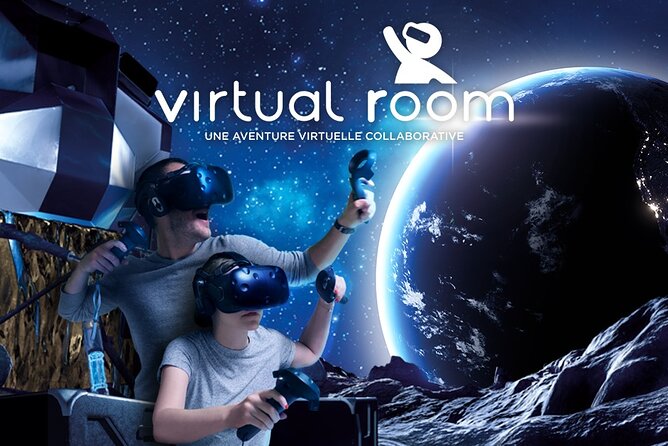
- Collaborative VR for 2 to 4 players: this is designed for a small team, not solo roaming.
- 1-hour sessions: the timing is short enough to fit into a day in Brussels without eating your whole schedule.
- English option: the experience is offered in English, so you can plan your visit around that.
- Mission-style storytelling: at least one mission is called Mission interplanetaire, which hints at a playful, narrative approach.
- Guide support you’ll actually understand: a review highlighted clear, simple explanations from a guide named Momo.
- Private group format: only your group participates, which makes the vibe calmer and more focused.
What Virtual Room Brussels is really about (and why that matters)
Virtual Room Brussels is the kind of activity that breaks away from the usual checklist of sights. Instead of walking, you’re solving and reacting inside a shared virtual space. The big idea is collaborative virtual reality for small teams. That changes the whole feel: it’s less like an arcade stop and more like a team challenge.
The escape-game and cinema combo is also the point. Escape games usually mean problem-solving under a time pressure feeling. Cinema usually means story, mood, and that sense of being pulled into something. Put them together and you get an experience where you’re reacting to what you see, while still needing teamwork to move forward.
If you’re the type who gets restless in long museum halls, this is a nice alternative. And if you’ve ever done VR solo and felt awkward standing there like a glowing robot, the team format helps. You’re doing it with people—talking, deciding, and comparing what you’re seeing.
You can also read our reviews of more tours and experiences in Brussels.



Rue de l’Escalier 16: how to plan your start

You’ll start at Rue de l’Escalier 16, 1000 Bruxelles. Your activity ends back at the same meeting point, so you’re not dealing with a complicated drop-off puzzle at the end.
A practical tip: plan to arrive with a little cushion. The session is about an hour, and VR experiences run on a tight flow. Even if you’re excited, show up ready to begin when your slot starts. It’s near public transportation, which is useful if your day in Brussels is already full of trams, metro lines, and walking detours.
And because the ticket is mobile, you’ll want your phone charged. Bring what you need to load the mobile ticket when you arrive. If your battery is questionable, this is an easy thing to fix before you head out.
How the 1-hour collaborative mission typically plays out
The info you have here doesn’t list a minute-by-minute script, so I’ll keep this realistic: you can expect a structured, guided VR session that lasts roughly one hour and stays centered on a team mission.
Here’s the rhythm the format implies:
- You arrive and get set up with your team of 2 to 4.
- You experience a mission that mixes what you see with what you need to do together.
- You finish the session and return to the meeting point.
Because it’s collaborative, the most important part isn’t the tech. It’s how you coordinate as a group. One person’s quick read might help another person focus on the challenge. Someone else can be the communicator, keeping the team aligned when the virtual scenes move fast.
Also, you should think of this as an activity you do once you’re mentally ready to participate. It’s not passive entertainment. The “reflection, communication and team spirit” angle is basically telling you what the experience wants from you: talk to each other, stay engaged, and work as a unit.
Escape-game pacing meets cinema feel
The most interesting promise in the description is the in-between nature: escape game plus cinema. Escape games lean on interaction and solving. Cinema leans on narrative flow and atmosphere.
In practice, that often means your mission isn’t just a series of unrelated tasks. It has a storyline texture—enough mood and context that the challenges feel part of something, not random. The mission name Mission interplanetaire from the reviews also supports that. Space-themed missions tend to encourage playful problem-solving, not just rote guessing.
What I like about this mix is how it balances your energy. If you want puzzles, you get that. If you want story and feeling like you’re inside a scene, you get that too. And if you’re traveling with people who don’t all love the same thing, this combo can catch more than one interest.
Team size 2 to 4: where the fun really comes from
Virtual Room is built for teams of 2 to 4 players. That’s a sweet spot. Too small, and you risk losing the shared momentum. Too big, and someone ends up watching while others decide.
With 2 to 4 people, everyone can contribute in some way:
- You can split roles informally (one person watches for cues, another calls out what they’re noticing).
- You can compare perceptions because the visuals and tasks are happening together.
- You can keep communication steady, which is part of the experience design.
This is also why I think the private group format matters. Only your group participates, so your team isn’t forced into the same room with strangers. That helps if you want a calmer experience for a family visit or for a friends trip where you’d rather not manage someone else’s group dynamic.



English, and the difference a good guide makes (hello Momo)
The experience is offered in English, and that’s important for VR. VR can feel confusing fast if instructions are unclear. The good news: one review specifically praised simple and effective explanations from a guide named Momo.
That detail matters more than it sounds. In a VR mission, small misunderstandings can derail your teamwork. Clear guidance keeps the focus on the challenge and story rather than on figuring out what you’re supposed to do.
Also, the review mentioned a plan to return for a second mission. That often points to one thing: the experience landed well enough that people didn’t feel they’d “wasted time” on the first run. Instead, they felt ready to try again with a new storyline.
If you’re traveling with kids or mixed-age family groups, that family-positive note is a good sign. Not every VR game is built for families, but this one is described as original and accessible, and that matches what you want for a smooth outing.
Price and value: is $36.97 worth a 1-hour team VR mission?
At $36.97 per person, this isn’t the cheapest activity in Brussels. But it doesn’t pretend to be. VR rooms usually cost more because you’re paying for the equipment, the mission design, and the staff support that keeps everything running.
Where the value comes in is the structure:
- It’s a private tour/activity, so you’re paying for your group’s session rather than sharing with random teams.
- It’s short, about 1 hour, which makes it easier to budget your day.
- It’s built for teamwork, which can be more fun than solo VR because you’re not just reacting—you’re collaborating.
So I’d frame it like this: you’re paying for an interactive evening-style experience, compressed into an hour, with an English option and a guided feel. If you’re planning a day full of walking and sightseeing, this is one of the few activities that changes pace without asking you to commit to a half-day tour.
Who should book this, and who might rethink it
This is a strong fit if you want:
- Something active and different from standard sightseeing
- A team challenge for friends or family
- A guided VR experience in English
- A private session rather than a public VR crowd
It’s also a decent choice for people who like games but don’t want to rely on complicated reading or heavy strategy. The description emphasizes communication and team spirit. That usually means you’re encouraged to work together rather than brute-force your way through.
Who might double-check? If your group hates communication games or you’re traveling with very large group sizes. The experience is designed for 2 to 4 players per team. If you have more people than that, you’ll likely need separate teams or separate bookings, which could affect how convenient it feels.
Also, because you’re locked into an exact session style (and it’s non-refundable), this is best for people with a plan. If your schedule is shaky, you’ll feel that risk more.
The practical booking reality (mobile ticket, confirmation, and that non-refundable rule)
Here’s the stuff you should know so you don’t get surprised:
- You’ll receive confirmation within 48 hours of booking, subject to availability.
- You’ll use a mobile ticket.
- Service animals are allowed.
- It’s near public transportation.
- Most travelers can participate.
- It’s private, with only your group in the session.
And yes, the cancellation policy is strict: it’s non-refundable and can’t be changed. If you’re a “book now, adjust later” type, this one may be stressful. If you’re the “my dates are set” type, it’s straightforward.
Should you book Virtual Room Brussels?
I’d book it if you’re craving a break from pure sightseeing and you want a small-team experience that mixes story and challenge. The high rating (4.7) and the strong recommendation rate (93%) are good signals that this isn’t just a novelty. The guide support callout, including Momo’s clear explanations, is the kind of detail that turns VR from frustrating into fun.
I’d hesitate if your schedule might shift or if your group size doesn’t naturally fit into teams of 2 to 4. Also, if you’re looking for a long cultural tour with lots of walking through historic sites, this is a different kind of value. It’s about doing, not observing.
If you want an hour that feels like a movie scene you can influence, with teamwork at the center, Virtual Room Brussels is a smart pick.
FAQ
Where is the meeting point for Virtual Room Brussels?
The meeting point is Rue de l’Escalier 16, 1000 Bruxelles, Belgium.
How long is the virtual reality experience?
The duration is about 1 hour.
What team size does Virtual Room Brussels support?
It’s designed for teams of 2 to 4 players.
Is the experience offered in English?
Yes, it’s offered in English.
Do I get a mobile ticket?
Yes, the experience includes a mobile ticket.
Is this a private activity?
Yes. Only your group will participate.
When will I receive confirmation after booking?
You’ll receive confirmation within 48 hours of booking, subject to availability.
Are service animals allowed?
Yes, service animals are allowed.
What is the cancellation policy?
It is non-refundable and cannot be changed for any reason. If you cancel or ask for an amendment, the amount you paid will not be refunded.