REVIEW · BRUSSELS
From Brussels: Guided Day Trip to Bruges and Ghent
Book on GetYourGuide →Operated by buendía · Bookable on GetYourGuide
Bruges and Ghent in one long, satisfying day. You’ll get two standout wins: the calm beauty around Minnewater (Lake of Love) and the jaw-drop scale of Ghent’s Saint Bavo Cathedral. The trade-off is simple: you’re on your feet a lot, and this trip is not built for wheelchair users or major mobility needs.
What makes this experience work so well is the mix of guided walking plus breathing room. You start at Brussel-Centraal and ride comfortably to Bruges, then you move through key medieval streets with a live guide, and you finish Ghent with a little time to wander on your own.
One more thing I really like: you’re not stuck decoding everything yourself. The tour uses a radio system, and the guide leads in English or Spanish, which matters when you want to actually follow the stories behind the buildings.
In This Review
- Key Highlights Worth Showing Up For
- From Brussel-Centraal to Bruges: A Smooth Start to a Big Day
- Bruges Walking Tour: Canals, Belfries, and the 1245 Begijnhof
- Lake of Love and Minnewater: A calmer side of Bruges
- The Begijnhof founded in 1245: history you can walk through
- Old St. John’s Hospital and the “layers” of the city
- Church of Our Lady’s brick tower: the skyline moment
- Rozenhoedkaai and Castle Square: the classic Bruges angles
- Market Square (Grote Markt): the Belfort and the center of gravity
- Bruges Free Time: Lunch, Chocolate, and Choosing Your Own Tempo
- Bus to Ghent: Swapping Canal Views for a Medieval Port City
- Ghent Guided Tour: Saint Bavo Cathedral and the Power of the Port
- Saint Bavo Cathedral: the main art and the big building energy
- Belfort and town hall contrasts
- St. Nicholas’ Church and the Masons’ Guild House facade
- Graslei and the medieval port story
- Big monuments: counts, butchers, fish markets, and Friday Square
- Ghent Free Time: Wandering Without Losing the Plot
- Price and Value: Is $55 a Fair Deal?
- What the Radio System Means for Your Comfort
- Guides Matter: Why People Keep Mentioning Antonio and Peter
- Timing, Walking Pace, and What to Pack
- Who Should Book This Bruges and Ghent Day Trip?
- Should You Book It?
- FAQ
- Where do I meet the tour in Brussels?
- How long is the trip?
- What language is the live guide offered in?
- What’s included in the price?
- Is lunch included?
- Are entrance tickets included?
- Do I need headphones for the guided part?
- Is the tour suitable for wheelchair users or limited mobility?
- Is there a cancellation policy?
- Is the pickup/drop-off only in Brussels?
Key Highlights Worth Showing Up For
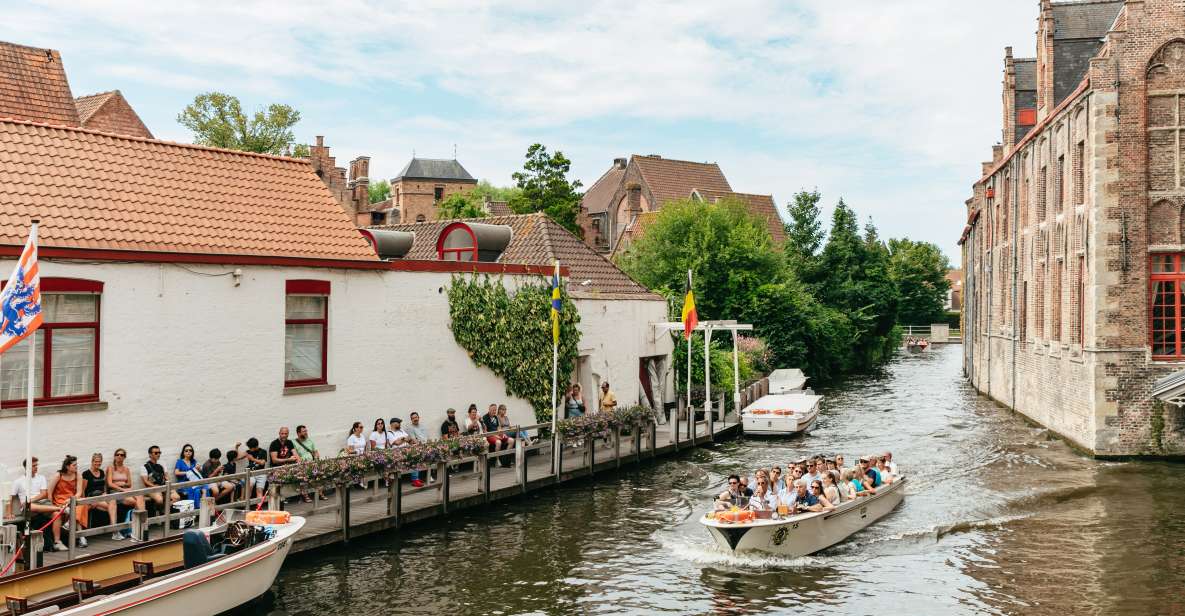
- Minnewater and the Begijnhof founded in 1245: quiet, historic, and easy to slow down in
- Saint Bavo Cathedral in Ghent: built for big art and bigger atmosphere, including the Mystic Lamb story
- Belfries and photo stops in Bruges: Castle Square views and the classic Rozenhoedkaai angle
- Ghent’s medieval port area of Graslei: you’ll understand why the city mattered so much
- A guide who keeps the day organized: people repeatedly mention guides like Antonio and Peter for clear, funny pacing
From Brussel-Centraal to Bruges: A Smooth Start to a Big Day
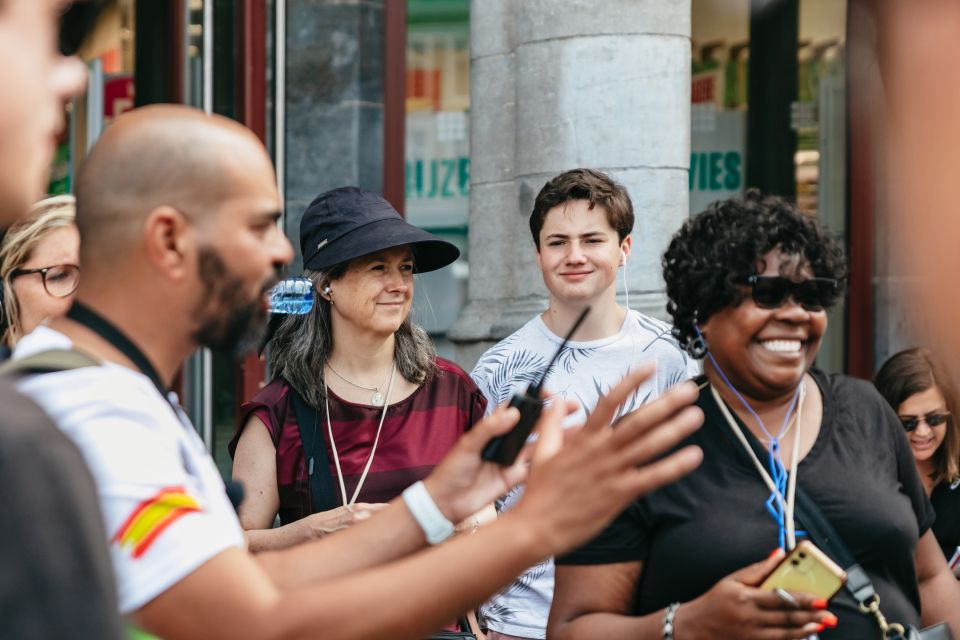
This day trip is built for people who want real Belgium without the stress of trains, transfers, and planning. You meet at Carrefour de l’Europe, under the main entrance columns of Brussel-Centraal, in front of the Hilton Grand Place Hotel area. The guide shows up with ID for Buendía Tours, so you’re not guessing who to follow.
Then comes the part that makes everything easier: the 100-kilometer bus ride. You’re not driving, you’re not navigating parking, and you can settle in before the walking starts. The coach is described as comfortable and eco-friendly, and the tour runs with a guide’s voice carried through radios—useful once you’re in crowded squares or narrow streets.
One small practical note that affects your comfort: this is a long day total (over ten hours). You’ll enjoy it more if you treat it like a walking tour plus sightseeing, not a quick hit. The trip spends time on the road, so your schedule won’t feel “short,” even with free time built in.
You can also read our reviews of more guided tours in Brussels


Bruges Walking Tour: Canals, Belfries, and the 1245 Begijnhof
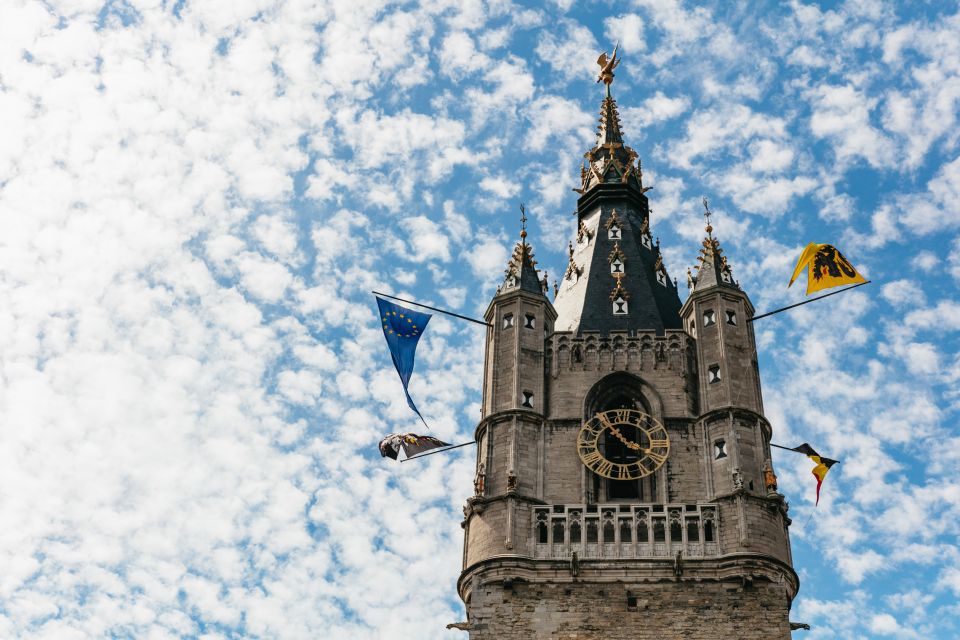
Bruges is the kind of place where you instantly get why people come here. You arrive after a bus ride, and within a couple hours on foot you’re already moving through the medieval heart of the city—its historic center is recognized as a UNESCO World Heritage Site, and you’ll feel that scale in the way the streets and plazas line up.
Lake of Love and Minnewater: A calmer side of Bruges
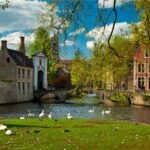
Early on, the tour steers you toward Minnewater Lake (Lake of Love). It’s not just a picture stop. This spot gives you a reset after travel—water, trees, and that quiet Bruges mood. It’s also a great place to slow your pace, absorb the surroundings, and get oriented before the busier squares.
The Begijnhof founded in 1245: history you can walk through
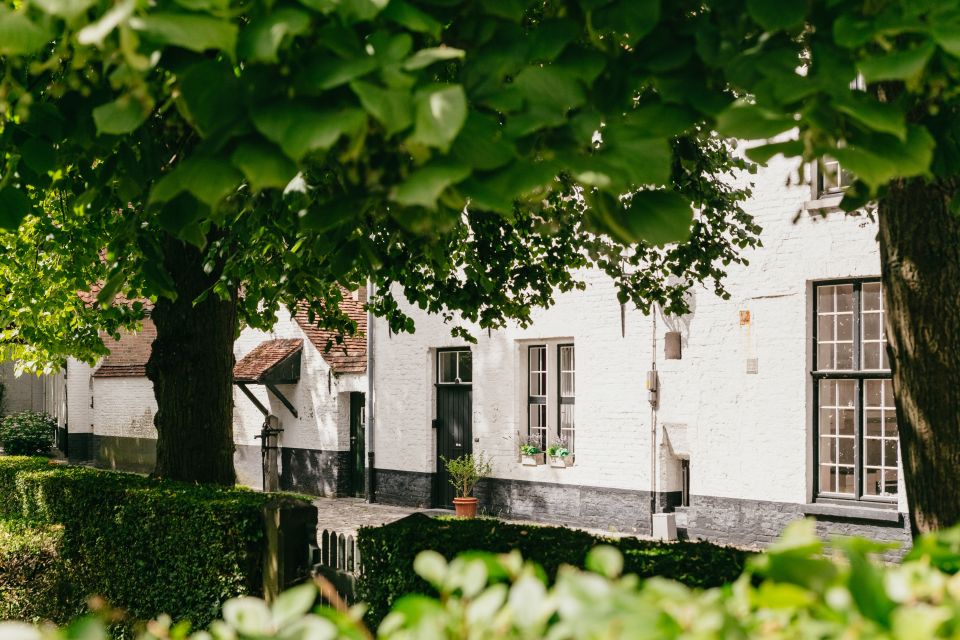
From there you head toward the Begijnhof complex, founded in 1245 to house lay religious women. Even if you don’t count yourself as a museum person, this area hits because it feels human-scaled: courtyards, quiet lanes, and a layout that still makes sense when you walk it. It’s a nice counterbalance to the big landmark towers you’ll also see later.
Old St. John’s Hospital and the “layers” of the city
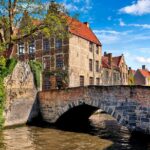
Bruges also shows its layers in the tour route. You’ll see references like Old St. John’s Hospital (dating to the 11th century) and stroll past places tied to the city’s evolving past. A guided route helps here—without a guide, you can miss what you’re looking at, even when the buildings are right in front of you.
You can also read our reviews of more tours and experiences in Brussels


Church of Our Lady’s brick tower: the skyline moment
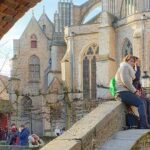
One of the big visual payoffs is the Church of Our Lady, known for the world-famous brick tower mentioned as the world’s second tallest brickwork tower. If you’re the kind of person who likes standing in a square and suddenly realizing why a city is so iconic, this is your moment.
Rozenhoedkaai and Castle Square: the classic Bruges angles
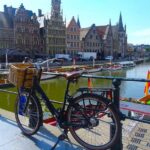
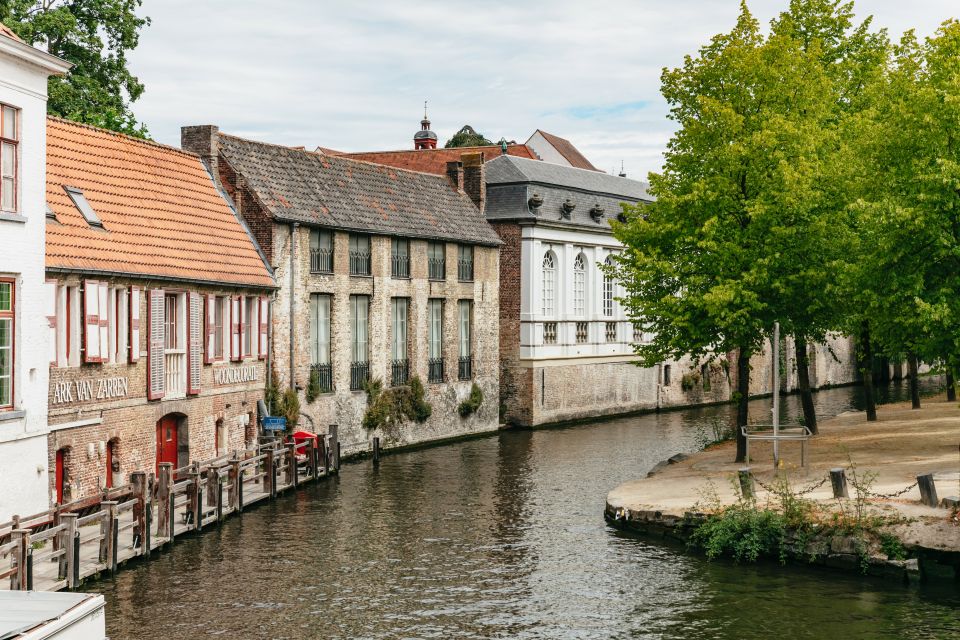
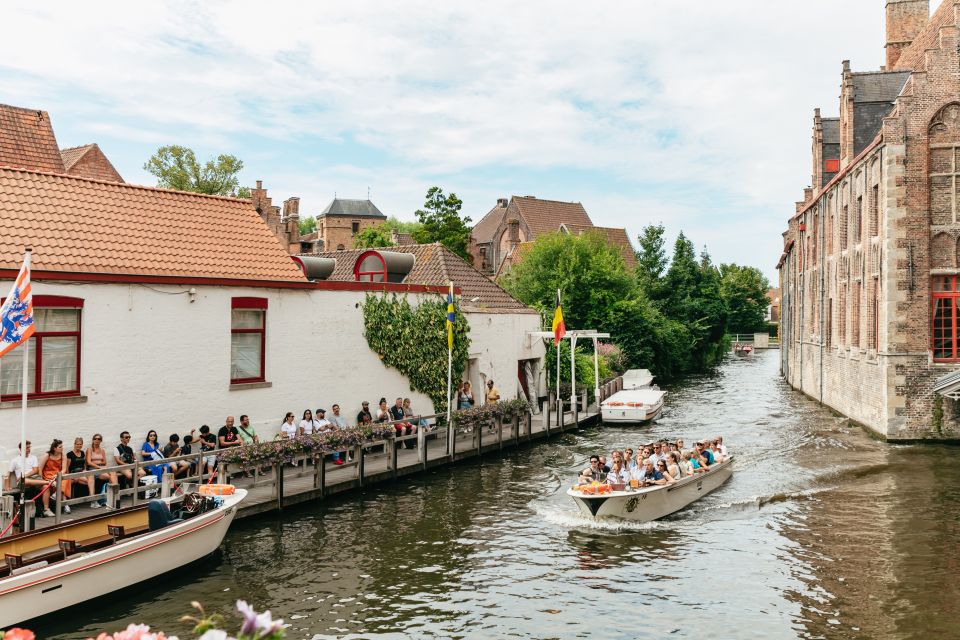
When the tour moves toward Rozenhoedkaai, you’ll understand why it’s one of the most photographed spots. It frames the canal scene in a way that feels instantly “Bruges.” Then you hit Castle Square, where you see the Belfry—the kind of skyline landmark you’ll recognize in postcards and photos before you even look up.
Market Square (Grote Markt): the Belfort and the center of gravity
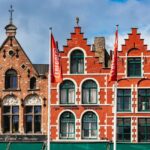
Finally, you arrive at Market Square, Grote Markt, and see the Belfort (Bruges’ bell tower). This is the heart of the old city. It’s where the guided tour makes sense: you’ve walked the quiet lanes and historic pockets, and now you’re standing in the big, open space that tied it all together.
Bruges Free Time: Lunch, Chocolate, and Choosing Your Own Tempo
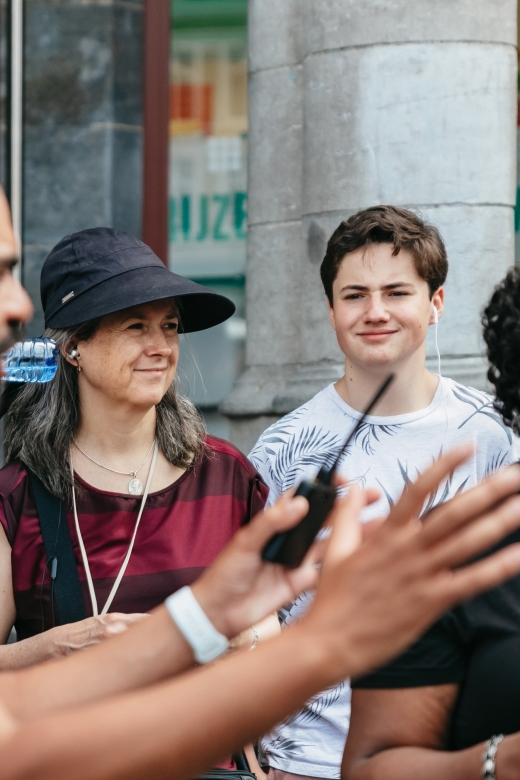
After the guided portion, you get about an hour of free time for lunch (you pay for your own meal). Then you have a bit of extra wiggle room in the schedule to keep the day from feeling like a conveyor belt.
This is the time to do two things:
- Eat something local without overthinking it.
- Work in a chocolate stop if you want a sweet souvenir that’s actually worth the calories.
You’ll enjoy this more if you don’t try to “optimize” Bruges. The tour already covered the major beats. Your job now is to pick a direction and wander long enough to spot the streets that feel less packed.
A quick reality check: a couple guides’ approaches can influence how much time you feel you have. Some people have suggested they wished they had slightly more time in Bruges. If you’re a slow wanderer, keep that in mind when deciding if one day is enough for you.
Bus to Ghent: Swapping Canal Views for a Medieval Port City
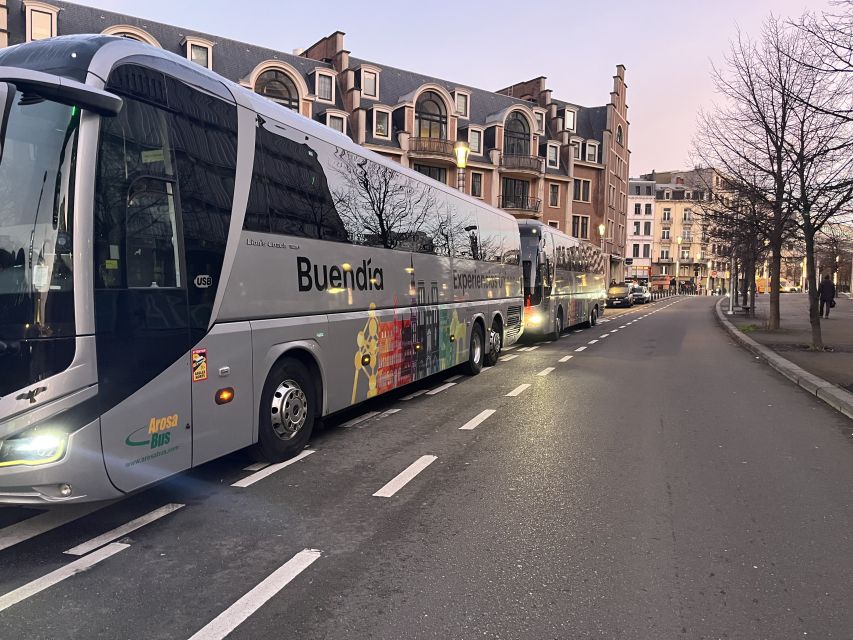
The ride from Bruges to Ghent takes about an hour. You’ll feel the day shifting from Bruges’ postcard mood to Ghent’s heavier architecture and port-era story.
Ghent has its own personality, and the guide’s framing helps. You’ll hear the nickname about Ghent’s inhabitants, linked to Charles V. That kind of historical framing matters because it turns random facts into a coherent story about power, trade, and identity.
Ghent Guided Tour: Saint Bavo Cathedral and the Power of the Port
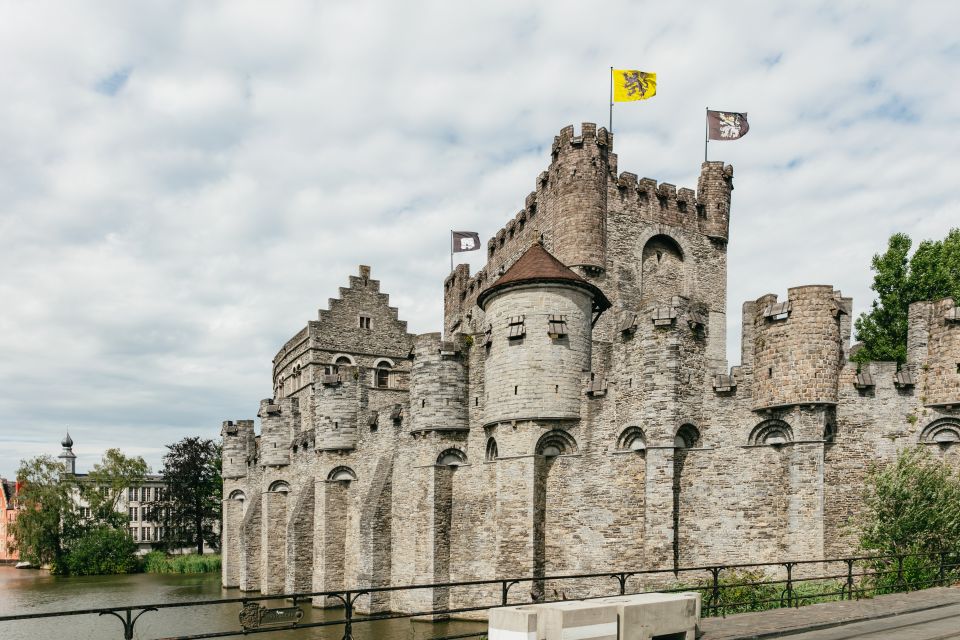
Ghent’s guided walk is shorter than Bruges, but it’s packed with high-impact sights. You’re in the city long enough to understand why people compare it to a “living” historic space rather than a frozen museum.
Saint Bavo Cathedral: the main art and the big building energy
The anchor stop is Saint Bavo Cathedral. This is where the tour connects architecture to culture through the story of The Adoration of the Mystic Lamb by the Van Eyck brothers. Even if you already know the name, hearing it tied to what you’re seeing makes it land differently.
Belfort and town hall contrasts
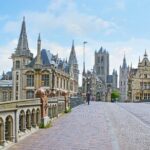
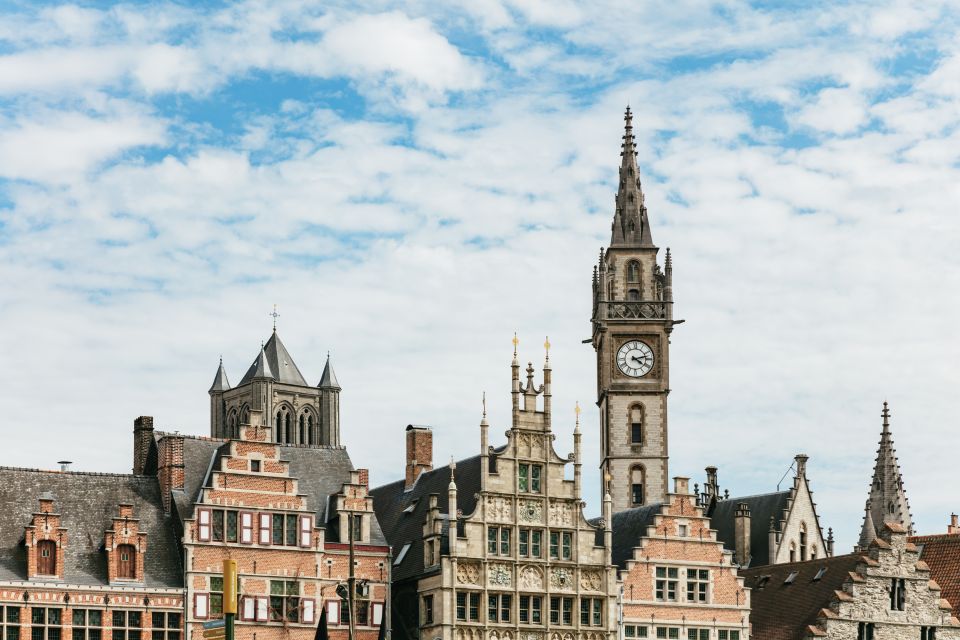
You’ll also see the Belfort (Ghent’s bell tower) and the Town Hall, described as Gothic and Renaissance-style. That mix is part of Ghent’s appeal: it didn’t stop evolving in one era. You’ll notice details that you’d probably miss without a guide pointing out what matters.
St. Nicholas’ Church and the Masons’ Guild House facade
Across from Saint Nicholas’ Church, you’ll see the unusual facade of the Masons’ Guild House. These are the kinds of stops that make a guided tour worth paying for. Left to your own devices, you might admire the buildings but miss why the facade is strange and why it matters.
Graslei and the medieval port story
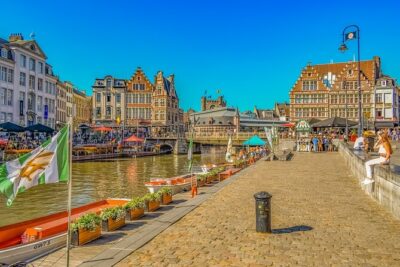
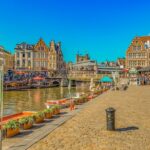
Then you walk along the embankments of Graslei, tied to Ghent’s medieval port. This is a “how the city worked” moment—trade shaped the streets, the wealth shaped the architecture, and the port layout explains the geography. It’s also one of those areas where a good guide helps you read the city without turning it into a lecture.
Big monuments: counts, butchers, fish markets, and Friday Square
The tour also highlights places like:
- the Castle of the Counts of Flanders
- the Great Butchers’ Hall
- the Old Fish Market
- Friday Market Square
Even when you’re not going inside (entrance tickets aren’t included), seeing where these landmarks sit gives you context for Ghent’s layout. It’s the difference between seeing buildings and understanding why they’re there.
Ghent Free Time: Wandering Without Losing the Plot
After the guided portion, you get around 1.5 hours of free time in Ghent. This is where you can shift from “guide-led” to “you-led.”
Use it to:
- grab a second coffee or snack
- walk toward the water areas for different angles
- pop into a shop or two if you want local goods
- take a breather if you’ve done a lot of stairs and uneven stones
One useful tip: treat free time as a chance to recharge, not to sprint across the city. The schedule includes a return bus back to Brussels, and you want to arrive relaxed, not frantic.
Price and Value: Is $55 a Fair Deal?
At around $55 per person, the value comes from three things working together.
First, you’re paying for transportation plus an actual human guide. The bus ride alone would be a hassle to line up on your own if you’re starting in Brussels and want to hit both cities in one day.
Second, you’re getting a planned walking route through major sights—Bruges’ canals and belfries, plus Ghent’s cathedral-and-port story—without you needing to decide what’s “must see.”
Third, you’re getting structure. The day is long, but it’s timed so you have both guided time and free time. You won’t feel stuck doing every step alone.
What might make the price feel “less worth it” is if you’re mostly interested in museum interiors. Entrance tickets aren’t included, so if you’re the type who wants to go inside multiple churches or towers, you may pay extra on top. But if you’re happy exploring the exteriors, squares, and streets with context, the money tends to feel justified.
What the Radio System Means for Your Comfort
This tour uses a radio system for the guide’s voice. And here’s the practical part: disposable headphones create pollution, so you’re asked to use your own wired earphones if you have them. If you don’t, you can purchase them for €1.
A couple small “watch-outs” show up in feedback. Some people have mentioned the €1 headphone collection not always being smooth, and they’ve also noted the radio can have static sometimes. Translation: bring your own wired earphones if you can, and don’t assume you’ll hear everything perfectly without them.
Also, you’ll be walking through busy zones. When a guide points out the story behind a belfry, a facade, or a port square, audio clarity really matters.
Guides Matter: Why People Keep Mentioning Antonio and Peter
A big reason this tour earns a strong rating is the guide factor. Many guests call out guides like Antonio and Peter for the same pattern: clear explanations, humor, and good pacing. People also appreciate when guides offer restaurant and food suggestions without being pushy.
That matters because Bruges and Ghent can blur together if you’re just following landmarks. When the guide threads history through the walk—like connecting Van Eyck’s Mystic Lamb to what you’re seeing in Saint Bavo Cathedral—it makes the day feel coherent.
It also helps that the tours don’t feel “all business.” Several comments mention that guides are patient with questions and organized enough that meeting points and return times don’t turn chaotic.
Timing, Walking Pace, and What to Pack
This isn’t a sit-and-stare day. You should expect:
- comfortable walking shoes (the tour explicitly recommends this)
- time spent in historic, sometimes uneven streets
- a long coach day that still includes a lot of on-foot movement
Weather matters. Belgium can be cold and rainy, and a few comments mention being helped with ways to handle bad weather. Still, don’t count on luck. Layer up.
One more behavior note that helps the whole group: if you’re given a return time, show up early. A late pickup can ripple through everyone’s day.
Who Should Book This Bruges and Ghent Day Trip?
I’d recommend this tour if you want:
- two major Flanders cities in one day
- a guided route that hits the big landmarks without you researching for hours
- enough free time to eat and wander without feeling rushed
I’d think twice if you:
- want lots of inside-the-building time (entrance tickets aren’t included)
- need wheelchair-friendly access (it’s not suitable for wheelchair users)
- have limited walking ability (it’s noted as not suitable for people with mobility impairments)
If you’re traveling solo, with friends, or as a couple, this is a strong “first Belgium” day trip. It’s also a good pick if you’re based in Brussels and don’t want to plan a full overnight.
Should You Book It?
If you’re asking whether Bruges and Ghent in one day is a good idea, my answer is yes—as long as you’re okay with a long day and a lot of walking.
Book it if you care about context and want to see the main sights in both cities with a guide. Skip it (or adjust expectations) if your priority is deep museum time or if mobility is a challenge.
If you do book, pack these two things for smoother enjoyment:
- your own wired earphones (or bring a plan to buy the €1 ones)
- comfortable shoes for historic streets
FAQ
Where do I meet the tour in Brussels?
You meet at Carrefour de l’Europe, under the columns of the main entrance of Brussel-Centraal station, in front of the Hilton Grand Place Hotel. The guide will be there with Buendía Tours ID.
How long is the trip?
The total duration is listed as 630 minutes.
What language is the live guide offered in?
The live tour guide is available in Spanish and English.
What’s included in the price?
Included are transportation to all destinations, the guide, walking tours in both Ghent and Bruges, eco-friendly comfortable buses, and a radio system.
Is lunch included?
No. Lunch is not included, and you have free time for it on your own.
Are entrance tickets included?
No. Entrance tickets are not included.
Do I need headphones for the guided part?
The tour provides a radio system. For groups over 24, visitors are asked to use their own headphones due to local regulations, and you may purchase them from the provider for €1 if you don’t have your own.
Is the tour suitable for wheelchair users or limited mobility?
No. It is listed as not suitable for people with mobility impairments and wheelchair users.
Is there a cancellation policy?
Yes. Free cancellation is offered up to 24 hours in advance for a full refund.
Is the pickup/drop-off only in Brussels?
Yes. You start and return to the same Brussels meeting point area at Carrefour de l’Europe.