REVIEW · BRUSSELS
Brussels: Hop-On Hop-Off Bus Tour
Book on GetYourGuide →Operated by Tootbus · Bookable on GetYourGuide
Brussels by bus beats guessing routes. This clean-energy hop-on hop-off ride is a handy way to cover major sights fast, then slow down when something catches your eye, and I especially like the open-top views for photo breaks and the full adult and kids audio guide so you’re not just sightseeing in silence. One catch to plan around: on the red route during the late-2025 seasonal window, the first departure is 10:00 AM and the last is 5:00 PM, so late starts won’t work.
For $29 per person with a 24- or 48-hour ticket, you’re buying flexibility as much as transport. You can start at any of the 11 red-route stops, ride as much as you want over one or two days, and use the app for real-time tracking and extra content—then pair the bus with the included free walking tours when you want to get out and stretch your legs.
In This Review
- Quick hits before you board
- The red route in plain English: start anywhere, hop anytime
- Stop-by-stop on the red route: what’s worth your time
- Central Station (33 rue Cardinal Mercier)
- Place Royale (5 rue de la Montagne de la Cour)
- Luxembourg (2 Place du Luxembourg)
- Cinquantenaire (59A Avenue d’Auderghem)
- Flagey (Chaussée d’Ixelles)
- Poelaert / Louise / Courthouse (58 rue de la Régence)
- Grand Place / Manneken-Pis (68 rue du Lombard)
- Bourse (16–18 rue des Poissonniers)
- Tour & Taxis / Maritime Station (1 rue Picard)
- Atomium (Bld du Centenaire)
- De Broukere / Monnaie (21 rue de l’Evêque)
- Audio guide and app: facts without hauling a guidebook
- Free walking tours: use them when you want street-level detail
- Open-top deck photo spots: how to enjoy the wind and timing
- Price and value: is $29 a good deal for Brussels?
- When the bus feels slow: traffic and route choices
- Who this tour suits best (and who should skip it)
- Practical tips to make your day smoother
- Should you book this Brussels hop-on hop-off bus?
- FAQ
- How long is the Brussels Hop-On Hop-Off Bus Tour valid?
- Where can I board the bus?
- How often do buses run on the red route?
- What language options are available for the audio guide?
- Is there an app and Wi-Fi onboard?
- Are earphones included?
- Are free walking tours included?
- Is the bus wheelchair accessible?
- What items are not allowed on board?
- Is there free cancellation?
Quick hits before you board
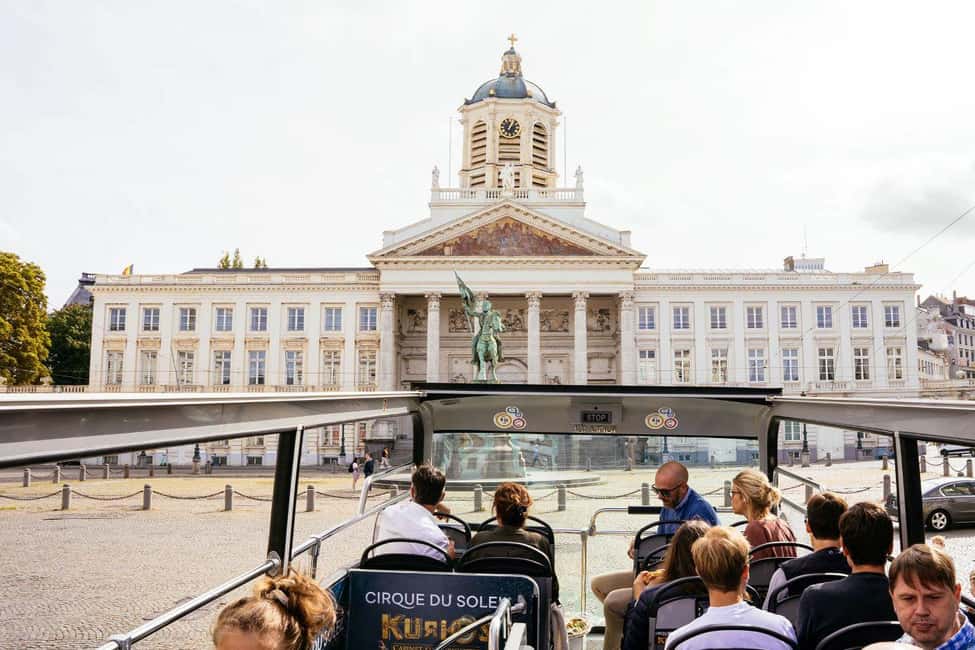
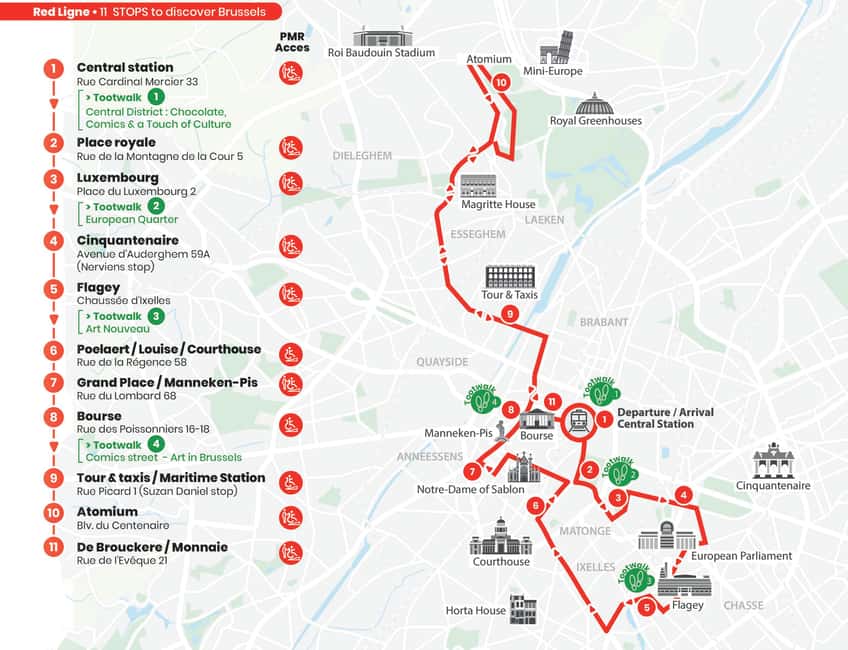
- Red route with 11 stops: Central Station to Atomium and back through the core sights like Grand Place and Manneken-Pis
- Open-top deck for views: Great wind-in-your-face energy, plus shaded areas reported by riders
- Audio on the bus and via app: Lots of language choices, including kids’ audio and Arabic, Japanese, Chinese, and more
- Eco-friendly ride: Clean-energy vehicle for calmer day-to-day commuting
- Driver skill is part of the experience: Expect smooth handling through dense city streets
- Free walking tours included: Nice add-on, but you’ll want to check how to find the meet-up in the app
The red route in plain English: start anywhere, hop anytime
This is not a one-shot guided bus that locks you into a schedule. With a 24- or 48-hour pass, you can treat the red route like a moving map: climb on when it suits you, then jump off at any stop you care about.
You’ll pass through classic “first visit” neighborhoods and landmarks, but the real win is pacing. If you want grand architecture, you can linger. If you’re tired, you can stay on longer and just soak in the city from the top deck. If you want museums, you can time your stops around opening hours once you’re in the area. The bus becomes your transportation backbone, not your boss.
Practically, buses run frequently enough to make hopping realistic. During the late-2025 seasonal period, the red route runs first at 10:00 AM and last at 5:00 PM, with buses every 30 minutes. The exact schedule can shift by season, so use the provider’s timetable when you lock in your day.
And yes, this is one of those “start wherever it’s easiest” setups. Your meeting point options are the 11 stops on the red route, including Central Station, Luxembourg, Cinquantenaire, Flagey, Grand Place/Manneken-Pis, Bourse, Tour & Taxis/Maritime Station, Atomium, De Broukere/Monnaie, and others.
You can also read our reviews of more tours and experiences in Brussels.



Stop-by-stop on the red route: what’s worth your time

Below is how I’d think about the stops, based on what the route is designed to cover and what people highlight most.
Central Station (33 rue Cardinal Mercier)
This is a smart first boarding point because it’s easy to reach and it puts you right into the flow of Brussels. I like starting here if you’re jet-lagged or rain-cautious, because you can get on quickly and decide later where you want to get off for a proper walk.
If you’re using the bus as your “arrival day orientation,” Central Station works as a launch pad. Just remember: you’ll still want to get out at least once soon, because Brussels rewards street-level wandering.
Place Royale (5 rue de la Montagne de la Cour)
This stop is for viewpoint lovers. It’s a natural place to get off and look around, especially if you want that postcard sense of space and angles without doing a long trek.
I’d treat Place Royale like a short break stop: hop off, take photos, maybe grab a coffee nearby, then ride onward. It’s the kind of stop that helps you feel oriented fast.
Luxembourg (2 Place du Luxembourg)
This area is a good match for people who want a mix of grand surroundings and a less frantic pace. From the bus you’ll get broad city views; on foot you’ll be able to slow down and absorb the feel of the district.
If your plan is to see European-area architecture and keep your walking lighter, this is a stop to use strategically.





Cinquantenaire (59A Avenue d’Auderghem)
Cinquantenaire is one of those “big landmark” stops where the bus helps you reach it without fuss. If you’re the type who wants your photos to look intentional (not just through a window), this is a stop that makes sense to exit for a few minutes.
Drawback to note: if you’re only doing a tight one-day loop and it’s raining, you might choose to keep Cinquantenaire as a sight-from-bus moment. The bus still delivers value here—just decide how much stepping out you want.
Flagey (Chaussée d’Ixelles)
Flagey is useful when you want to transition from pure monument viewing to a more lived-in neighborhood vibe. It’s also a good “photo and pause” stop when you want variety on your route.
I’d use this stop as a buffer. If you’ve already seen a few major sights, Flagey can reset the day.
Poelaert / Louise / Courthouse (58 rue de la Régence)
This stop signals the bus is bringing you into Brussels’ dramatic civic and architectural territory. It’s a solid option for people who like seeing buildings up close rather than only from afar.
If you’re short on time, you might do a quick look from the sidewalks and then hop back on. If you have more time, plan a slightly longer break to take in details.
Grand Place / Manneken-Pis (68 rue du Lombard)
This is the stop most people will care about, because it puts you near two of Brussels’ best-known icons. The bus makes it easy to reach the area, and it’s ideal for that classic “get off, look around, snap photos, then figure out what else is nearby” rhythm.
One smart move: don’t rush it. Even if you only have a few minutes, you’ll feel the place more if you give it time to sink in. If your schedule is tight, focus on the main landmarks first, then decide whether you want a longer stroll.
Bourse (16–18 rue des Poissonniers)
Bourse is a good mid-route stop if you like refined streets and historic city-center atmosphere. It’s also a practical place to break the day into “bus time” and “walk time.”
If you want to use the bus as transportation while also doing a neighborhood stroll, Bourse is a strong choice.
Tour & Taxis / Maritime Station (1 rue Picard)
This is where the route leans into a more industrial-modern feel. It’s a useful stop if you want variety beyond the old-center look.
A consideration: if you’re only chasing iconic monuments and nothing else, you might see this as optional. But if you want Brussels to feel more than just its highlights, this stop is worth including.
Atomium (Bld du Centenaire)
Atomium is a big, eye-catching target—exactly the sort of place that can take time to reach without a bus. The hop-on hop-off setup helps you get there with minimal planning stress, and it’s a classic stop for photos from the open-top deck as you approach.
A tip: if weather is rough, Atomium is still a win because you can do more of it from cover and still get the shot. If it’s clear, plan a bit more time on foot so the structure doesn’t just become a quick glance.
De Broukere / Monnaie (21 rue de l’Evêque)
This stop helps you return toward central energy and major walking areas. It’s a good pick if you want an easy way to position yourself for shops, cafés, and evening strolling.
If you’re trying to build a second day, this is also a helpful stop because it can steer you back toward the historic core without extra travel effort.
Audio guide and app: facts without hauling a guidebook
The audio commentary is a big part of the value here. You get it on the bus and via an app, plus a kids audio guide. Adult audio is available in Dutch, English, French, German, Spanish, Italian, Chinese, Japanese, Arabic, Portuguese, and Russian.
This matters because Brussels can feel layered: one street might be classic and ornate, then the next might push into a different era. The audio helps you connect the dots between stops without needing to stop and read every sign.
I also like the practical tech features: the app includes real-time bus tracking and additional content through an M-ticket wallet. Onboard Wi-Fi is included, so you’re not stuck hunting for a signal at the worst moment—especially helpful when you’re timing transfers.
One caution from experience-based feedback: the English audio can feel a bit out of date, and some narration may come across as rehearsed. That’s not a dealbreaker, but it’s worth knowing so you’re not expecting a live storyteller.
Free walking tours: use them when you want street-level detail
This activity includes free walking tours, and you can access them through the app. That’s a smart combo: bus for reach, walking for depth.
The trick is finding them at the right time. One practical note: the tour guide presence/meet-up point isn’t always obvious, so make sure you check the app content before you expect to join. If you want the walking tour benefit, you need to show up with a clear plan for where and when.
When the walking tour works well, it turns a stop into more than a photo opportunity. You get background at human pace, and you can ask questions if the tour format allows it.
Open-top deck photo spots: how to enjoy the wind and timing
People love this bus for the view, and the open-top deck helps. You’ll get better sightlines approaching major landmarks, and you can capture photos that feel like you’re actually outside—not framed through glass.
A small comfort note: the open-top feel can come with wind. Riders mention cool breezes and shaded areas, which is exactly the kind of detail that affects comfort in Belgium weather. If you’re sensitive to chills, bring a layer even in decent forecast days.
My advice is to think in photo windows. Don’t take photos while the bus is bouncing through tight city traffic—wait for the bus to slow near the big sights, then get ready. The app also helps you anticipate what’s coming next, so you’re not scrambling.
Price and value: is $29 a good deal for Brussels?

At $29 per person for 1–2 days, this ticket is best understood as a money-saver on transportation and planning time.
If you’re doing a short trip and you want to see the major hits—Atomium, European-area stops, Grand Place, Manneken-Pis—this bus makes it easier to cover ground without adding taxi costs. It also replaces some guesswork: you can start with the bus, then decide what you want to revisit on foot.
Where it becomes extra good value is when you use it like this:
- Take the loop to get oriented.
- Get off at 2–4 stops that match your interests.
- Use the second day (if you bought 48 hours) to aim for museums or neighborhoods you didn’t have time for.
If you’re only in Brussels for a few hours total, the deal is still workable, but it’s more likely you’ll feel “tight schedule” pressure. In that case, prioritize the center sights first, then decide whether Atomium is worth the extra time.
When the bus feels slow: traffic and route choices
Hop-on hop-off buses are at the mercy of traffic, and Brussels streets can mean some bumpy stretches. That’s normal, and the operator can’t control congestion. But you do get an experienced driver, and some riders specifically praise how skilled the drivers are at maneuvering the big bus through dense areas.
Route choice matters too. There’s mention that an out-and-back portion toward Atomium can feel like a time sink if you only care about city-center sights. If that’s you, treat Atomium as optional. Take it if you want the signature structure and open space; skip it if your time is ultra limited and you’re focused on the historic core.
Who this tour suits best (and who should skip it)
This bus is perfect if you:
- Want an easy way to hit major landmarks without buying separate tickets or doing complex logistics
- Like learning as you go, and you’ll actually use the audio guide
- Have limited time and want a plan that still gives freedom
- Want a family-friendly option thanks to the kids’ audio guide
You might not love it if you’re the type who wants a fully live, deep guided experience at every stop. The audio is helpful, but it’s not the same as having a person tailor explanations to your questions.
It’s also less ideal if you dislike riding long stretches. Since it’s hop-on hop-off, you control that, but the bus does encourage “stay on longer than planned” in rainy or tiring moments.
Practical tips to make your day smoother

A few small moves can make this feel painless:
- Download the provider app before you go so you can use the M-ticket wallet, audio, and real-time tracking
- Bring your own earphones if you prefer your own fit, but note the activity includes earphones (and there’s support reported if yours break or get lost)
- Dress for stop-and-go weather. Open-top wind is part of the deal
- Start where it’s easiest for your day. Central Station is convenient; Grand Place/Manneken-Pis is ideal if your priority is the city icons
- If you’re aiming for museums mentioned along the way (Musical Instruments Museum, Horta Museum, Royal Museums of Fine Arts of Belgium), plan your off-bus time around museum opening hours since the bus runs until early evening
Also remember the basic rules: oversize luggage isn’t allowed, and alcohol and drugs aren’t allowed on the tour.
Should you book this Brussels hop-on hop-off bus?
Book it if you want a low-stress way to see Brussels highlights, especially if you’re here for a short visit or you want a flexible plan you can adjust by weather, energy, and interests. The combination of open-top views, an audio guide in many languages (including kids), Wi-Fi and tracking in the app, and even free walking tours makes it a practical all-around option.
Skip or reconsider if you’re already planning to spend your whole time in one tight walking radius and you don’t need transport help. In that case, a bus pass can feel like you’re paying for motion when you’d rather spend your hours on foot.
FAQ
How long is the Brussels Hop-On Hop-Off Bus Tour valid?
Your ticket is valid for either 24 or 48 hours, and you can check starting times based on availability.
Where can I board the bus?
You can start at any stop on the red route (11 stops). The listed stops include Central Station, Place Royale, Luxembourg, Cinquantenaire, Flagey, Poelaert/Louise/Courthouse, Grand Place/Manneken-Pis, Bourse, Tour & Taxis/Maritime Station, Atomium, and De Broukere/Monnaie.
How often do buses run on the red route?
For the late-2025 seasonal schedule window, the red route runs with buses every 30 minutes, with the first departure at 10:00 AM and the last departure at 5:00 PM.
What language options are available for the audio guide?
The audio guide is available in Dutch, English, French, German, Spanish, Italian, Chinese, Japanese, Arabic, Portuguese, and Russian, plus a kids audio guide.
Is there an app and Wi-Fi onboard?
Yes. The experience includes an app and onboard Wi-Fi. The app supports features like M-ticket wallet, real-time bus tracking, and audio commentary.
Are earphones included?
Yes. Earphones are included (you can also bring your own).
Are free walking tours included?
Yes. Free walking tours are included as part of the experience and are accessible through the app.
Is the bus wheelchair accessible?
Yes, the activity is wheelchair accessible.
What items are not allowed on board?
Oversize luggage is not allowed, and alcohol and drugs are not allowed.
Is there free cancellation?
Yes. You can cancel up to 24 hours in advance for a full refund.