REVIEW · BRUSSELS
Bruges and Ghent – Belgium’s Fairytale Cities – from Brussels
Book on Viator →Operated by Brussels City Tours - Keolis Travel · Bookable on Viator
Two medieval cities, one efficient day.
This full-day tour strings together Ghent and Bruges with a guided walking plan, audio radios, and time to wander the canals and squares on your own. I like how it pairs big-name stops with smaller moments, like the river quays in Ghent and the Lake of Love area in Bruges.
Two things I’d put at the top: the radio + earphone setup that keeps you connected even when the group stretches out, and the way the guide organizes your day across two UNESCO-listed cities without making you “do everything” at a sprint. One consideration: the day is packed, so if you’re easily drained by group logistics (or you’re picky about exact language-only narration), plan carefully.
In This Review
- Key highlights worth clocking before you go
- Price and what you’re really paying for
- Getting started in Brussels without wasting daylight
- Ghent First: St. Bavo’s Cathedral and the three-tower view
- What makes this part of the tour work
- What to watch for
- Ghent Walking Route: Castle of the Counts, St. Nicholas, and legends on the move
- Best way to enjoy this section
- The drive to Bruges: countryside time that adds real separation
- Bruges Highlights: Minnewater, City Hall, and the Basilica of the Holy Blood
- The biggest payoff in Bruges
- A practical caution
- Optional canal tour in Bruges: pay extra for the angle that photos can’t replace
- Ten Wijngaarde Beguinage and the Historic Centre time
- How to make that free time count
- Language and group size: why it can feel smooth or slightly tiring
- Food and lunch: budget realities in Bruges
- Timing, walking pace, and why this tour feels like a map, not a free-form day
- The best-fit traveler
- So… should you book this Bruges and Ghent day trip?
- FAQ
- What’s included in the Bruges and Ghent trip from Brussels?
- Is there a canal boat tour in Bruges?
- How long does the tour run?
- Do I need to pay for cathedral and church entrances?
- What happens if I arrive late to the meeting point?
- What time is lunch, and is it included?
- Where do I meet the tour?
- Where does the tour end?
- What language is the tour offered in?
- Is the tour cancelled for rain?
Key highlights worth clocking before you go
- Radio headsets (earphones included): you can walk a few steps out, then still catch what the guide is saying.
- UNESCO stops that actually anchor the day: St. Bavo’s Cathedral in Ghent and the Basilica of the Holy Blood in Bruges are part of the core route.
- Ghent’s medieval skyline in three-tower form: the belfry (91 m) links up with the cathedral and St. Nicholas’ Church for landmark views.
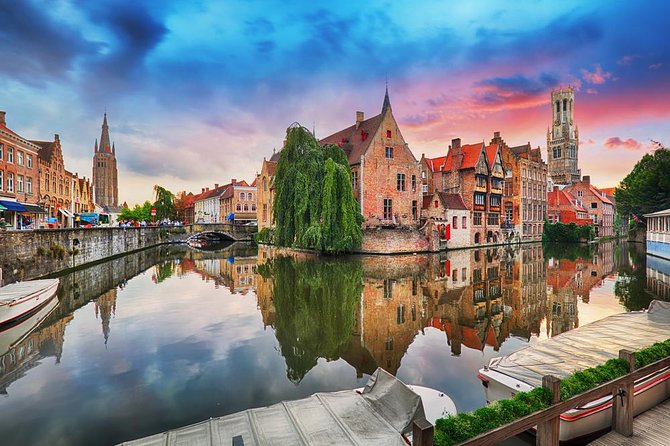
- Bruges around Minnewater: Lake of Love, plus Lovers Bridge vibes, gives you a calmer pause from the Market Square pace.
- Optional canal time in Bruges (extra cost): you can choose it, and it’s often the best angle for postcard photos.
Price and what you’re really paying for
At about $59.13 per person for an approximately 10.5-hour day, this is priced like a budget-to-midrange group tour with a guide included. That matters because you’re not just buying transport—you’re also buying a guided route through two cities, plus radios and earphones so you don’t lose the narration when you step aside for photos.
What’s not included is just as important for value. Lunch and drinks are on your own, and the Bruges boat/canal tour is organized but at an extra cost. If you treat those as optional add-ons rather than “must-haves,” the base price can feel like a bargain for first-time orientation.
If your ideal day is long, unstructured wandering, this price point may not be your best match—because you’re paying for an efficient schedule. If your ideal day is a guided highlights circuit with enough freedom to enjoy both towns, it’s a strong deal.
You can also read our reviews of more tours and experiences in Brussels.


Getting started in Brussels without wasting daylight
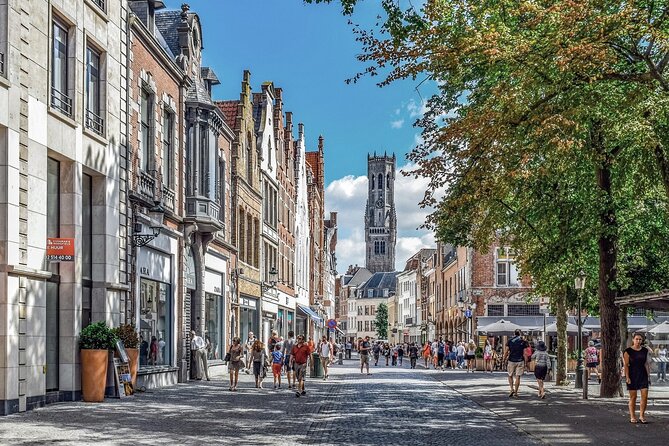
The meeting point is Bd de Berlaimont 18, 1000 Bruxelles, with a 9:00 am start time. The end is at Brussel-Centraal (Carr de l’Europe). That 9:00 departure is the difference between seeing both cities with sanity and spending the day feeling rushed.
Two practical notes from how this kind of tour runs:
- Be early. The tour notes make it clear they can’t wait indefinitely, and latecomers may miss the group.
- Bring comfortable walking shoes. You’re looking at a full day of cobblestones, and both Ghent and Bruges reward you for walking.
Also, the coach is air-conditioned, which you’ll care about in warmer months and still appreciate on a long ride.
Ghent First: St. Bavo’s Cathedral and the three-tower view
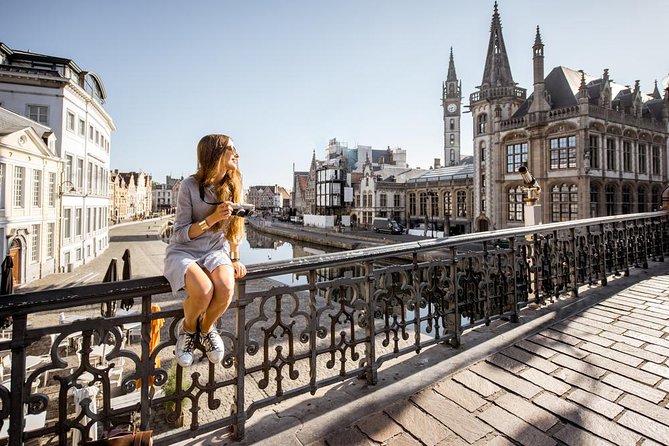
Ghent is where the day feels like it has a “story spine.” Your guide starts you at St. Bavo’s Cathedral, a tall Gothic landmark in the city center. Even if you skip interior time, the cathedral’s role is huge: it’s linked with the famous Ghent Altarpiece (noted here as part of what the cathedral is known for).
A key detail for planning: Mystic Lamb access at St. Bavo’s is not possible on Sundays. If you’re traveling on a Sunday and that particular stop matters to you, verify expectations before you go.
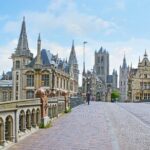
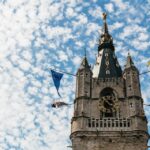
Next, you connect to Ghent’s medieval skyline. You’ll stop at landmark towers and viewpoints, including the 91-metre-tall belfry of Ghent, one of three medieval towers that overlook the old city center. The other two are St. Bavo Cathedral and St. Nicholas’ Church. This is one of those moments where you quickly understand why people call Ghent fairytale-like—stone, height, and a river city feel in one frame.
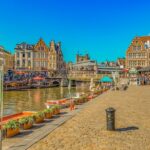
The tour also includes a stop for the historic river quays, such as Graslei on the Leie river right bank. This is the kind of stop that pays off because you can use it to orient yourself once the walking starts.
What makes this part of the tour work
Ghent is less frantic than Bruges, so it’s easier to absorb details. With the earphones/radios, you can keep moving at your own pace while still following the guide’s stories—especially useful if you want photos without falling behind.
What to watch for
Even with free time, Ghent is still a guided “hits” day. If you love museums or want lots of inside time, you may wish you had a second day. For most people doing a first visit from Brussels, though, this is a great primer.

Ghent Walking Route: Castle of the Counts, St. Nicholas, and legends on the move
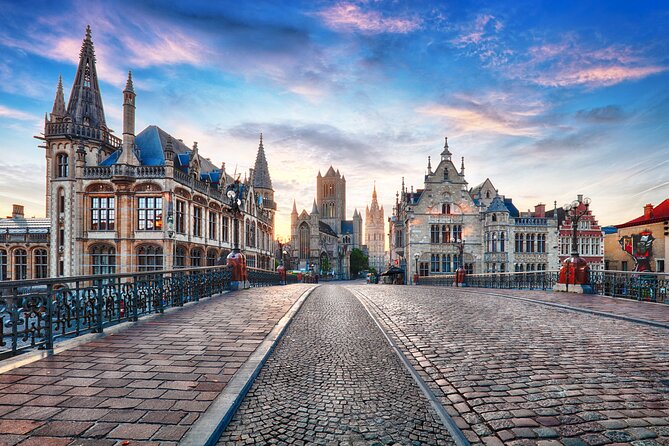
After the cathedral start, you walk through core Ghent landmarks:
- Gravensteen (the Castle of the Counts of Flanders): the current castle dates to 1180 and was home to the Counts of Flanders until 1353. Later uses included a court, prison, mint, and even a cotton factory. That mix makes the site feel more than just scenic—you see how power shifted over centuries.
- St. Nicholas’ Church: one of the oldest major landmarks in Ghent, begun in the early 13th century as a replacement for an earlier Romanesque church. The stop time is short, so focus on the exterior and the sense of age.
Your guide ties these sights to local legends and anecdotes while you move through charming streets. This is where the radio system can really help: if the group slows at a corner, you can still hear instructions and story points.
Best way to enjoy this section
Keep an eye on the route rhythm: you’ll get quick “see it now” stops, then you’ll move again. If you try to pause too long at each location, you can end up feeling like you’re always catching up. With a long day, that mental load adds up.
The drive to Bruges: countryside time that adds real separation
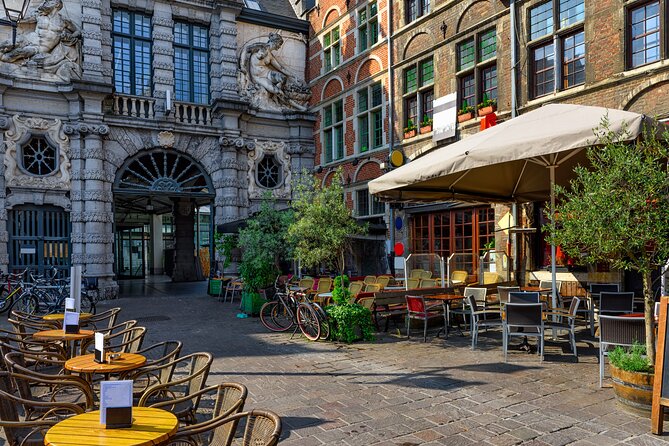
Between Ghent and Bruges, the tour shifts from city intensity to calmer rhythm with a scenic drive through Belgian and Flemish countryside. This isn’t just a transfer—it’s a useful reset. You’ll arrive in Bruges with your energy intact enough to enjoy the walking stops and the later downtime.
If you’re prone to motion sickness, the coach is spacious and air-conditioned, but you’ll still want the usual precautions.
Bruges Highlights: Minnewater, City Hall, and the Basilica of the Holy Blood
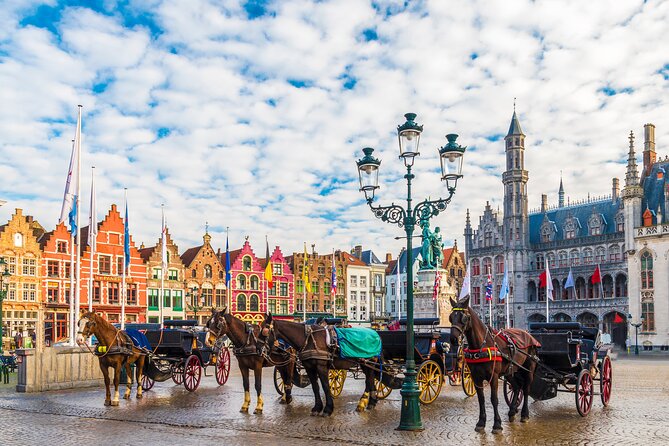
Bruges is the star of this pairing for many people. It’s compact, romantic, and built for wandering, which makes a guided plan feel less like a checklist and more like a map.
The tour includes a stroll around Minnewater (Lake of Love), plus the Lovers Bridge area. This is one of those Bruges pockets where the city’s prettiness becomes quieter. You get a short window to soak it in before returning to the more iconic squares.
After that, the route hits the big symbolic sites:
- Basilica of the Holy Blood: a Catholic basilica in Bruges housing a venerated relic called the Holy Blood, connected to the story of Thierry of Alsace bringing it from the Holy Land. The stop here is brief, but it’s a meaningful anchor for understanding why the city matters beyond chocolate and canals.
- Onze-Lieve-Vrouwekerk (Church of Our Lady): a major church with a tower at 115.6 metres, listed as the tallest structure in the city and second tallest brickwork tower in the world. Even if you don’t go in, the tower presence is what you’ll remember.
- Stadhuis (Bruges City Hall): located in Burg Square, the political center of Bruges.
Then you get time around Burg Square itself—architecture lovers often enjoy the mix of buildings here because the square shows off how civic power was staged in stone.
The biggest payoff in Bruges
You’re doing Bruges twice in one day: first through quick guided stops, then through your own roaming time. That lets you match the pace to your mood—more photos around Minnewater if you want calm, or more square-hopping if you want activity.
A practical caution
If you want to see Bruges at a slow strolling pace, you’ll have to choose where you “spend” your attention. The schedule includes multiple short guided moments, so your best strategy is to decide your priorities before you arrive.
Optional canal tour in Bruges: pay extra for the angle that photos can’t replace
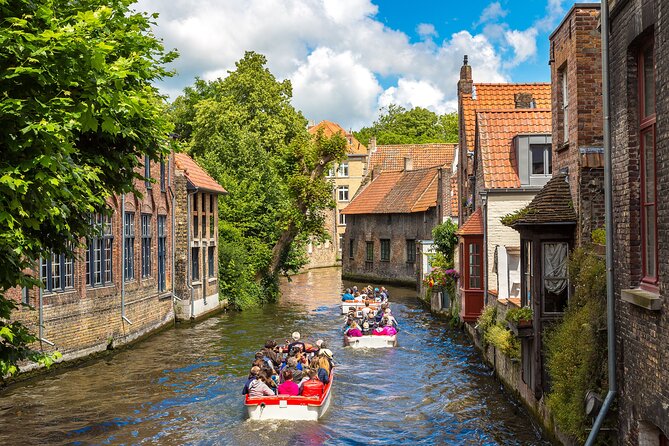
The tour offers an optional boat/canal tour at extra cost. The canal tour organization is included in the tour’s framework (but you book it through the guide on the day). This is the part that often justifies the day trip for people who care about atmosphere.
From a practical point of view, a canal boat changes your perspective instantly: you see facades at water level and get smoother lines for photos than you do from streets. If your time is tight, it’s also a good use of time because it’s built-in “rest” while still sightseeing.
Ten Wijngaarde Beguinage and the Historic Centre time
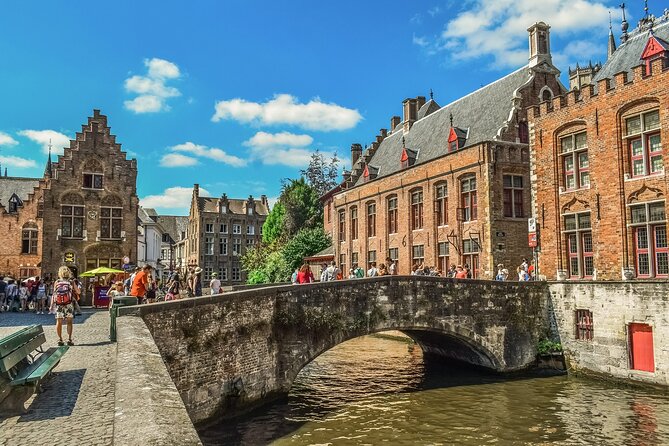
Later in Bruges, you stop at the Princely Beguinage Ten Wijngaarde, described here as the only preserved beguinage in Bruges. The tour notes that there are no more beguines living there, and it functions as a convent for Benedictines (since 1927).
Then you get Historic Centre of Brugge time with a longer stop. This is where you can wander at your own pace, buy a few souvenirs, and take photos without constantly moving to the next landmark.
How to make that free time count
Use the guided stops to learn what matters most, then use your free time to focus on the areas you like. If you’re shopping for Belgian treats or local crafts, you’ll do better if you don’t wait until the very end.
And if you’re the type who tends to get hungry easily, plan snacks. Lunch is on your own, and the day can feel compressed.
Language and group size: why it can feel smooth or slightly tiring
The tour is offered in English, and the guide commentary may be bilingual. The tour can also run in languages like Spanish and French, depending on the group. In a large group, switching narration languages can make some parts feel repetitive or mentally exhausting.
This is where you should match expectations to your comfort level. If you prefer one consistent language for the whole day, try to book with the clearest language option available and consider asking before you go. If you’re flexible, the combination of radios and short stop durations usually keeps you in the flow.
Group size also matters. The experience caps at 200 travelers, which often means a real mix of nationalities and paces. The radio/earphone system helps, and the coach ride being comfortable helps even more when you’re sitting for long stretches.
Food and lunch: budget realities in Bruges
Lunch isn’t included. The plan typically places lunch somewhere between 12:00 pm and 2:00 pm, but exact timing can shift. Bruges has plenty of cafés near the scenic areas, so the temptation to sit down fast is strong.
Here’s the practical advice I’d give you:
- Have a snack plan so you don’t end up rushing lunch.
- If you want a better meal value, don’t feel forced into the first place you notice right near the tour’s suggested area.
- If the day runs ahead or behind, having a snack reduces stress.
One of the frustrating realities of day trips is that sitting down can eat time you’d rather spend walking. You’ll likely find that most people enjoy Bruges more when lunch doesn’t turn into a long sit.
Timing, walking pace, and why this tour feels like a map, not a free-form day
This is a big day. Expect a lot of walking with cobblestones. The tour notes ask for moderate physical fitness, and that’s fair: you’re going to move a lot, even if many stops are only 10–20 minutes.
If you’re traveling with kids, strollers, or anyone with mobility limits, plan extra margins. The walking is manageable for many people, but cobbles and tight streets can slow you down.
The best-fit traveler
This tour tends to work best if you:
- Want a first visit orientation to both cities from Brussels
- Like guided context but still want downtime to roam
- Can handle a full schedule and prefer “see a lot” over “slow and deep”
So… should you book this Bruges and Ghent day trip?
If you’re short on time and want a high-efficiency way to understand why Ghent and Bruges are so famous, I’d say yes. The included guide, air-conditioned coach, and earphones/radios make it feel organized rather than chaotic, and Bruges’ scenic areas like Minnewater give you that fairytale break from nonstop sightseeing.
Hold off if your top priority is long independent time, museum-level depth, or you’re very sensitive to narration language switching. In that case, you’d probably prefer a slower, single-city plan.
If you do book, come ready to walk, be early at the meeting point, and bring a snack buffer. You’ll get more out of the day—and you’ll spend your energy on enjoying the cities instead of managing the logistics.
FAQ
What’s included in the Bruges and Ghent trip from Brussels?
You get a professional guide, an air-conditioned vehicle, and radios with earphones when necessary. The tour can also organize a boat trip in Bruges at extra cost.
Is there a canal boat tour in Bruges?
Yes. It’s an optional canal/boat tour, and it’s organized with the guide on the day of your trip (extra cost).
How long does the tour run?
It’s listed as approximately 10 hours 30 minutes.
Do I need to pay for cathedral and church entrances?
Many key stops are shown as free for admission ticket purposes in the tour notes. Entrance can still be subject to specific site rules, like the Mystic Lamb access note for Sundays.
What happens if I arrive late to the meeting point?
The tour notes say they cannot accommodate latecomers. You should arrive on time; if you think you’ll be delayed, you’d need to follow the tour’s guidance for that situation.
What time is lunch, and is it included?
Lunch is typically between 12:00 pm and 2:00 pm, but timing can change. Lunch is not included, so you pay on your own.
Where do I meet the tour?
Start location is Bd de Berlaimont 18, 1000 Bruxelles, Belgium. The tour starts at 9:00 am.
Where does the tour end?
It ends at Brussel-Centraal, Carr de l’Europe, 1000 Bruxelles, Belgium.
What language is the tour offered in?
The tour is offered in English, and guides can provide commentary in English, French and/or Spanish depending on the group.
Is the tour cancelled for rain?
No, it’s only cancelled for extreme weather such as heavy storms or floods.