REVIEW · BRUSSELS
Private Tour – Bruges and Ghent, our fairytale cities
Book on Viator →Operated by Brussels City Tours - Keolis Travel · Bookable on Viator
Two cities, one medieval day, lots of walking. This private Bruges and Ghent tour is interesting because it strings together the right sights in the right order, with a multilingual guide who explains what you’re seeing as you go. I especially love the way Ghent hits you with classic medieval power and university-city energy, then Bruges slows down into canals, churches, and quiet corners. One thing to consider: it’s a long day (about 10 hours 30 minutes), so you’ll want solid walking shoes and a moderate fitness level.
You start from Brussels at 9:00 am and spend the day in an air-conditioned vehicle with the guide using radios/earphones when needed. Most stops are free to enter, which is a nice value perk when you’re planning a full day across two cities.
In This Review
- Key things to know before you go
- Why this Brussels-to-Ghent-and-Bruges route works
- Ghent: the medieval city that feels like a living campus
- Stop 1: Het Belfort van Gent (Ghent’s Belfry view)
- Stop 2: Graslei and Korenlei (Leie River quays)
- Stop 3: St. Bavo’s Cathedral (Gothic scale and the Ghent Altarpiece)
- Stop 4: Gravensteen (a fortress that changed jobs over centuries)
- Stop 5: Saint Nicholas Church (a long-ongoing landmark)
- From Ghent to Bruges: the easy shift that saves your energy
- Bruges: churches, canals, and the art of slowing down
- Stop 6: Basilica of the Holy Blood (relic lore and a quick look)
- Stop 7: Onze-Lieve-Vrouwekerk (the tall brickwork tower angle)
- Stop 8: Stadhuis (Bruges City Hall in Burg Square)
- Stop 9: Minnewater Lake and Lovers’ Bridge (romantic without trying too hard)
- Stop 10: Burg Square (time for architecture watching)
- Stop 11: Princely Beguinage Ten Wijngaarde (a calm, lived-in kind of history)
- Stop 12: Historic Centre of Brugge (with optional canal tour time)
- Price and value: what $57 gets you in real terms
- Pacing, comfort, and what to bring for a 10.5-hour day
- Who this tour fits best
- Should you book this Bruges and Ghent private tour?
- FAQ
- What language options do you have for this tour?
- Is lunch included?
- Will I have free time during the day?
- Can I book the Bruges canal tour in advance?
- Do you offer pick-ups from hotels?
- Can I take luggage with me?
- Do I need to bring my passport?
- What happens if it rains?
- Are pets allowed on board the coach?
Key things to know before you go
- A true private format: only your group rides and walks together.
- Free entry at most major stops: you don’t need to budget for tickets at the highlights listed.
- A guide who handles the story: you choose English, French, or Spanish and get on-the-spot explanations.
- Ghent first, Bruges second: you get a full medieval contrast in one day.
- Optional Bruges canal time: a 30-minute canal tour can be arranged with your guide on the day.
- Sunday has one limitation: access to the Mystic Lamb at St Bavo’s Cathedral isn’t possible on Sundays.
Why this Brussels-to-Ghent-and-Bruges route works
Trying to self-plan Ghent and Bruges in one day can turn into a logistics headache. This tour fixes that for you with one guided day, one vehicle, and a clear sight order. You’re not just seeing big buildings—you’re also learning how each place functions in the story of the cities, from civic towers to castle power to religious art.
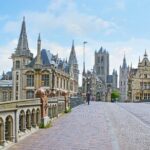
The pacing is built for motion. You’ll move through city centers on foot at several points, which is exactly how you get the best photos: belfries towering over squares, rivers framing viewpoints, and canals leading you from one landmark to the next. If you like your travel days to have structure but still include some breathing room, this style fits.
You can also read our reviews of more private tours in Brussels


Ghent: the medieval city that feels like a living campus
Ghent often surprises people because it doesn’t feel frozen. You get the medieval look—stone, steeples, old streets—plus a youthful presence tied to the university scene and the local pub culture. That mix matters because it changes how the city feels at street level: you’re not only sightseeing, you’re watching real daily life unfold around historic walls.
You begin with a classic skyline anchor and then move through the riverfront, major church spaces, and a fortress site that shows how power worked here.
Stop 1: Het Belfort van Gent (Ghent’s Belfry view)
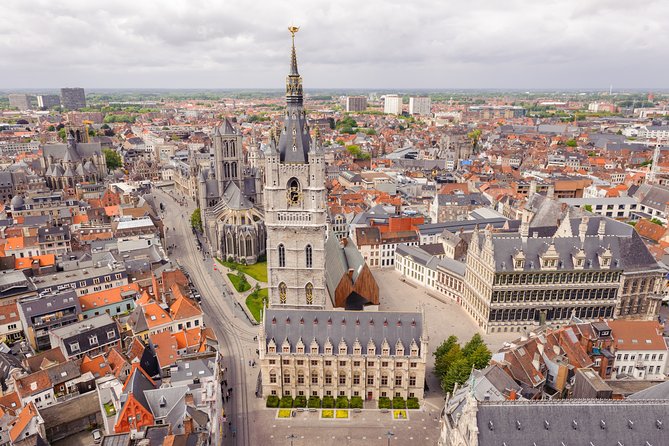
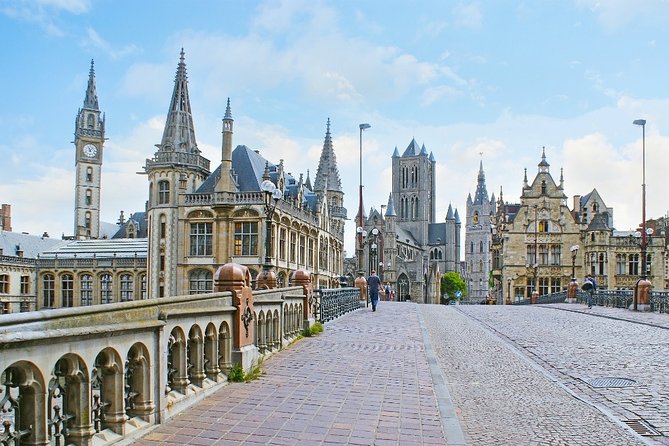
Your first major hit is the Het Belfort van Gent, a 91-metre tower that helps define the medieval skyline. It’s one of three towers that oversee the old center, and that “look down on the city” idea is key to understanding medieval municipal power.
Even without paying for a ticket here, it’s still a great orientation stop. Standing in the area gives you context for what you’ll see next: churches, quays, and the medieval layout all snap into place once you understand where the city’s watchful towers are.
Stop 2: Graslei and Korenlei (Leie River quays)
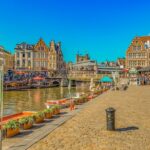
Next you walk to Graslei and Korenlei, the famous quay area along the Leie River. This is the kind of place where the city’s age shows in details: the waterfront line, the historic-facing façades, and the river acting like a spine through town.
Practical tip: bring your “slow steps” mindset here. Even a short stop lets you catch different angles depending on where you stand relative to the water. It’s also a good moment to pause and reset before you move into cathedral and castle territory.
Stop 3: St. Bavo’s Cathedral (Gothic scale and the Ghent Altarpiece)
Then comes the big one: St. Bavo’s Cathedral, an 89-metre Gothic cathedral and the home base for the Ghent diocese. The standout art connection is the Ghent Altarpiece, which is a major reason people come here.
Here’s the consideration: the tour notes that access to the Mystic Lamb at St Bavo’s Cathedral isn’t possible on Sundays. So if your dates include Sunday, you’ll still enjoy the cathedral space and its importance, but plan expectations around that specific attraction.
If you care about art history but also want it explained clearly, this is where the guide helps you get more out of the visit than a quick walk-by.




Stop 4: Gravensteen (a fortress that changed jobs over centuries)
After the cathedral, you switch gears to Gravensteen, a castle dating to around 1180. It’s interesting because it wasn’t only a residence; it later worked as a court, prison, mint, and even a cotton factory. That “repurposed over time” theme makes the site feel less like a museum and more like a living piece of city infrastructure.
Even if you don’t spend ages inside, the setting does the job: you get that fortress feel and a clear sense of why rulers needed strongholds in this part of Flanders.
Stop 5: Saint Nicholas Church (a long-ongoing landmark)
You finish the Ghent cluster with Saint Nicholas Church, among the oldest prominent landmarks in the city. The church’s story starts in the early 13th century as a replacement for an earlier Romanesque building. It’s one of those places where the timeline matters—this isn’t a single-era monument, it’s part of a longer rebuilding tradition.
A nice move here is to think about continuity. You’re moving from belfry to cathedral to castle to church, and each stop shows a different side of what Ghent valued: civic oversight, religious influence, territorial power, and community landmark presence.
From Ghent to Bruges: the easy shift that saves your energy
Once Ghent’s landmarks are in your head, the ride to Bruges becomes part of the fun instead of wasted time. You’re on an air-conditioned coach, which matters because this is still a full-day itinerary.
You also get a multilingual guide option. If you choose English, French, or Spanish, the point is the same: you’re not just reading plaques. You’re getting practical context while you’re still close enough to the sights to connect it.
Bruges: churches, canals, and the art of slowing down
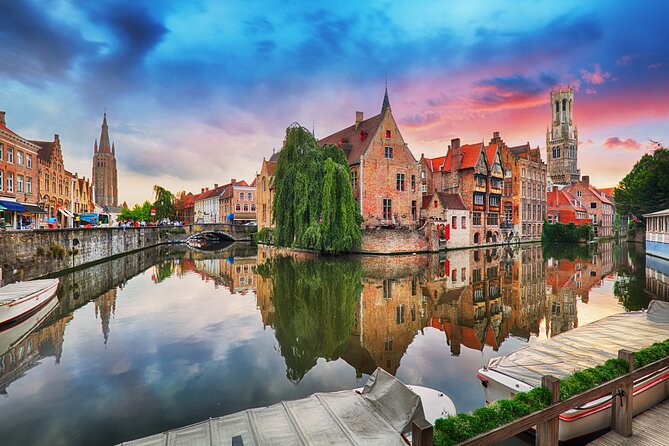
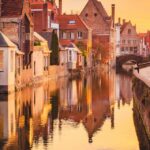
Bruges can feel overwhelming if you don’t have a route. This tour gives you one, so you spend less time hunting and more time actually looking. You’ll pass iconic church forms, civic architecture, and romantic spots like the Lake of Love area.
Just a heads-up: Bruges is popular. Even if your day isn’t peak season, you’ll want to keep your expectations realistic about crowds around the most famous viewpoints.
Stop 6: Basilica of the Holy Blood (relic lore and a quick look)
In Bruges, you start with the Basilica of the Holy Blood. The tour frames it around a venerated relic allegedly connected to the Holy Land, with the story tied to Thierry of Alsace. Even if you’re not chasing religious relics, the basilica is worth a quick stop because of its role in how Bruges built its identity around spiritual importance.
The stop is short (about 10 minutes), so treat it like a landmark checkpoint: see it, absorb the context from the guide, then move on before you lose the rhythm of the day.
Stop 7: Onze-Lieve-Vrouwekerk (the tall brickwork tower angle)
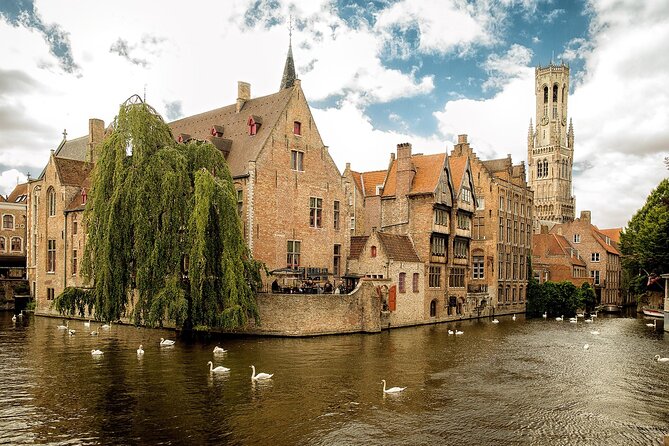
Next is Onze-Lieve-Vrouwekerk, also known as the Church of Our Lady. The tower reaches 115.6 metres, and the tour notes it remains the tallest structure in Bruges and second tallest brickwork tower in the world.
This is a great stop for photo lovers, because the tower is so visually commanding that it changes how you frame streets and squares nearby. It’s also a place where you can feel the medieval city-building ambition—Bruges wasn’t just trading goods; it invested in architecture meant to signal status.
Stop 8: Stadhuis (Bruges City Hall in Burg Square)
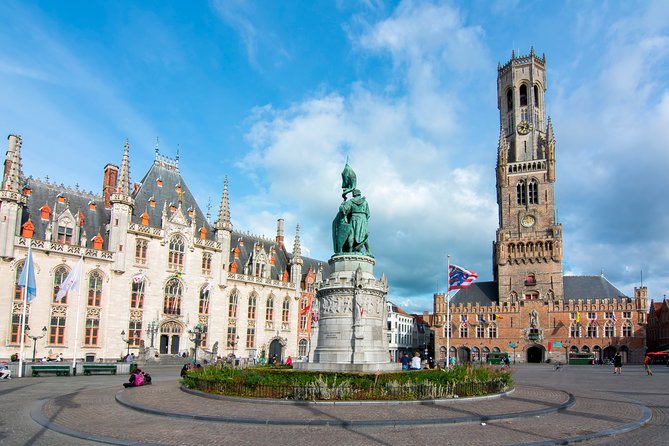
Then you hit the Stadhuis, the Bruges City Hall, located in Burg Square. This square is the political center area, tied to the former fortified castle location. So you’re not only looking at pretty buildings—you’re standing in a place that historically mattered for governance.
If you like civic history (not just churches), this stop clicks. The architecture mix in the square makes it easier to understand how administrative power sat alongside everyday life.
Stop 9: Minnewater Lake and Lovers’ Bridge (romantic without trying too hard)
After civic power, you get a breather: Minnewater Lake, often called the Lake of Love, plus the Lovers’ Bridge. The tour notes it’s a romantic pocket within the city boundaries. In practical terms, this is a good moment to slow down, grab a photo, and mentally reset.
Don’t overthink it. Even a short pause here helps you appreciate Bruges more later, because the city can feel like non-stop postcard angles. This stop gives you a change of pace.
Stop 10: Burg Square (time for architecture watching)
Burg Square isn’t just a one-and-done stop. The itinerary gives you time again here, about 20 minutes, so you can walk the edges and see how buildings relate to one another in the square layout.
Architecture lovers will enjoy this because Bruges does that thing where different eras coexist visually. You’re able to compare styles in the same small area, which is easier when you’re not rushing.
Stop 11: Princely Beguinage Ten Wijngaarde (a calm, lived-in kind of history)
Then comes a quieter Bruges highlight: the Princely Beguinage Ten Wijngaarde, noted as the only preserved beguinage in the city. The tour also explains there are no longer beguines living there, but since 1927 it functions as a convent for Benedictines.
This stop is meaningful because it shifts the focus away from monumental towers and toward a community structure. Beguinages are one of those European history topics that sound like a niche footnote until you see the setting. Here, it feels like a pause from the city noise without leaving the historic core.
Stop 12: Historic Centre of Brugge (with optional canal tour time)
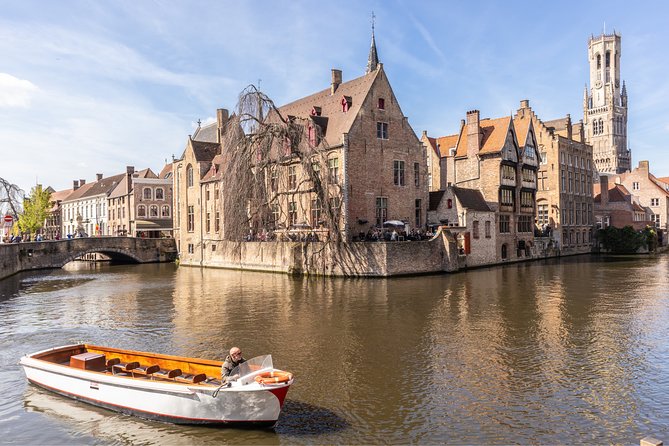
Finally, you’re in the Historic Centre of Brugge, where you get time for an optional canal tour. The canal tour is not included and is listed as about 30 minutes. The important practical detail is that you can only book it with your guide on the day of the tour.
If you’ve never done a Bruges canal ride, this is often the most direct way to see why locals built the city around waterways. Just remember: canal time is extra time. You’ll want to decide based on your energy level and the kind of photos you want.
Price and value: what $57 gets you in real terms
At the listed $57 price, the value comes from three things working together:
1) Transportation + guide for a full day
You’re covering two cities with a single coach ride structure, which is exactly what you’d struggle to coordinate on your own when you include museum-style stops and the walking between them.
2) A lot of free admissions listed
The stops on the day’s route are noted as free (including tower/church/castle highlights in the itinerary). That cuts the usual ticket costs that add up fast in Western Europe.
3) Multilingual interpretation in the moment
The guide is professional and available in English, French, or Spanish. Even if you’re not a museum person, it changes how you experience landmarks like the Ghent Altarpiece connection at St. Bavo’s and the civic-tower layout tied to the belfry.
One caution on value: this is not a food tour. Food and drinks aren’t included, so you’ll spend a bit extra during the day. Also, while the major stops are quick, the day still averages a lot of walking. Bring what you need so you don’t lose the day to blisters.
Pacing, comfort, and what to bring for a 10.5-hour day
This is a full itinerary, so plan your body like it’s part of the travel plan.
- Wear comfortable walking shoes. The tour explicitly recommends them, and the stop-to-stop rhythm means you’ll feel every step.
- Bring layers. Even if the forecast looks fine, weather in Belgium can shift. The tour notes you might want rain gear.
- Moderate fitness level is expected. If you know you struggle with long walking days, this may be tough.
- Bring some cash. The tour advises having cash available.
Also, if you’re traveling with luggage, you’re in luck here. The tour says you can take luggage, and it travels on large, comfortable tourism coaches. That’s helpful for people who start the day outside Brussels or who don’t want to drag everything on foot.
Who this tour fits best
This tour is a smart choice if you want:
- a guided way to see the must-see Ghent and Bruges highlights in one day,
- clear explanations as you walk (not just audio after the fact),
- free-entry stops that keep your budget controlled.
It’s especially good for first-timers who want the big icons—belfry views, cathedral scale, a fortress site, and Bruges church-and-canal charm—without needing to research opening times stop-by-stop.
From the guide perspective, the names that come up in feedback include Stephan and Andrea. Their common thread is friendliness and making the day feel easy to follow, plus recommendations for what to do with your free time.
Should you book this Bruges and Ghent private tour?
Yes, if your goal is a structured, guided day that hits the famous landmarks and still leaves room to enjoy the cities rather than fight your schedule. The blend of private-group comfort, a multilingual local guide, and multiple free-entry stops makes it hard to beat for a day-trip format.
I’d book with caution if you:
- dislike long walking days,
- need step-free access (the tour isn’t recommended for people with difficulty walking),
- or are traveling on a Sunday, since access to the Mystic Lamb at St Bavo’s Cathedral isn’t possible then.
If you like day trips that feel organized but not sterile, this is one of the better ways to get both Ghent and Bruges into a single day from Brussels.
FAQ
What language options do you have for this tour?
The guide can provide the tour in English, French, or Spanish.
Is lunch included?
No, lunch isn’t included on this tour (the FAQ notes lunch is not included except on the Flanders Fields tour).
Will I have free time during the day?
Yes. The tour includes free time on every excursion, except for tours within Brussels. The amount can range from 45 minutes to 3 hours depending on the excursion, and you can ask your guide on the day.
Can I book the Bruges canal tour in advance?
No. The canal tour in Bruges can only be booked with your guide on the day of your trip.
Do you offer pick-ups from hotels?
No. The meeting point is found on your voucher, and it’s near public transportation.
Can I take luggage with me?
Yes. The tour travels in large, comfortable tourism coaches, and luggage can be taken.
Do I need to bring my passport?
Border controls aren’t expected once you are in the Schengen Area. It’s still advised to carry an ID with you at all times.
What happens if it rains?
The tour isn’t cancelled for normal rain. It’s only cancelled in cases of extreme weather like heavy storms or floods.
Are pets allowed on board the coach?
No, pets aren’t allowed on board.