REVIEW · BRUSSELS
Bruges and Ghent Day Trip from Brussels
Book on Viator →Operated by Buendía · Bookable on Viator
Bruges and Ghent in one day sounds intense, because it is. This day trip turns your Brussels morning into two guided walks, plus short photo-and-snack stops, all wrapped in A/C round-trip transport. You’ll get a structured look at Medieval Bruges from Minnewater to Grote Markt, then continue to Ghent for big hits like Saint Bavo’s Cathedral and the Gravensteen-area river views.
I like that you don’t spend the whole day playing transit roulette. You get professional English guidance and real time to wander on your own in both cities, not just rushed line-walking. One drawback to keep in mind: it’s a lot of steps in a short window, and the bus doesn’t always drop you right at the front door of each stop.
In This Review
- Key points to know before you go
- Brussels to Bruges and Ghent: what the 10-hour rhythm is really like
- Meeting at Carrefour de l’Europe and staying on schedule
- Bruges in one guided sweep: from Minnewater to Grote Markt
- Bruges free time strategy: how to not waste your 90 minutes
- Ghent walking tour: Town Hall, Belfry dragon, and Van Eyck at Saint Bavo
- Ghent free time and pickup: what to expect after the guided walk
- Price and value: is $56.72 worth it?
- Headphones, radio-guides, and communication in crowds
- Who this Bruges and Ghent day trip suits best
- Should you book this Bruges and Ghent day trip?
- FAQ
- FAQ
- Is the tour guided in English?
- How long is the day trip?
- What time does the tour start in Brussels?
- Is food included?
- Do I need headphones?
- Can I cancel and get a refund?
Key points to know before you go
- Two cities, two guided walks: Bruges first, then Ghent, both with local storytelling
- Short, efficient stops that are designed for photos and quick context
- One real indoor moment: Saint Bavo’s Cathedral in Ghent (inside and out)
- Free time that can feel tight if you want a long sit-down lunch in Bruges
- Headphones might be needed on some days via radio guide rules
- Crammed by nature: cobblestones + crowding mean good shoes matter
Brussels to Bruges and Ghent: what the 10-hour rhythm is really like
This is a classic “see a lot without doing all the planning” tour. You start at 8:30 am at Carrefour de l’Europe in central Brussels, then you’re on the road for the bulk of your day. Expect a steady rhythm: bus travel, quick guided stops, a chunk of free time, then more walking.
Bruges comes first. The pace is built for orientation: you get key landmarks and enough story to understand why they matter. Ghent is next, and it often feels easier because the center is compact and the riverfront views pull you along.
You should mentally plan for a long day on your feet. Even when each stop is short, the cumulative walking adds up fast. If you’re the type who needs frequent breaks, this might not feel relaxing.
You can also read our reviews of more tours and experiences in Brussels

Meeting at Carrefour de l’Europe and staying on schedule
The meeting point is Carrefour de l’Europe, and the tour ends back there. That matters because it anchors the whole day: you always know where the “home base” is, even if you’re not dropped directly at the first street corner of Bruges or Ghent.
There’s also a practical bathroom stop early in Bruges at Bargeplein (Katelijnparking). The guide runs it like a mini operation: you’ll get a short window to go, and the guide tells you exactly when to be back. This kind of clarity is a big deal on a day trip like this.
One more real-world note: some buses park a bit away from the exact tour spots, which means an extra walk both in Bruges and Ghent. It’s not a dealbreaker, but you should build in a little buffer for pickup and regrouping. Wear shoes you can handle on cobblestones, and don’t count on being able to stop mid-walk for long browsing.
Bruges in one guided sweep: from Minnewater to Grote Markt
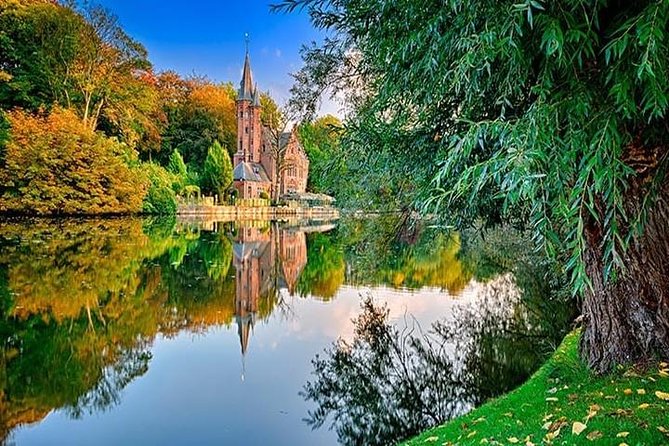
Bruges on this tour is designed like a guided highlights circuit. You’ll move from scenic water and quiet courtyards to beer lore, medieval streets, and major squares—then you’ll earn free time to explore at your own pace.
Here’s how the flow works on the ground:
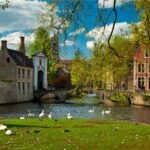
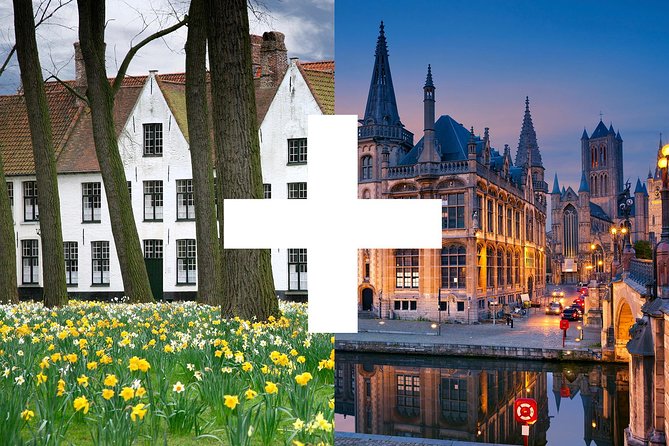
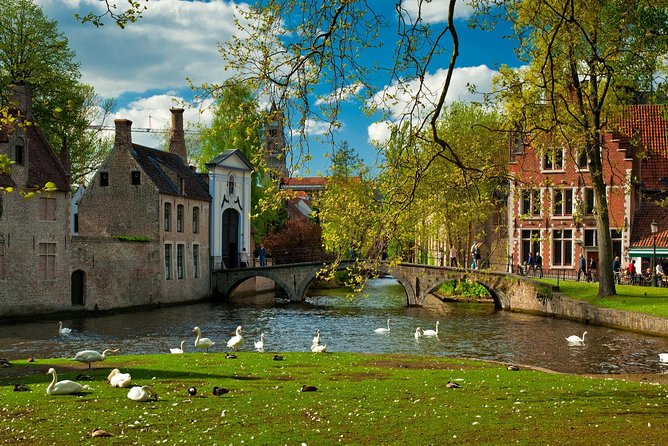
- Minnewater (Lake of Love): This is your calm start. You’ll see the lake and get the story behind why the place is tied to romance and local legend.
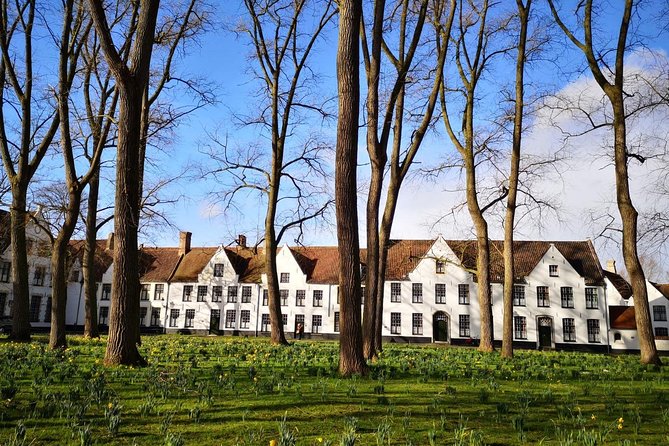
- Begijnhof (founded 1245): This is one of the most emotionally interesting stops, even if it’s only a short visit. You’ll hear how this community of women helped preserve a long social tradition in Bruges.
- Chocolalino artisan chocolate stop: This is brief, but it’s a practical taste moment. The guide also gives tips for spotting handmade chocolate versus more industrial styles—useful if you later go shopping with a sharper eye.
- Walplein and Stoofstraat: These are story-heavy stops. You’ll learn about beer history at Walplein, then at Stoofstraat you’ll get guidance on how to identify original medieval houses. That turns “pretty street” into “you can actually read the architecture.”
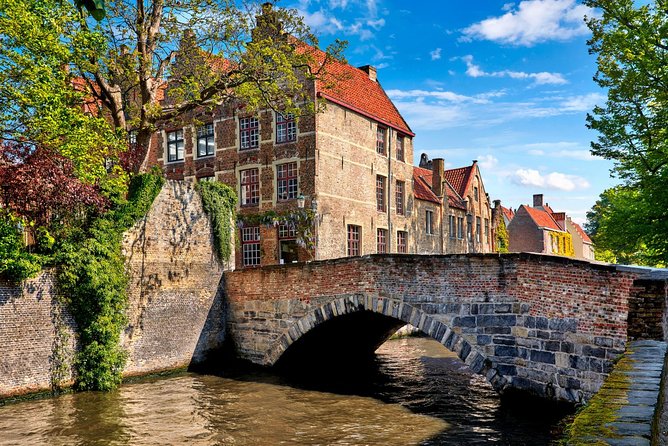
- Photo moment at the little bridge: A quick breather for pictures—because Bruges is built for postcards.
- Saint John’s Hospital and Onze-Lieve-Vrouwekerk area: You’ll learn how medieval healthcare worked, then see the church area with a key art curiosity: the Madonna and Child in white marble by Michelangelo is inside.
- Gruuthusemuseum frontage and Boniface Bridge legend: Another mix of power-and-plot. The Gruuthuse family stop connects you to the city’s elite story, then Boniface Bridge gives you the folklore angle.
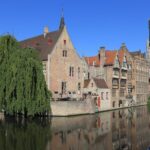
- Rozenhoedkaai (Quai du Rosaire): This is the most photographed Bruges riverside spot. Even with limited time, you’ll get why people come here so often.
- Huidenvettersplein (Tanners Square): A darker but fascinating stop. You’ll hear how tanners worked and what that meant for medieval life.
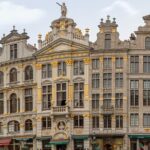
- Burg Square and The Markt: You’ll end the Bruges guided stretch at the big civic stage. Burg Square sets the Gothic backdrop, then The Markt (Grote Markt) wraps it up with practical tips—where to shop for traditional chocolate and where to eat.
The tour then gives you about 1.5 hours of free time in Bruges (timing can shift with the group pace and traffic). This is the part you’ll feel most. If you want a proper sit-down lunch, you’ll need to be efficient: choose one nearby spot quickly, not after wandering for 40 minutes.
Bruges free time strategy: how to not waste your 90 minutes
This tour does give you freedom, but it’s still a day trip. Your best move is to pick your priorities before the free-time clock starts.
If you want to eat: aim for something close to the Markt area. Bruges is beautiful, but walking back and forth between “I’ll just look here” and “wait, where’s the bus?” eats time. One extra caution from real experience: getting back to the bus can involve more walking than you expect, especially if you were dropped a bit away earlier.
If you want chocolate: use your guided tips. Distinguish handmade from mass-produced by looking for details the guide points out, then buy from a place that matches your style—tasting first beats guessing later.
If you want photos: go to the Rozenhoedkaai area while you still have daylight and energy. The best shots are often about timing, not just angles.
Ghent walking tour: Town Hall, Belfry dragon, and Van Eyck at Saint Bavo
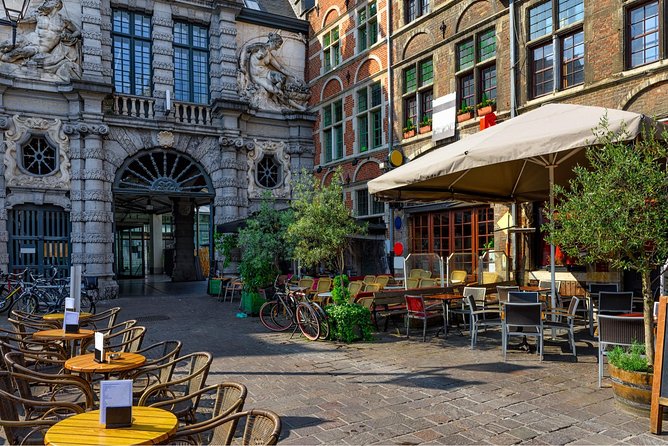
After Bruges, the bus heads to Ghent and you start with a guided walk in the center. Ghent can feel like a different mood: still medieval, but with a layout that often makes it easier to move as a group.
You’ll start at the Ghent Town Hall (Stadhuis) and get a quick explanation of how the building’s architecture evolved. Then comes the Het Belfort van Gent where you’ll hear the tower’s emblematic history, including the dragon story.
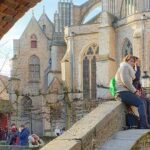
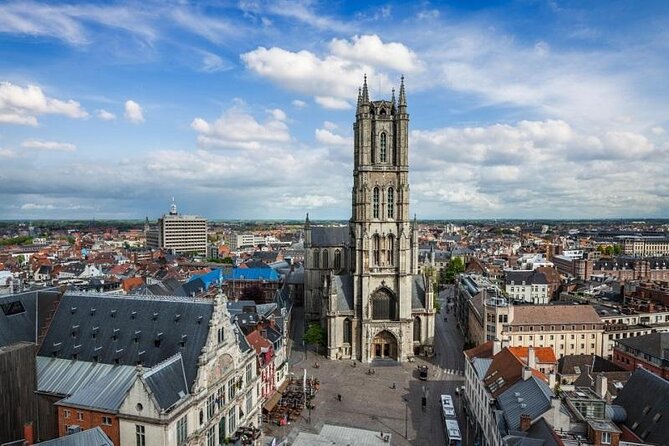
The biggest anchor is Saint Bavo’s Cathedral (inside and out). You’ll see both exterior and interior, and you’ll learn about the painting that’s famous as the Adoration of the Mystic Lamb by the Van Eyck brothers. With a longer stop here (25 minutes), it’s the clearest chance on the itinerary to slow down and actually take in something indoors.
Other stops keep the medieval theme going:
- Saint Nicholas Church: a quick note that Belgian churches host concerts and events
- Masons’ Guild Hall frontage: what guild houses are, plus what makes this one distinct
- Korenmarkt: a story about the building where the post office used to be
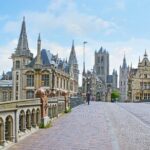
- Saint Michael’s Bridge: for photos and a tower story
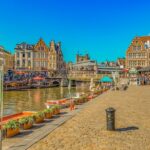
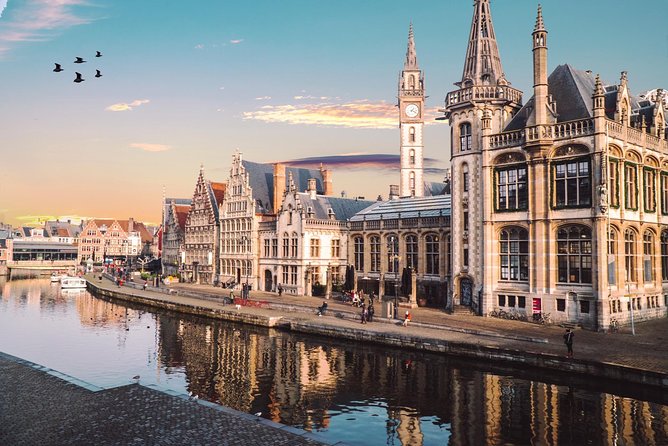
- Graslei and Korenlei along the Lys riverbank: classic postcard river views, plus context about key buildings lining the water
Then you’ll reach OOOST (Great Butchers’), a 15th-century covered market. After that, there’s a short market stall stop where you’ll hear about Ghent’s famous candy, cuberdon. The tour closes at Sint-Veerleplein, with tips for beer and souvenirs, plus the reminder about when and where you need to be for the bus.



Ghent free time and pickup: what to expect after the guided walk
You get about 1 hour of free time in Ghent. Ghent is often easier to roam in than Bruges because the center is compact and the riverfront pulls you in naturally. Still, one hour can go fast once you factor in crowd flow and getting oriented after the group breaks apart.
Use your guided walk to pick one area to return to. Many people gravitate to the Graslei/Korenlei waterfront for photos, then drift into nearby lanes for cafés and shops. If you’re hungry, treat this hour like a sprint: choose a direction and stick to it.
As a practical tip: when the guide gives bus-return instructions, listen closely and take a quick photo of the meetup spot if you can. On a day trip, the difference between easy and stressful is often just a few minutes of confusion.
Price and value: is $56.72 worth it?
For about $56.72, you’re paying for two guided walking tours, English interpretation, and round-trip transport with A/C. You’re also getting a planned structure that saves time versus trying to coordinate Bruges and Ghent on your own.
Here’s where the value feels strongest:
- You want the highlights of both UNESCO cities without researching a route
- You like history and stories tied to specific streets and squares
- You’d rather spend your energy on sightseeing than on transit logistics and scheduling
Where it can feel less worth it:
- If you expect a slow, museum-style day with lots of long indoor time, this itinerary is not built for that. Bruges especially moves quickly.
- If you hate group pacing or you’re sensitive to crowded streets, you might find the walking heavy.
In plain terms: this is a smart value if you want a well-organized overview plus enough free time to taste and shop. It’s less ideal if you want a deep, unhurried exploration of just one city.
Headphones, radio-guides, and communication in crowds
Belgian regulations sometimes require radio-guides. On those days, you might hear explanations through a handheld system rather than just plain talking. You can use your own wired headphones with a 3.5 mm jack (non-wireless), or you can buy disposable ones for €1.
This matters because city streets get noisy fast. Even if the guide is great, bad audio can ruin the moment. If you’re the type who needs clear sound to enjoy commentary, bring your own wired headphones if you can. If you don’t, buying disposables is an easy fix.
Who this Bruges and Ghent day trip suits best
This tour is a strong match if you:
- Want a high-effort, high-coverage day with guided context
- Like seeing both cities, even if you can’t stay overnight
- Enjoy chocolate, beer lore, and photo stops tied to real landmarks
- Prefer to follow a plan when you’d rather not think about transit
It may be frustrating if you:
- Struggle with long walking stretches on cobblestones
- Need lots of quiet time or very flexible pacing
- Plan to do a long sit-down lunch in Bruges without being strategic
Good shoes are not optional. On a cold or rainy day, it’s also smart to bring a jacket you can move in and a small rain layer.
Should you book this Bruges and Ghent day trip?
Yes, if your goal is to see the big moments of both UNESCO cities in one organized day. I like that the tour mixes short guided stops (so you learn quickly) with free time in both Bruges and Ghent (so you don’t feel trapped). The best part is how the guide turns places you’ve seen in photos into streets you can understand—especially the Bruges medieval architecture cues and Ghent’s cathedral and riverfront stories.
Skip it or choose a different plan if you want a slow, museum-heavy day or if walking is a real challenge for you. If you do book, come prepared: wired headphones, comfortable shoes, and a clear idea of what you want to eat or buy during your free time.
FAQ
FAQ
Is the tour guided in English?
Yes. The tour is offered in English with a professional guide.
How long is the day trip?
It lasts about 10 hours on average.
What time does the tour start in Brussels?
The start time is 8:30 am, departing from Carrefour de l’Europe.
Is food included?
No. Food and drinks are not included, but the guide can point you to good options.
Do I need headphones?
Headphones are sometimes required because Belgian regulations can call for radio-guides on certain occasions. You can use wired headphones with a 3.5 mm jack, or buy disposable headphones for €1.
Can I cancel and get a refund?
Yes. You can cancel for a full refund up to 24 hours before the experience start time.