REVIEW · BRUSSELS
Luxembourg and Dinant Day Trip from Brussels
Book on Viator →Operated by Brussels City Tours - Keolis Travel · Bookable on Viator
Luxembourg and Dinant are a sharp contrast in one day. I like how this trip gives you guided context in Luxembourg, then lets you wander in the Old Town at your own pace. My only real caution is the day is long and can feel rushed, especially if you end up with a less smooth bilingual audio setup or a packed bus.
You start early (8:30 am) and spend a big chunk of the day on the road through the Ardennes region. I think the value is strongest for people who want a first taste of Luxembourg’s palace-and-cathedral story plus Dinant’s river views, without planning anything yourself. If you hate long coach days, plan for sore legs and bring snacks or a light plan for lunch.
In This Review
- Key Things You’ll Notice on This Trip
- Luxembourg and Dinant in One Long Day
- Price and What $79.30 Really Covers
- From Brussels by Coach: Time, Comfort, and Why It Matters
- Luxembourg City Guided Walk: Palace, Notre-Dame, and Neumünster
- The Grand Ducal Palace area (what you’re actually looking at)
- Cathedrale Notre-Dame: baroque-and-Gothic styling in one place
- How long are the stop pieces?
- Kirchberg District Windows: European Union Buildings Without the Stress
- Old Town Free Time: Use It for Photos and a Slow Stroll
- Dinant on the Meuse: Cathedral Views and the Citadelle Reality Check
- The citadelle: funicular vs steps
- Time in Dinant can feel tight
- Maison de Monsieur Sax: Worth It, But Don’t Expect a Full Day Museum
- Timing and Bilingual Audio: How to Avoid the Most Common Frustrations
- Who This Day Trip Fits Best
- Should You Book This Luxembourg and Dinant Day Trip?
- FAQ
- How long is the Brussels to Luxembourg and Dinant day trip?
- What time does the tour start?
- Where do I meet the group?
- What language is the tour offered in?
- Is a guided portion included in Luxembourg and Dinant?
- Is lunch included?
- Are entrance fees included?
- Is the ticket mobile?
- Do I need a passport for this trip?
- Do you cancel if it rains?
Key Things You’ll Notice on This Trip
- A big guided block in Luxembourg City covering major landmarks, plus free time right afterward
- Bilingual-style commentary (often English with another language), which can slow the pace of stops
- Kirchberg district sights visible from the modern side of Luxembourg, including European institutions area
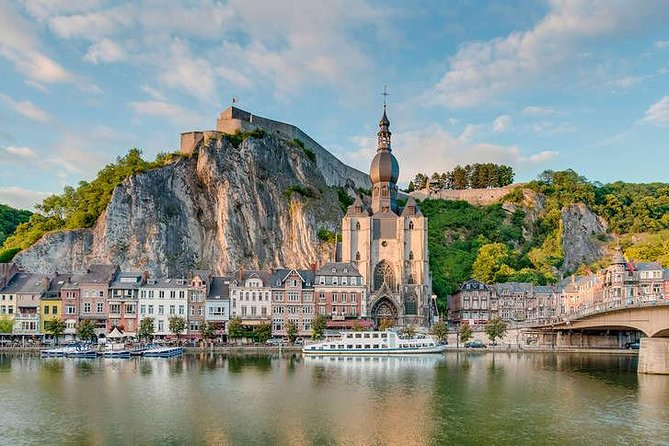
- Dinant on the Meuse with cathedral-and-citadelle viewpoints and time for photos
- Radios/earphones included, which helps on busy walking segments
- Entrance fees and lunch are not included, so budget a little extra day-of
Luxembourg and Dinant in One Long Day
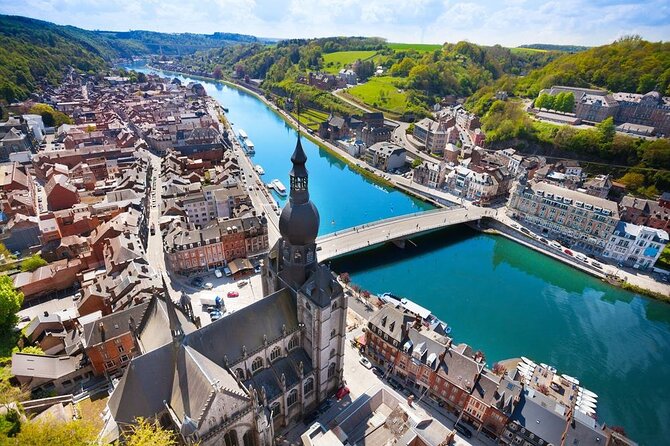
This is the kind of trip that makes sense if you want two places with very different vibes, but you only have a day. Luxembourg City gives you architecture and state-history context, while Dinant is all about the river setting, Gothic angles, and hilltop views.
The pacing is the main trade-off. You’ll do guided stops, then get time to explore on your own, then repeat the pattern again in Dinant—so it’s not a slow, linger-all-day experience.
You can also read our reviews of more tours and experiences in Brussels



Price and What $79.30 Really Covers
At $79.30 per person, you’re mostly paying for the structure: coach transportation, a professional guide, and radios + earphones. That combo matters on a day like this because the distances are real, and the walking blocks can be spread out.
What’s not included is where your budget will quietly grow. Entrance fees are at your own expense, and lunch is also not included (so plan to pay for it in Luxembourg during the free time window).
If you compare this to doing two separate day trips—or renting a car—you’re likely getting good value for a first visit. Just don’t expect it to be a “see everything up close” pass. Think highlights plus time to breathe.
From Brussels by Coach: Time, Comfort, and Why It Matters
The drive from Brussels to Luxembourg takes about 3 hours. Add stops, photo moments, and timing through Dinant, and you’re looking at a full 12-hour day (roughly), with a mid-evening return.
The coach itself is advertised as air-conditioned, but comfort can still be hit-or-miss. Some people flagged cramped seating and not much legroom, so bring your “long-day kit”: a scarf or light layer for earphones, a small cushion if you need one, and water.
One more thing: buses often run on schedule, and latecomers can miss the group. So show up early at the meeting point on Bd de Berlaimont 18, 1000 Bruxelles (start time is 8:30 am).
Luxembourg City Guided Walk: Palace, Notre-Dame, and Neumünster
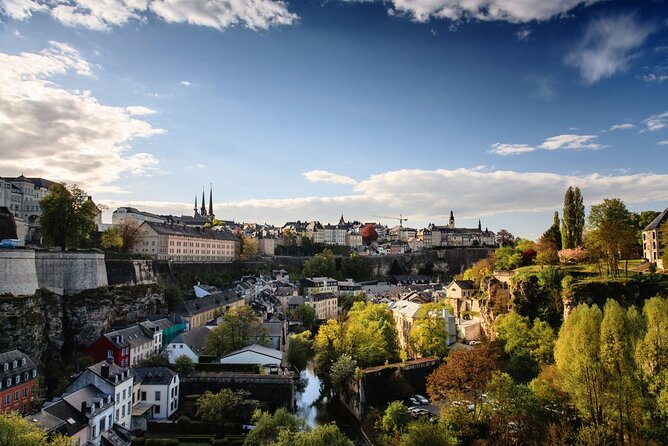
Luxembourg City is what anchors the day, and you get a real guided block rather than just passing by. Your first stop is Luxembourg City sightseeing with a focus on the city’s power and design mix.
The Grand Ducal Palace area (what you’re actually looking at)
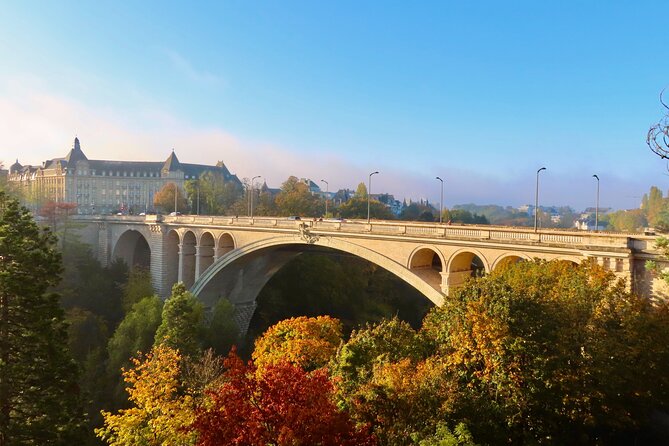
You pass the Grand Ducal Palace, the official residence of the Grand Duke. The building’s different parts reflect different eras—Renaissance styling in sections, Baroque/Renaissance blending in others, and later elements tied to the Chamber of Deputies.
Even if you don’t go inside, this is worth it because the palace story gives you a “who rules here and how” foundation before you wander.

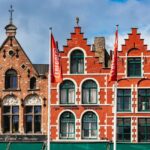




Cathedrale Notre-Dame: baroque-and-Gothic styling in one place
Next is Cathedrale Notre-Dame, described as a former Jesuit church from the 17th century with Baroque and Renaissance styling plus Gothic elements. You’ll hear about a forum dedicated to the Grand Ducal family on the side of the nave.
You also visit Neimenster (Neumünster Abbey) in the Grund district. It’s a public meeting place and cultural center now, but the story stretches back: the original Benedictine abbey was destroyed in 1542, and monks rebuilt around 1606.
This stop is the kind that works especially well if you like architecture with layers—religious origins, later political importance, and modern cultural reuse.
How long are the stop pieces?
The planned guided segments at these specific points are short (for example 30 minutes at Notre-Dame and 20 minutes for Neumünster), so it’s more “get your bearings fast” than “stay for hours.” If you want deeper time inside churches or museums, you’ll want to use some of your free time later.
Kirchberg District Windows: European Union Buildings Without the Stress
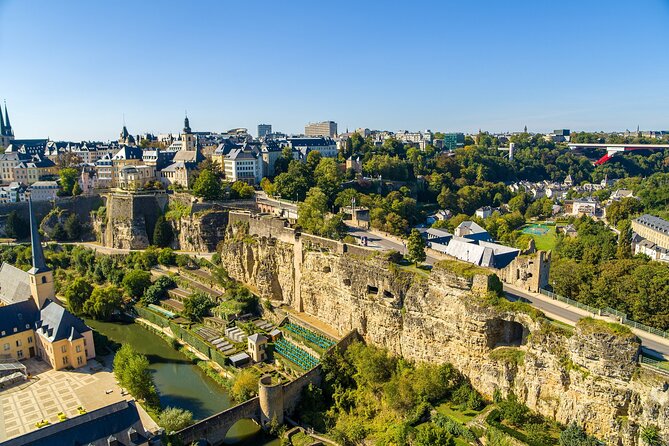
After the older historic parts, the trip shifts to the modern side of Luxembourg: Kirchberg. This is where you’ll see high-rise institutional buildings linked to the European Union’s workings.
From the included stop overview, you’re looking at the European Center Kirchberg, including the seat of the European Parliament, plus the Schuman Center area connected to the Council of Ministers.
What I like about this layout is that you don’t have to navigate transit or parking. You get the visual “map” of where these institutions live, and the guide gives the story so the city doesn’t feel random.
It’s also a good moment for people who prefer shorter walking. You can often get great photos while standing still, then move on quickly.
Old Town Free Time: Use It for Photos and a Slow Stroll
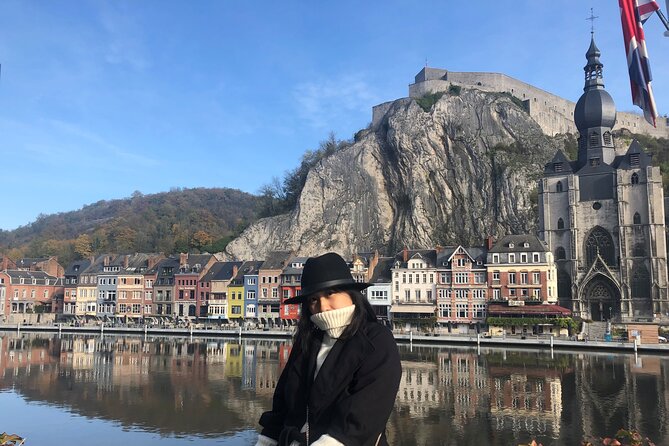
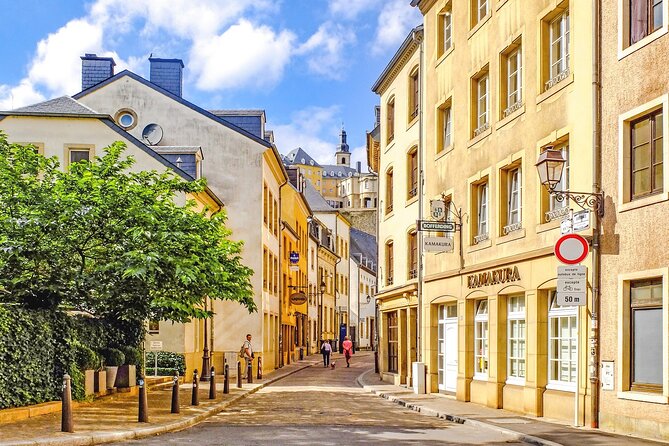
Your Old Town time is where Luxembourg stops being a lecture and becomes a place you can enjoy. The design of Luxembourg’s streets makes it easy to pop from viewpoint to viewpoint without committing to a big museum schedule.
A smart strategy: pick one “anchor” first (church views, a scenic street, or a river-like perspective), then meander outward. If you try to do everything, you’ll end up rushing and missing the charm that makes this city feel different from nearby places.
Also remember: lunch is on your own expense, so use part of your free time to eat without turning it into an endless search. If the weather’s nice, prioritize outside stroll time and treat lunch as a quick, practical pause.
Dinant on the Meuse: Cathedral Views and the Citadelle Reality Check
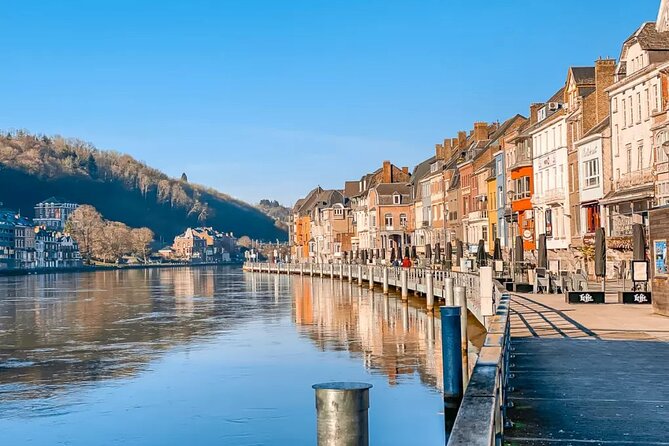
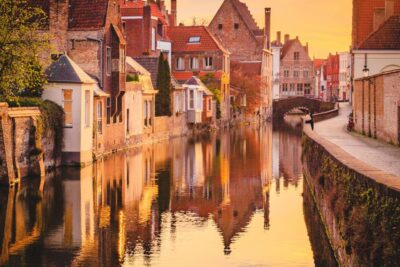
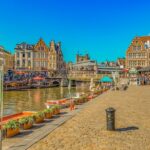
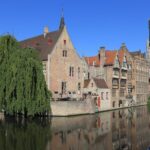
Dinant is the day’s emotional shift. The river setting makes it feel instantly more romantic—houses and shops running along the water, with major landmarks visible as you look up.
You’ll visit Dinant during the return drive from Luxembourg. There’s time to see the 13th-century Gothic cathedral, and you’ll be pointed toward the citadelle and the onion-domed tower of the collegiate church.
You also learn Dinant is tied to brassware (copper and brass traditions) and has local specialties like biscuits (including biscuits with honey). It’s a small but fun way to connect the town to its craft history.
The citadelle: funicular vs steps
Here’s the practical part. Dinant’s citadel experience can depend on what’s working that day. I’ve seen guidance in the supplied info pointing out that the funicular may not work, and then the stairs are a serious climb (more than 400 steps is mentioned). If you want that view, go with a plan: comfortable shoes, water, and a willingness to skip the climb if it’s closed.
Time in Dinant can feel tight
You’re only scheduled for about 1 hour 30 minutes in Dinant, which means you can’t treat it like a full second city day. You’ll do the overview, then choose between cathedral/casual stroll and the big hilltop views.
Maison de Monsieur Sax: Worth It, But Don’t Expect a Full Day Museum
If you’re a music nerd, you’ll appreciate this stop. Maison de Monsieur Sax connects Dinant to Adolphe Sax (inventor of the saxophone, born in 1814). The stop is relatively short—around 30 minutes—and it’s framed as a historical museum.
I like it for what it is: a focused add-on that breaks up the town sightseeing. But if you’re expecting a massive, multi-hour museum, you might end up wishing you had used those minutes for the streets and viewpoints instead.
Timing and Bilingual Audio: How to Avoid the Most Common Frustrations
This tour often runs with multilingual groups, and that can change how fast things feel. The experience is offered in English, but commentary may also be repeated in another language, which some people found less engaging or confusing.
Here’s how I’d handle it as a practical traveler:
- Put your earphones in immediately and check volume early.
- If your guide repeats the same section in another language, use that time to look around. The buildings and street angles are often what the guide is referring to.
- If you’re sensitive to long repetitive phrasing, focus your attention on the photo points and move with purpose.
Also: the bus leaving on time is part of the deal. One piece of feedback highlights that the bus left exactly as the clock turned. So don’t treat “meet at 8:30” like “meet whenever you’re ready.”
Who This Day Trip Fits Best
This works well for you if:
- You want Luxembourg’s highlights fast, with a guided spine and time to wander.
- You’re okay with a long coach day in exchange for seeing two places.
- You like architecture, city history context, and river-city photo stops.
It might not be the best match if:
- You hate tight time windows for viewpoints and need hours to linger.
- You need a slower pace with fewer language repeats.
- You’re very sensitive to coach comfort and legroom.
The tour also notes moderate physical fitness is needed, and it’s not recommended for those who have difficulty walking.
Should You Book This Luxembourg and Dinant Day Trip?
I’d book this if you’re on a first trip to Brussels and want a day that feels like a mini-country tour without logistics. Luxembourg’s blend of cathedral, palace-area history, and the European-institutions district gives you a lot for one day, and Dinant adds a scenic, characterful counterpoint.
If you do book, go in with the right expectations: it’s a highlights-and-free-time format, not a “slow, detailed museum day.” Plan for paid entrances and lunch, wear comfortable shoes for Dinant viewpoints, and arrive early so you’re not chasing the group.
If you want a clean “one day, two towns” plan that doesn’t require driving, this is a strong option.
FAQ
How long is the Brussels to Luxembourg and Dinant day trip?
It runs for about 12 hours (approximately).
What time does the tour start?
The start time is 8:30 am.
Where do I meet the group?
You meet at Bd de Berlaimont 18, 1000 Bruxelles, Belgium.
What language is the tour offered in?
The tour is offered in English, and guides can provide English, French, and/or Spanish depending on guest needs.
Is a guided portion included in Luxembourg and Dinant?
Yes. There is a professional guide, and you’ll have guided sightseeing stops plus free time.
Is lunch included?
No. Food and drinks are not included, and lunch is at your own expense.
Are entrance fees included?
No. Entrance fees are at your own expense.
Is the ticket mobile?
Yes, the tour uses a mobile ticket.
Do I need a passport for this trip?
There are no border controls once you enter the Schengen Area, but it’s advised to carry an ID with you.
Do you cancel if it rains?
No, cancellations only happen in case of extreme weather (heavy storms, floods, etc.).