REVIEW · BRUSSELS
From Brussels: Bruges and Ghent Full-Day Trip by Train
Book on GetYourGuide →Operated by Bravo Discovery · Bookable on GetYourGuide
You get medieval Belgium in a single, well-planned train loop. The big draw is pairing two top cities—Bruges and Ghent—with a guide that keeps the day moving without leaving you lost.
I especially like how the Bruges section combines a structured walk with genuine free time for eating and browsing. I also like the way Ghent leans into art and architecture, from cathedral interiors to the old port views at Graslei.
One thing to consider: this is a lot of walking in a long day—uneven surfaces, tight corners, and limited time for extras unless you choose the optional stops.
In This Review
- Key things that make this trip worth your time
- Grand Place to Flanders: how the day actually runs
- Bruges: canals, beguinage, and that UNESCO feeling
- The beguinage and a medieval pocket that still works
- De Halve Maan to Old St. John’s Hospital: Bruges’ original rhythms
- Guildhalls and squares: where Bruges does its pricing and power
- Canal boat option: the one extra that can make Bruges click
- Ghent: the cathedral that makes art feel physical
- City Hall and Market Hall: mixed styles, easy walking
- Graslei and Gravensteen: big medieval scenery in two moves
- Patershol and Great Butchers’ Hall: where food and old walls meet
- Price and logistics: is $82 good value?
- Pace, comfort, and the one drawback that matters most
- Who should book this Bruges and Ghent train day
- Should you book this Brussels to Bruges and Ghent day trip?
- FAQ
- When and where do we meet in Brussels?
- What time does the tour leave Brussels?
- How long is the day trip?
- What’s the scheduled return to Brussels?
- Which languages are the guided tours offered in?
- What’s included in the $82 price?
- What are the main extra costs during the day?
- Is there free time in Bruges?
- Is the tour wheelchair accessible?
- What should I bring for this tour?
Key things that make this trip worth your time
- Train day from Brussels that keeps logistics simple and avoids back-and-forth planning
- 2.5-hour Bruges walk plus 2 hours free time to eat, shop, and recharge
- Ghent’s cathedral and major civic sites (Saint Bavo Cathedral, City Hall, Market Hall) packed in one flow
- Old port of Graslei and the Gravensteen castle for big medieval scenery moments
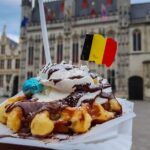
- Food and drink breaks you can actually use: chocolates, Moules Frites, and beer
- Optional paid add-ons like the canal boat and the Van Eyck altarpiece
Grand Place to Flanders: how the day actually runs
This is a guided, full-day train trip that starts in Brussels and loops you back the same evening. The meeting point is the Grand Place in front of the Tourist Information Office, where your guide holds a white umbrella. Departure is 9:30 AM on Sundays, and the scheduled return is 5:00 PM, with arrival in Brussels at about 6:00 PM.
What that means for you: you’re not trying to squeeze two medieval cities on your own schedule. Instead, you’re buying back time—time you can use for good meals, a canal boat if you want it, and a couple of practical souvenirs without sprinting.
The tour lasts 10 hours, so you’ll want to think like a walker, not like a museum-per-hour person. Comfortable shoes are a must. One review even boils it down to the obvious truth: if your feet aren’t ready, your day won’t be either.
You can also read our reviews of more tours and experiences in Brussels
Bruges: canals, beguinage, and that UNESCO feeling
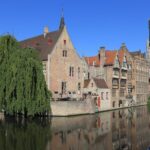
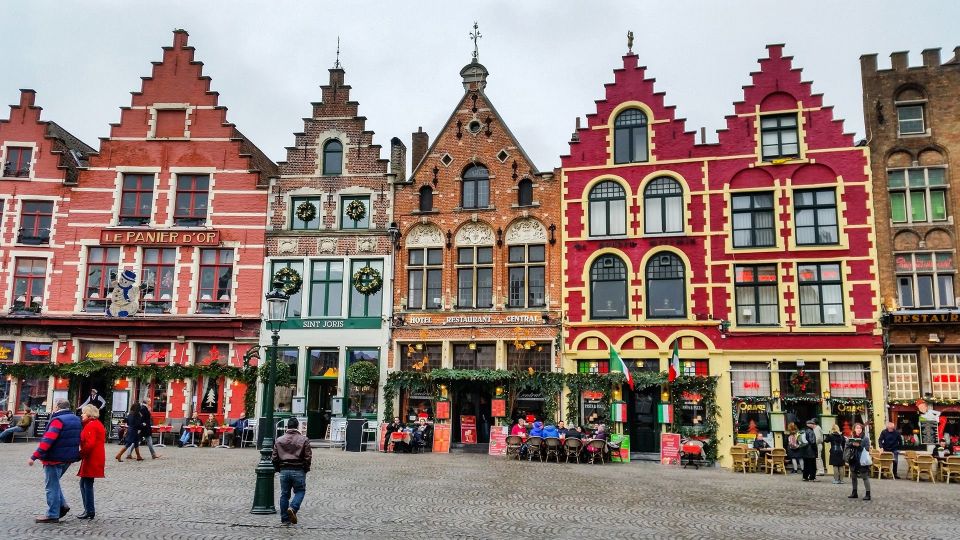
Bruges is the kind of city that looks good from every angle—especially the canal-side lanes in the historic center. The day starts once you reach the Bruges central station, and you’ll begin with a 2.5-hour walking tour that focuses on the most memorable, most walkable sights.
Then you get two hours of free time. That’s not filler. It’s what makes Bruges work in one day, because you can:
- grab lunch in a place that feels local (not just on a main square),
- buy chocolates without feeling rushed,
- and if you want, fit in the canal boat later during the tour’s Bruges segment.
If you like small “place details” the way I do, pay attention to the canal system connection around the city’s reservoirs, including the Lake of Love in the ancient city wall park. It gives you a helpful mental picture for why Bruges feels like it does—water shapes the city.
The beguinage and a medieval pocket that still works
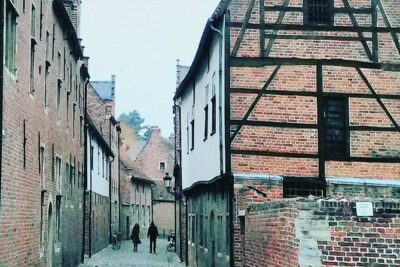
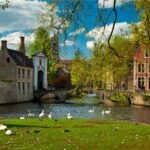
One of the early standouts is the Beguinage, described as one of the best-preserved examples of medieval gated communities where only women lived. Even if you’re not a history-book person, these spaces are worth it because they show daily life patterns—rules, privacy, and community—set into stone and quiet courtyards.
This is also a good place to slow your pace for a few minutes. Bruges can be dizzying if you’re moving too fast, and short pauses make photos and observations better later.
De Halve Maan to Old St. John’s Hospital: Bruges’ original rhythms
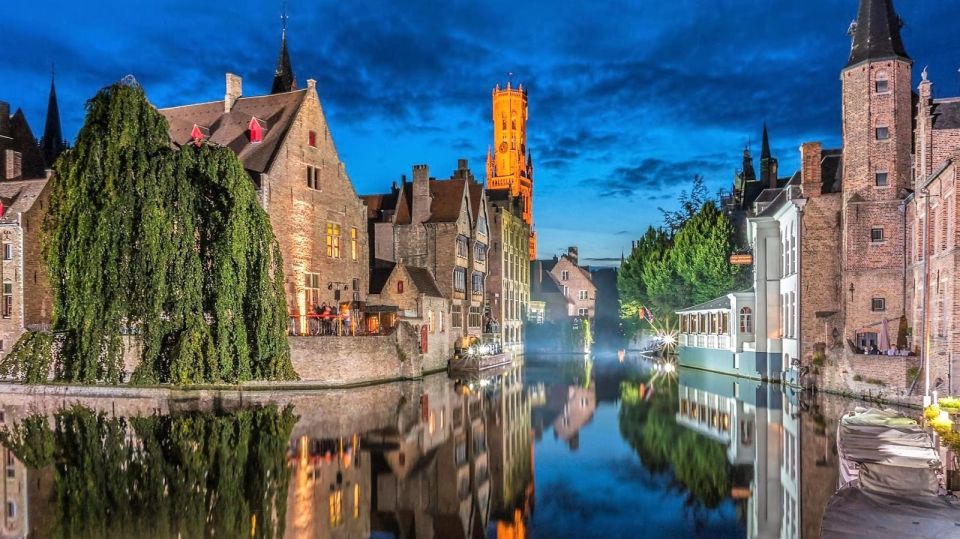
After the beguinage, the itinerary drops you into a part of Bruges that feels genuinely usable today: Brewery De Halve Maan. It’s noted as the only brewery still operating in the city center. That detail matters because it’s not a staged museum brewery—it’s active life continuing in historic walls.
Next comes Old St. John’s Hospital, highlighted as one of the oldest hospitals in Europe with 800 years of European architecture. There’s an optional museum connection here—the Hans Memling museum is mentioned as an extra choice. If you’re the type who likes art, you’ll probably be tempted. If not, it still counts as a major architectural stop even without the museum.
Then the day goes toward the heart-and-skyline landmarks: Our Lady of Bruges. You’ll see one of the city’s oldest churches and its impressive tower, still among the tallest brickwork towers in the world. The art treasure angle is there too, including the optional chance to see Michelangelo’s Madonna with the Child.
Guildhalls and squares: where Bruges does its pricing and power
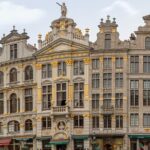
Bruges doesn’t just look pretty—it used to run on commerce. That’s why stops like the VisMarkt (fishmarket) and Tanners’ Square land so well. You get old guildhalls, plus cafes and restaurant corners that still feel connected to the original function of the square.
The route also includes Groeninge Museum, Burg Square, and Markt Square, with the Belfort tower as a key Gothic anchor. This cluster is valuable because it maps the story of Bruges from trade to civic pride. And because these are tight, walkable areas, you get continuity instead of hopping across the city.
You can also read our reviews of more tours and experiences in Brussels
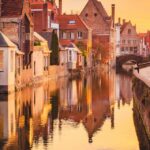
Canal boat option: the one extra that can make Bruges click
Near the end of the Bruges portion, there’s an optional canal tour. It’s priced at 8 EUR per person, paid when you board. This is one of those add-ons that’s often worth your attention because it changes how the buildings read.
From the street, you see facades. From the water, you see the original layout of the city’s canal system—the kind of view you can’t fake with photos from bridges. If you’re short on energy, skip it. But if you like canals, it’s one of the better time-to-view tradeoffs on the day.
Ghent: the cathedral that makes art feel physical
After Bruges, you head to Ghent, set at the scenic confluence of the Leie and Scheldt rivers. The guided tour begins at Saint Bavo Cathedral, where the exterior is impressive, but the interior is what really delivers.
You’ll spend time admiring the Gothic church with Baroque ornamentations, then move into the marble choir and private chapels. The itinerary calls out standout features like the Rubens painting Saint Bavo Enters the Convent at Ghent, plus the Rococo pulpit and frescoes in the Romanesque crypt.
This is also where the trip offers one key art choice with an extra cost: the altarpiece The Adoration of the Mystic Lamb by the Van Eyck brothers. It’s listed as an additional 4 EUR. If you care about Middle Ages art, this is the one optional fee I’d seriously consider, because it’s named as one of the most important works from that era.
City Hall and Market Hall: mixed styles, easy walking
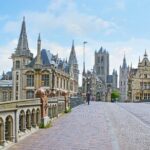
From the cathedral area, you’ll go to City Hall, described as an extraordinary mix of Gothic, Renaissance, and Baroque architecture. That mix matters because it shows how Ghent didn’t freeze in time. Different eras layered onto the civic identity.
Then comes Market Hall, with the Belfort Tower mentioned as part of the experience, and you’ll also see nearby churches including Saint Nicholas, Saint James, and Saint Michael—reminders of Ghent’s medieval past.
If Bruges makes you think about trade and water, Ghent starts to feel more like a living stage of power: civic buildings close to religious landmarks, in a layout you can walk and understand.
Graslei and Gravensteen: big medieval scenery in two moves
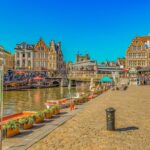
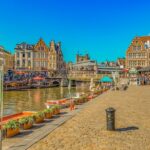
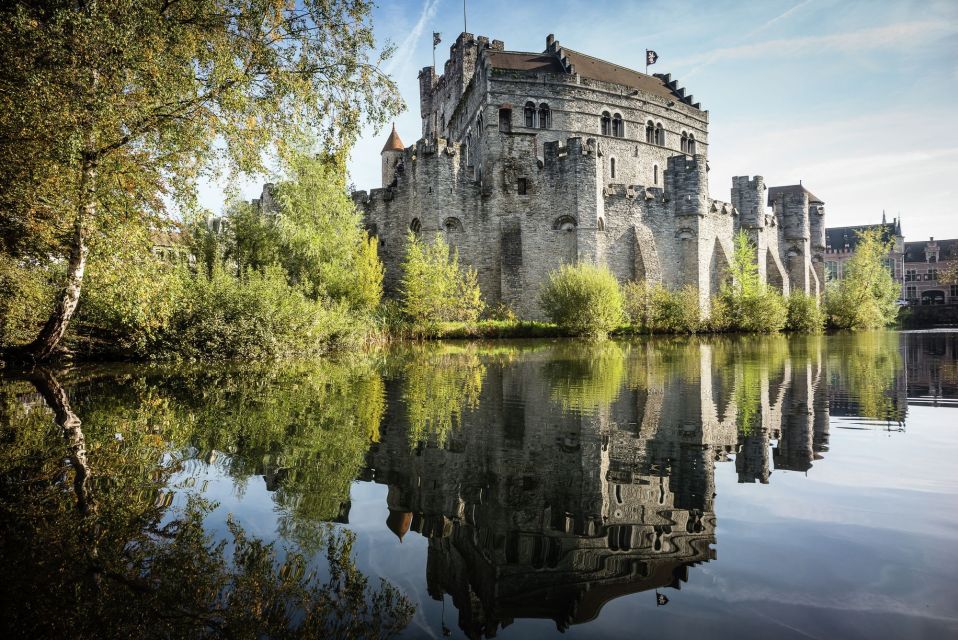
Next you reach the old port area of Graslei, and the view concept is clear: river Leie scenes with the old guildhalls. This is the kind of stop that makes the day feel worth it even if you’re tired, because it’s visually different from the cathedral-and-square pattern.
After the port, you head to the medieval castle of Gravensteen, where the counts of Flanders used to live. Even if you don’t go in deep, the castle stop is strategically placed. It gives you height, angles, and a sense of medieval fortification after hours of architecture at street level.
Patershol and Great Butchers’ Hall: where food and old walls meet
One of Ghent’s most charming districts is Patershol, and the tour includes it for a reason: brick facades, old-looking streets, and restaurants and cafes that are described as a great base for Flemish cuisine.
Then you finish with the Great Butchers’ Hall (a 15th-century meat market). It’s one of the trip’s smarter choices because it connects food to history. You aren’t just eating; you’re seeing how Ghent organized daily life around trade and craft.
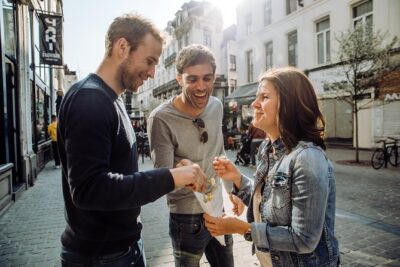
And yes, the day is built around Belgian comfort food signals: Moules Frites (the national dish) and beer, plus the obvious Belgian chocolate stops and tastes that pop up in the free time and guided stroll moments. It’s not a gourmet food tour with multiple tastings, but it’s enough to get the classics without turning your schedule into a checklist.
Price and logistics: is $82 good value?
At $82 per person for a 10-hour day, the value mostly comes from what’s included: a guided tour, a local guide, and transportation from and to Brussels.
Here’s the practical way to judge it: you’re paying for reduced decision-making. You don’t have to coordinate trains, figure out the best route between Bruges and Ghent, or keep track of what to see in what order. The guide also helps you prioritize—especially in Ghent, where church interiors and art highlights can be overwhelming without context.
The cost isn’t all-inclusive though. The day lists extra paid options:
- Canal boat in Bruges: 8 EUR
- Mystic Lamb altarpiece: 4 EUR
So yes, you’ll likely spend a little more if you choose both. But the tradeoff is that you can skip one or both and still leave with a complete, satisfying day.
Pace, comfort, and the one drawback that matters most
This tour is praised for guidance, but the consistent practical note is pacing. It’s long. You’ll walk. Surfaces can be uneven, and you’re mixing cathedral stops with square time and port views. If you show up with average walking shoes or no breaks planned, you’ll feel it.
One review mentions the tour can feel slowed when the guide speaks in English and French. That’s normal on multilingual tours: explanations take time, and the group stays together. The good news is that the structure prevents the most common day-trip problem—people splinter and then you spend time regrouping.
There’s also a small-group perk mentioned: if the group is small, you may be able to choose returning with the guide at the scheduled time or staying longer and heading back on your own later. That’s useful if you want more Bruges wandering during the time you’re already in the city.
Who should book this Bruges and Ghent train day
This is a good fit if you:
- want to see two major Flanders cities without planning logistics,
- like guided context for big landmarks (especially in Ghent),
- enjoy walking, and
- want classic Belgian food and atmosphere even if you can’t spend days on a single city.
It’s less ideal if you want a slow travel pace or a deep museum day in either city. The format is designed for highlights, not lingering. One review even points out that if you want to add extra experiences like boat rides, horse rides, or museum time in a deeper way, you’ll need more than one day.
Should you book this Brussels to Bruges and Ghent day trip?
If your goal is a memorable, well-guided sampler of medieval Belgium, I think this is a solid booking. The route hits the key visual anchors: Bruges canals and guild squares, then Ghent’s cathedral and civic buildings, ending with port views and the Gravensteen castle. The included train transport is the real time-saver.
Book it if you can handle a full day on your feet and you’re okay with a couple of optional extras costing a few euros each. Don’t book it if you’re hoping for a relaxed pace or you’re planning a heavy museum binge in one city—this itinerary keeps moving on purpose.
FAQ
When and where do we meet in Brussels?
You meet at the Grand Place Brussels in front of the Tourist Information Office at 08:30, with your guide holding a white umbrella.
What time does the tour leave Brussels?
The trip departs from the Grand Place at 9:30 AM, and it runs only on Sundays.
How long is the day trip?
It lasts about 10 hours.
What’s the scheduled return to Brussels?
The scheduled return to Brussels is at 17:00, with arrival around 18:00.
Which languages are the guided tours offered in?
The guide is listed in Spanish, English, and French.
What’s included in the $82 price?
Included are the guided tour, a local guide, and transportation from and to Brussels.
What are the main extra costs during the day?
The canal boat trip in Bruges costs 8 EUR per person, and entrance to The Adoration of the Mystic Lamb by the Van Eyck brothers costs 4 EUR.
Is there free time in Bruges?
Yes. After the 2.5-hour walking tour in Bruges, you get 2 hours of free time for eating, souvenirs, and a boat trip.
Is the tour wheelchair accessible?
Yes, it is listed as wheelchair accessible.
What should I bring for this tour?
Comfortable shoes. The day includes a lot of walking and uneven surfaces.