Brussels gets easier with a good guide. I like this tour because it moves from the Royal Palace down into the city center in just two hours, with a route designed to avoid the hill and spare you stairs and steep climbing. I also like the practical takeaways, from what to see next to where to eat Belgian waffles and what souvenirs actually make sense.
The walk is built around real neighborhood rhythm, not just postcard stops. When a guide like Evgenia, Paulina, or Yuvi brings in the local context, the city starts to feel personal instead of like a checklist.
One consideration: it is not suitable for wheelchair users, and it is still an outdoor walking tour for two hours, so pack for weather and wear comfortable shoes.
In This Review
- Key highlights at a glance
- Getting Your Bearings in Brussels Without Wearing Yourself Out
- What the 2-hour pace really means
- Where You Meet: Trône Metro and the Yellow Sign by Leopold II
- The Comfort Design: Mostly Downhill, Minimal Stress
- Royal Palace: Starting With Power, Not Random Old Stones
- Park of Brussels: Quiet Corners You Would Skip at Normal Speed
- Medieval Wall Remains: Seeing Brussels’ Early Shape
- Notre-Dame des Victoires au Sablon and the Holy Maria Legend
- Manneken Pis: More Than a Famous Photo
- Antiques Market and the Museum Quarter: Culture Meets Everyday Browsing
- Grand Place Brussels: The Perfect Finish for First-Time Visitors
- What You’ll Actually Take With You After the Tour
- How the guide makes the difference
- Price and Value: Is $60 Worth It?
- Who This Tour Suits Best (and Who Should Skip It)
- Should You Book This Brussels Walking Tour?
- FAQ
- How long is the Brussels walking tour?
- How much does the tour cost?
- Where is the meeting point?
- What languages are available?
- Is the route mostly downhill?
- What stops will we see during the walk?
- Does it include a tour guide?
- Is the tour suitable for wheelchair users?
- What should I bring?
- Is it easy to change plans if needed?
Key highlights at a glance
- Downhill route plan so you start at the Royal Palace and finish around Grand Place without tackling the hill the hard way
- Church legend stop at Notre-Dame des Victoires au Sablon, including the story linked with Holy Maria
- Manneken Pis plus context so it feels more like a cultural clue than a quick photo
- Park of Brussels breaks that add quieter, off-the-path moments
- Museum quarter wandering after an antique market, so you see how Brussels layers culture and everyday life
- Guides who help you plan with recommendations for relaxing spots, Belgian waffles, and souvenirs
Getting Your Bearings in Brussels Without Wearing Yourself Out
If you’ve only got a short window, this tour makes the city feel organized fast. You start where Brussels traditionally shows off its civic face, the Royal Palace area, then work your way down into the core around Grand Place. The big point is that the route is planned so you don’t climb up the hill, which changes how enjoyable the walk feels when you’re sightseeing back-to-back.
I also appreciate that the guide’s job isn’t just reciting facts. You get practical life-hacks for your stay, including tips on where to relax and how to keep your next day from turning into guesswork. In other words, the tour helps you decide what to do after you leave.
You can also read our reviews of more walking tours in Brussels
What the 2-hour pace really means
This is not a slow “stand around and admire” tour. You cover a solid spread of central Brussels, including parks, churches, photo-famous statues, and the big square finish. Expect steady walking, but designed so it’s manageable—no climbing up and no stairs.
Where You Meet: Trône Metro and the Yellow Sign by Leopold II
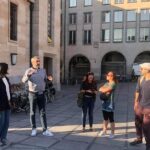
The meeting point is close to Metro station Trône (lines 2 and 6). Plan to arrive a few minutes early and look for your guide near the monument Leopold II holding a yellow sign that says My Super Tour/Bruxelles 15:15.
This matters more than it sounds. Brussels has lots of similar-looking streets and entrances, and the yellow sign is your quick visual anchor. If you’re arriving by metro, it’s one of those situations where being on time helps the whole group start smoothly.
The Comfort Design: Mostly Downhill, Minimal Stress
Brussels has real elevation around the center, and that can turn a fun plan into a sore-legs plan. This tour is set up so you descend comfortably rather than fight an uphill climb. That’s why you’ll spend less time “powering through” and more time paying attention to what you’re seeing.
The other comfort angle is that it’s described as a walking tour with no climbing up and no stairs. That doesn’t mean it’s effortless, but it does mean the physical demands are kept reasonable for most people who can handle a two-hour walk.
Royal Palace: Starting With Power, Not Random Old Stones
You begin in the area tied to the Royal Palace. Starting here gives you a useful reference point: you see the style of Brussels when it leans formal and official, and you understand that the rest of your walk connects back to how the city grew around governance and public life.
Your guide’s narration at the beginning sets the tone. You get history around what the Royal Palace represents and how Brussels’ identity formed over time. Even if you’ve passed by the area before, this start helps you connect the dots later at places like Grand Place.




Park of Brussels: Quiet Corners You Would Skip at Normal Speed
After the palace area, you explore the Park of Brussels, including hidden spots and quieter pockets. Parks are where cities show a different side of themselves—less about monuments and more about daily calm.
This stop is valuable because it breaks the “photo-stop rhythm.” Instead of rushing from one famous landmark to the next, you get a slower beat and a few off-the-path views. If the weather is decent, it also feels like a mini reset before you return to the denser historic center.
Medieval Wall Remains: Seeing Brussels’ Early Shape
Next you’ll encounter remnants of the ancient Medieval city-walls. This is one of those stops that can feel small, but it’s actually a big learning moment. Walls explain why streets and neighborhoods took the forms they did, and they show how Brussels once organized its boundaries.
Your guide uses this to give you an overview of history and traditions in a way that sticks. Instead of only hearing dates, you start seeing city structure—why things are where they are and how the center developed.
Notre-Dame des Victoires au Sablon and the Holy Maria Legend
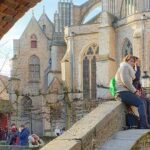
Then comes Notre-Dame des Victoires au Sablon, with a story tied to Holy Maria. Religious sites in Europe are often packed with meaning, and legends are part of how locals remember them.
I like that the tour doesn’t treat the church like a quick exterior check. You learn the legend connected with Holy Maria, and that gives context to why the church matters in the first place. It also helps you understand how symbolism shows up in daily life in Belgium, not only in formal ceremonies.
Manneken Pis: More Than a Famous Photo
Yes, you’ll see Manneken Pis. But the value is how it’s framed during the walk. With a guide telling you what to look for and why it has cultural weight, the statue becomes a clue about Brussels’ humor, identity, and tradition.
This is one of the best “quick but not shallow” stops. You get the payoff of seeing the icon, while still moving through the story that helps you make sense of it.
Antiques Market and the Museum Quarter: Culture Meets Everyday Browsing
After Manneken Pis, you pass an antique market and continue toward the Museum’s quarter. This part of the walk connects two sides of Brussels: the everyday act of browsing and collecting, and the formal world of exhibitions and collections.
Even if you don’t go inside any museum during the tour, you’ll leave with a better idea of where that cluster sits and how it fits with the surrounding streets. It’s also a good section for photos because the mix of market energy and institutional buildings creates variety in your route.
Grand Place Brussels: The Perfect Finish for First-Time Visitors
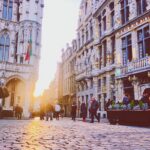
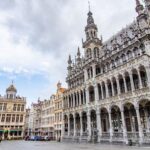
You end in the heart of the city at Grand Place, one of the most beautiful historic squares in Europe. Ending here works because Grand Place isn’t just scenic—it’s a natural way to “land” after learning the city’s layers.
By the time you reach the square, you’ve already seen the palace zone, park breaks, medieval traces, church significance, and the iconic statue. That means Grand Place feels earned, not random. It becomes the visual summary of the walk.
What You’ll Actually Take With You After the Tour
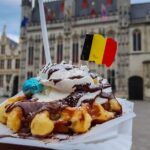
This tour is built to help you plan the rest of your stay. The guide shares tips on where to relax and have fun, and you’ll also get help with practical food decisions, including where to try the tastiest Belgian waffles.
You’ll also get souvenir guidance, which sounds minor until you’re standing in a shop wondering what’s worth buying. The tour’s recommendations can save time and money because they steer you toward options that fit the trip instead of generic tourist clutter.
How the guide makes the difference
The strongest theme in the feedback is how well the guides communicate. I’m especially taken by the way different guides bring a mix of history and modern stories. Guides such as Evgenia, Nver, Paulina, Yuvi, and Polina have been highlighted for being friendly, professional, and willing to explain more than what’s on the basic route.
That matters because Brussels isn’t one-style history. It’s government and art, old walls and modern life, formal squares and quirky corners. A guide who can connect those layers helps you leave with a better mental map, not just photos.
Price and Value: Is $60 Worth It?
$60 per person for a 2-hour guided walking tour is a fair trade when you think about what you’re buying: a focused route, local interpretation, and planning help in a tight time window. You’re not just paying for walking; you’re paying for someone to steer you through key sections—Royal Palace to Grand Place—while explaining the why behind what you see.
The best value angle here is coverage. In two hours, you get a dense mix: palace area, park, medieval remnants, a church with legend, Manneken Pis, an antique market, the museum quarter vicinity, and Grand Place. If you’re trying to maximize your first day, this is the kind of tour that can reduce decision fatigue later.
Who This Tour Suits Best (and Who Should Skip It)
This walking tour fits:
- First-time visitors who want a fast way to understand how the center connects
- People who have been to Brussels before but want a smarter route and fresh context
- Travelers who like guided narrative, not just landmark spotting
It may not fit:
- Wheelchair users, since it’s described as not suitable for wheelchair access
- Anyone who struggles with two hours outdoors, especially in colder months. Bring layers if weather is unpleasant, and use the umbrella and water you’re advised to pack.
Should You Book This Brussels Walking Tour?
I’d book it if you want a guided, efficient way to see the main historic spine of Brussels without turning your day into a steep climb problem. The downhill design and the structured route from Royal Palace to Grand Place make it a practical introduction, and the add-on tips for Belgian waffles, relaxing spots, and souvenirs turn it into more than sightseeing.
If you’re determined to roam on your own with zero guidance, you could build a similar route yourself. But if you value clear context, quick planning help, and a smooth walk that avoids stairs and uphill climbing, this is a strong choice for a first or second visit.
FAQ
How long is the Brussels walking tour?
The tour lasts 2 hours.
How much does the tour cost?
The price is $60 per person.
Where is the meeting point?
Meet near the monument Leopold II, close to Metro station Trône (lines 2 and 6). The guide will be holding a yellow sign that says My Super Tour/Bruxelles 15:15.
What languages are available?
The live guide offers Russian and English.
Is the route mostly downhill?
Yes. The route is designed so you don’t climb the hill, and you descend comfortably, starting at the Royal Palace and ending in the heart of the city.
What stops will we see during the walk?
You’ll cover Royal Palace history, the Park of Brussels, remnants of Medieval city-walls, Notre-Dame des Victoires au Sablon (with a legend connected with Holy Maria), Manneken Pis, an antique market, the Museum’s quarter, and end at Grand Place Brussels.
Does it include a tour guide?
Yes, a professional tour guide is included.
Is the tour suitable for wheelchair users?
No, it is not suitable for wheelchair users.
What should I bring?
Bring comfortable shoes, an umbrella, and water.
Is it easy to change plans if needed?
You can cancel up to 24 hours in advance for a full refund, and you can reserve now and pay later to keep flexibility.