REVIEW · BRUSSELS
600 Years of History and Heritage: A Self-Guided Walking Tour of Leuven
Book on Viator →Operated by VoiceMap Audio Tours · Bookable on Viator
Leuven is best learned one block at a time. This self-paced VoiceMap audio walk strings together Leuven landmarks in a smart loop, with English narration that explains what you’re looking at—market hall statues, church rebuilds, and university connections. I also love the offline audio and maps, plus the way you can pause and step into places if they’re open; the main drawback is you’ll need your own smartphone and headphones since those aren’t included.
You’ll spend about 1 to 1.5 hours on foot, starting at Leuven’s Rector de Somerplein (perron C3000 area) and finishing at Fonske. The tour runs daily and is set up so you can move at your pace without worrying about group timing.
In This Review
- Key highlights worth planning for
- Leuven by audio: why 90 minutes works
- Starting at Rector de Somerplein: easy to find, easy to orient
- The market square and church-site resilience you’ll actually notice
- Leuven’s Flemish Brabant identity and the university-Oude Markt connection
- Two competing squares, a famous resident, and Leuven’s long-bar moment
- Saint Anthony Chapel, Father Damien, and the Sint-Antoniusberg climb
- Hotel De Pastorij, Faculty of Theology, and stopping where you actually eat
- The brewery since 1985 and the tour’s collection-style storytelling
- Ladeuzeplein’s beetle totem, a 100-year-old landmark, and shopping streets
- Price and what you actually get for $11.99
- Who should book this audio walk (and who might not)
- Should you book this self-guided Leuven tour?
- FAQ
- How long is the self-guided walking tour of Leuven?
- What language is the audio narration available in?
- Does the tour work offline?
- Where do I start and where does it end?
- Are museum tickets or entrance fees included?
- Is this tour refundable if I cancel?
- What do I need to use the tour on my phone?
Key highlights worth planning for
- A tight, walkable route that loops through Leuven’s oldest streets, big squares, and major campuses in about 90 minutes
- Market square stories that point out hall construction, statues, and the church site’s repeated destruction and rebuilding
- University and Oude Markt links so you understand why these places matter, not just where they are
- Church-to-beer rhythm: Father Damien at Saint Anthony’s Chapel, then a brewery history that includes homebrewing since 1985
- Ladeuzeplein details including the beetle totem reference and why the library area feels so modern compared with the medieval streets
- Simple start-to-finish directions: Rector de Somerplein in, Fonske out
Leuven by audio: why 90 minutes works
This tour is built for short-attention planning. You get a focused walk through central Leuven—enough time to feel the city’s layers without turning it into a full-day project. The audio narration keeps you looking up and around, which is the fastest way to learn a place like Leuven where a lot of the meaning is in facades, street angles, and square layouts.
What makes it especially practical is the self-guided format. You’re not stuck listening start-to-finish while your feet wait for the next checkpoint. You can stop for photos, duck into a doorway if it looks open, grab water, then restart when you’re ready. That pause flexibility is a big deal in a historic center where crowds and weather can change fast.
One more reason I like it: the story thread moves across different “types” of Leuven—religious sites, university life, civic squares, and beer culture. You don’t just get dates. You get context for why a square is important, why a church got rebuilt, and why the streets feel the way they do.
You can also read our reviews of more walking tours in Brussels

Starting at Rector de Somerplein: easy to find, easy to orient
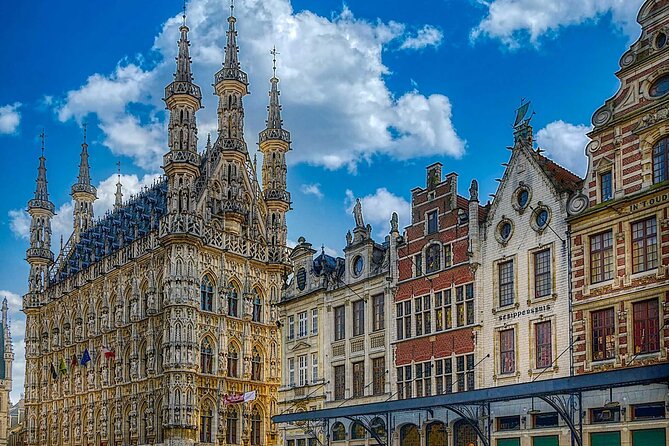
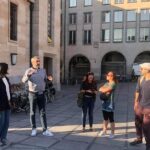
Your route begins at Rector de Somerplein near the perron area by C3000 Leuven. That matters because it’s a recognizable anchor. If you’re arriving by train or public transportation, you can orient quickly and start walking without a stressful “where do I go?” moment.
Before you begin, set up your audio in the VoiceMap app so you’re ready to go at the first market-square-style moment. Since the tour includes offline access to audio, maps, and geodata, you can keep moving even if mobile signal is spotty around older streets and building-heavy squares.
This start point also sets your expectations for the finish. Because the tour ends back at Rector de Somerplein with Fonske, it feels like a loop. You’re not stranded at the far end of town. You can build your day around it—wander nearby shops for a bit after, or come back later because the “home base” is right where you started.
Practical note: this is offered in English, so if you’re comfortable with that, you’ll get the full experience without guesswork.
The market square and church-site resilience you’ll actually notice
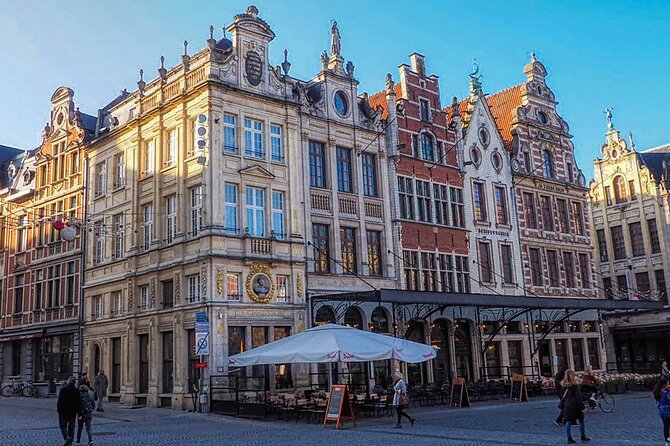
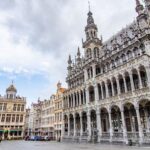
The audio begins in Leuven’s central market area and quickly trains your eyes on the key vertical details. One early highlight is the explanation about the market hall’s construction and the statues you’re looking up at. Even if you’ve seen statues in other cities, this kind of guided pointing helps you see what’s meaningful versus what’s just decoration.
Then you move to the church-site story—one of Leuven’s more gripping threads. The narration covers the resilient history of destruction and reconstruction, which helps you understand why the church and surrounding complex look the way they do today. Instead of treating the building like a static postcard, you’ll hear how history left its fingerprints here.
This is also a good section to slow down. Squares in Leuven can look simple at first glance, but once you know what the audio is asking you to observe, you start noticing lines of sight and how the church anchors the space. That makes the walk feel smarter, not like you’re just moving between dots on a map.
If the weather turns, don’t panic. The audio keeps your momentum, and you can pace your stops around covered entrances or longer pauses on square edges where you can still hear the narration.
Leuven’s Flemish Brabant identity and the university-Oude Markt connection
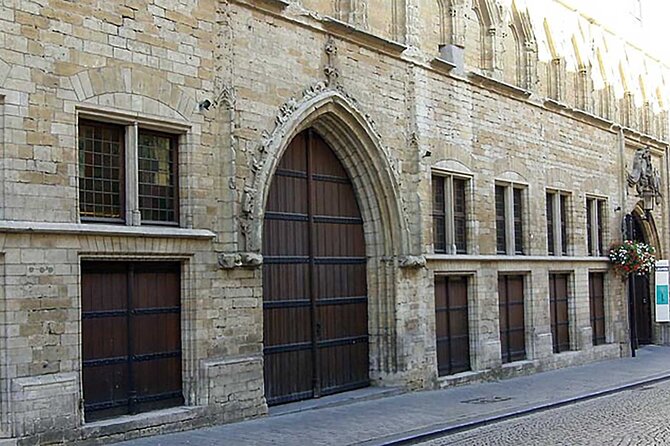
Leuven is the capital of Flemish Brabant, and the narration uses that fact to frame the city you’re seeing. That’s useful because Leuven’s personality doesn’t come only from tourism. It comes from institutions—especially the university ecosystem—that shaped the city’s rhythm over centuries.
One of the next key stops brings you outside the Catholic University of Leuven to hear its history, then ties it back to the Oude Markt. I like this approach because it prevents the classic problem: you see big campuses, but you don’t know how they relate to the older civic core. Here, the audio links the university to the history of the Oude Markt so your brain gets the “why” behind the map.
As you continue, you’ll walk along one of Leuven’s oldest streets, where the narration balances distant story with immediate attractions. That’s a good pattern for a self-guided route. You get a little time-travel, then you’re reminded to look for what’s right in front of you—street life, storefront energy, and those small architectural details you’d otherwise speed past.
This part of the walk also gives you breathing room. There’s a natural moment where you pass by food and beverage vendors without being forced to stop. If you need a break, this is an easy time to grab something. If you don’t, keep moving and save your cravings for later.
Two competing squares, a famous resident, and Leuven’s long-bar moment
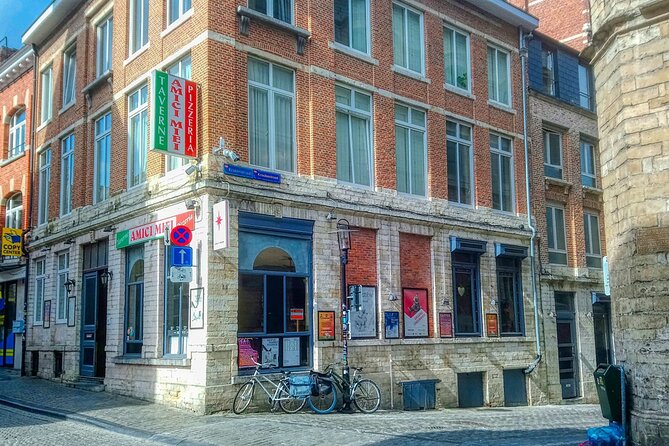
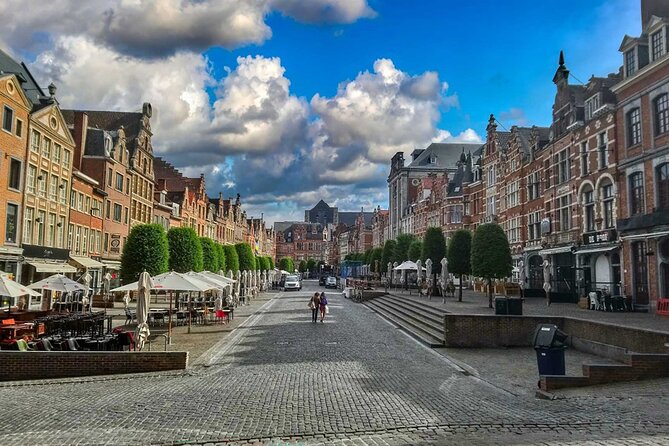
Leuven has a friendly rivalry in its open spaces. The audio takes you through a square that competes with the Grote Markt for the title of Leuven’s most famous square. That’s more than trivia. It teaches you to compare scale, layout, and what each square “does” for the city—whether it’s daily life, public gathering, or the stage-set look you associate with classic Belgian town centers.
Along the way, you’ll also be guided to greet a famous Leuven resident—an encounter that’s fun even if you don’t know the reference beforehand. And then comes the specific, very Leuven moment: you’ll stop past the location known as the longest bar in Europe. Even without going in, the narration gives you something to anchor your visit around, and it works well if you want a quick taste of the beer culture without turning the route into a pub crawl.
If you’d rather save your time for sightseeing, you can stay outside and still get the value. If you want a drink, this is one of those spots where you can pause and do it without losing the thread, because the route keeps flowing afterward.
Also in this segment: you’ll see Holy Trinity College Preparatory School on the Old Market square. Seeing the educational institutions in the same frame as historic squares helps you feel what Leuven is like day-to-day: work, study, worship, and social life all layered in one compact area.
You can also read our reviews of more guided tours in Brussels






Saint Anthony Chapel, Father Damien, and the Sint-Antoniusberg climb
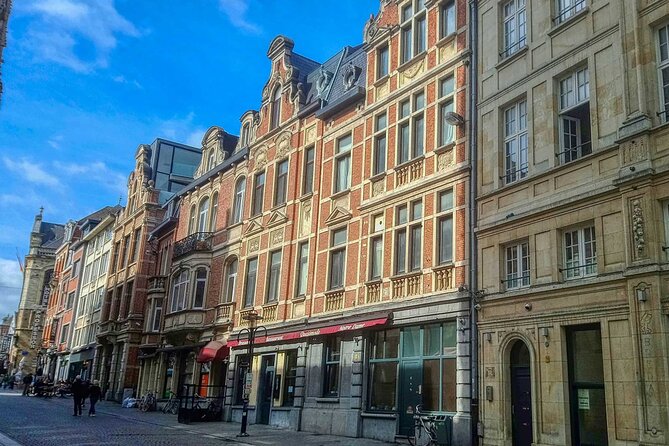
This is one of the most meaningful sections of the walk. The audio brings you to Saint Anthony’s Chapel, then guides you to the grave of Father Damien. For many people, this kind of stop changes the mood of the day. Suddenly you’re not just learning architecture. You’re encountering a real human story connected to Catholic history and service.
Next, the tour asks you to walk up the “mountainous” incline of Sint-Antoniusberg street. That word choice from the narration is practical: it’s steep enough to feel, but it’s still totally doable within a short walking loop. If you’re visiting with limited mobility, it’s the part you’d want to think about. Otherwise, treat it like a short reset. Your legs get a workout and the streets reward you with views over the city’s rooftops.
As you reach the church area, the narration shifts back to architecture—hearing the history of the church while you marvel at its impressive façade. This is a good place to slow down and look at the details again. The audio makes you focus on what’s in front of you, not just what’s behind you.
If you’re in rainy weather, this incline can feel extra slippery on slick pavement. A careful step beats a dramatic slide. But don’t skip it—this is where the walk earns its emotional punch.
Hotel De Pastorij, Faculty of Theology, and stopping where you actually eat
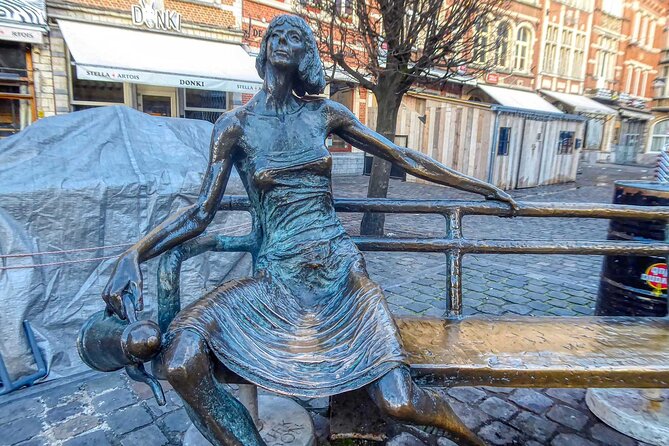
After the climb, the route continues along streets tied to education and faith, including Hotel De Pastorij and the Faculty of Theology. This section is valuable because it shows how Leuven’s intellectual identity lives in the built environment, not just in lecture halls. You’ll get narration that keeps linking street scenes back to what these places were built to do.
Then the audio gives you a simple, helpful moment to plan a bite to eat—telling you where to find something good nearby. I like these small pauses. They keep the tour from feeling like a nonstop history lecture, and they help you avoid the trap of saving hunger for later and ending up making boring choices.
As you continue, you’ll stop at a college entrance for papal history. Even if you’re not a papal-history expert, the context helps you understand why a religious education setting can carry broader political and spiritual weight.
Finally, you’re introduced to a culinary center of Leuven, connecting food culture to the city’s institutional side. That blend works especially well on a self-guided route: you get meaning, then you get a reason to relax.
The brewery since 1985 and the tour’s collection-style storytelling
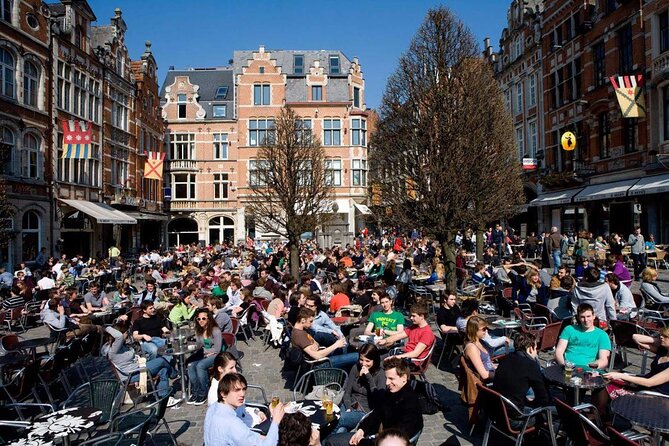
One of the funniest and most specific parts of the narration is the brewery stop, where the audio tells you that the place has been homebrewing since 1985. That kind of detail is gold on a self-guided walk. It turns a single building into a story you can remember later.
The narration also notes an extensive collection housed inside the building. That sets expectations: you’re not just walking past a normal pub. You’re seeing a curated space with objects and context, the kind of place where you might spend a bit longer if it’s open and you feel like it.
If you’re a beer person, you’ll probably want extra time here. If you’re not, the value still holds. The point isn’t only the drink; it’s how Leuven preserves and explains its brewing culture alongside academic and religious heritage.
This brewery section is also a nice pacing tool. By the time you reach it, you’ve already learned about squares and churches. Now the audio gives you a more everyday, human side of Leuven—what people build, brew, and share.
Ladeuzeplein’s beetle totem, a 100-year-old landmark, and shopping streets
After the brewery, the tour heads toward what it calls the largest square in Leuven and explains how it got its name. Soon after, you’ll hear about the beetle totem and how it links to the library in Ladeuzeplein. That kind of local icon detail makes you look differently at the city’s “modern” features.
Then you’ll be guided to an impressive building with a short history of only about 100 years, according to the tour narration. This is a smart contrast against everything you’ve seen earlier. Medieval-looking streets and centuries-old buildings can blur together. Hearing that the library area is relatively newer helps your brain reset and understand why parts of Leuven feel like different eras stacked side by side.
From there, the tour moves into a main shopping area and points out a theatre dating from the 1800s. This segment keeps the walk from feeling too academic. You’ll see how people move through the center on normal days—windows, storefront rhythms, and public life around a theatre that has been part of the city’s cultural calendar for a long time.
The day closes in the same spot where it began. You’ll end back at Rector de Somerplein, then say hello to Fonske, a statue dedicated to enlightenment. That final beat gives the walk a tidy ending and a wink. It’s Leuven saying: yes, we study and we worship, but we also like symbols that nudge you toward curiosity.
Price and what you actually get for $11.99
The tour costs $11.99 per person, and access is listed as lifetime. For a self-guided walking route, that’s strong value, especially if you plan to use it more than once or if you like re-walking streets to catch details you missed.
You also get English narration, plus VoiceMap on Android and iOS with offline access to audio, maps, and geodata. In a historic center, offline support is more than comfort. It keeps your day running when your signal drops or when you’re busy looking up at buildings instead of staring at your screen.
What’s not included is also important. Tickets or entrance fees aren’t included, and smartphone and headphones aren’t provided. So treat the tour as a narrated walk—some stops may invite you inside, but you shouldn’t expect entrances bundled into the price.
You’ll also be doing all the travel on foot. The route is short enough for most people, but you do get that Sint-Antoniusberg incline. If steep streets tire you out, plan slower breaks and give yourself extra time at the squares.
Net: for $11.99, you’re paying for context and guidance—not for museum time. If that matches how you like to travel, it’s a very fair deal.
Who should book this audio walk (and who might not)
Book it if you:
- Want a high-quality orientation to Leuven’s center without paying for museums
- Like walking loops where the start and finish line up neatly
- Enjoy hearing what buildings are and why they changed over time—churches rebuilt, squares compared, institutions linked
- Prefer control: pause for photos, pause for a quick drink, keep moving when you’re ready
You might skip it if:
- You don’t want to rely on a smartphone for navigation and audio
- You want deep museum-style interpretation with ticketed access (this walk doesn’t include entrance fees)
- Hills are a problem for you, especially with the Sint-Antoniusberg slope
This works well for a rainy day too. You stay on course, and you’re not waiting for a guide to show up. Just pack a light rain layer and keep steady on the incline.
Should you book this self-guided Leuven tour?
Yes, if your idea of a great trip is learning the city while you walk it. The narration is built around the stuff you’d actually notice in Leuven—market hall details, church reconstruction stories, university connections to the Oude Markt, and a beer-focused stop that’s specific enough to feel memorable.
If you’re staying in Leuven for only a short time, this is a smart way to get grounded fast. If you’re there longer, the lifetime access means you can come back later and walk a second time with new attention on details you missed.
FAQ
How long is the self-guided walking tour of Leuven?
It’s listed as about 1 hour to 1 hour 30 minutes.
What language is the audio narration available in?
The tour is offered in English.
Does the tour work offline?
Yes. Offline access is included for the audio, maps, and geodata.
Where do I start and where does it end?
You start at Leuven Rector De Somerplein (perron C3000 Leuven) and end at Fonske at Rector de Somerplein 3.
Are museum tickets or entrance fees included?
No. Tickets or entrance fees to attractions along the route are not included.
Is this tour refundable if I cancel?
No. The experience is non-refundable and cannot be changed.
What do I need to use the tour on my phone?
You’ll need your own smartphone and headphones. The tour uses the VoiceMap app on Android and iOS.