REVIEW · BRUSSELS
Brussels 3-Hour Guided Art Nouveau Tour
Book on GetYourGuide →Operated by Bravo Discovery · Bookable on GetYourGuide
Art Nouveau in Brussels hits fast because it is so physical. In just 3 hours you’ll walk up close to the buildings that made Victor Horta a legend, and you’ll learn why the style uses iron, glass, wood, and stone like it is making music. You start at the Grand-Place, then go by tram toward the Bailli district, a neighborhood where Art Nouveau is unusually concentrated.
Two things I like a lot: you get a clear guide-led story (not just photo ops), and you’re taught how to read the architecture. I also appreciate that the tour is wheelchair accessible, and the ending lands you in front of the Victor Horta Museum so you can decide what to do next.
One thing to keep in mind: this is primarily an exterior walking tour. If you were hoping to go inside multiple houses, you’ll likely want to plan on museum stops on your own since museum admission is not included.
In This Review
- Key things to know before you go
- Grand-Place start, then tram to Bailli: how the tour sets you up
- The Art Nouveau checklist: what you learn to spot in every stop
- Old England House (Music Instrument Museum): a strong opening context
- Victor Horta’s Hotel Tassel: where the ideas become obvious
- Bailli highlights: Van Rysselberghe and Otlet, two different takes on the same language
- The homes of Paul Hankar and René Janssens: creativity in a tight radius
- Hotel Goblet d’Alviella and the Beukman house: seeing the style’s range
- Finishing at the Victor Horta Museum: your next step after the walk
- Price and logistics: is $35 good value for 3 hours?
- Who this tour suits best (and who may want a different plan)
- Should you book this Brussels Art Nouveau tour?
- FAQ
- Where does the tour start?
- What time does the tour begin?
- How long is the guided Art Nouveau tour?
- How much does it cost?
- Is museum admission included?
- What languages is the guide available in?
- Is the tour wheelchair accessible?
- What stops are included on the route?
- Do I need to buy anything separately for the end point?
- What should I bring?
- Is there free cancellation?
Key things to know before you go
- Grand-Place meet-up at 10:00 with your guide holding a white umbrella
- Tram ride into Bailli, where the concentration of Art Nouveau is the whole point
- A guided path through major names like Victor Horta, Paul Hankar, and Octave Van Rysselberghe
- Exterior views plus interior photos, so you can still understand the design choices you can’t see directly
- Finish in front of the Victor Horta Museum, a practical next step for anyone who wants more
Grand-Place start, then tram to Bailli: how the tour sets you up
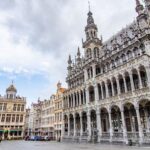
You meet at the Grand-Place in Brussels, at 10:00, and you’ll spot your guide by a white umbrella. It’s a smart starting point. You begin in a classic public square, then shift gears into a 19th–early 20th century design world.
After you gather, you ride a tram to the Bailli district. This matters because Bailli is often described as a key Art Nouveau “village” within the city, and the tour uses that geography to keep the walk efficient. You’re not zigzagging across Brussels randomly; the route is built to keep you in the right creative neighborhood.
If you’re doing Brussels in a hurry, the tram segment also helps you avoid turning architecture sightseeing into a full-day logistics puzzle. At 3 hours total, you should still feel like you saw real substance, not just a quick drive-by.
You can also read our reviews of more guided tours in Brussels


The Art Nouveau checklist: what you learn to spot in every stop
Brussels Art Nouveau can look like decoration until someone explains the logic behind it. On this tour, you’ll hear how the style mixes materials—iron for structure and movement, glass for light, wood for warmth, and stone for stability. Once you know that, details start connecting instead of floating around.
A good guide doesn’t just point at shapes. The best moments here are when you learn to notice how the building’s elements relate to each other: how the façade’s lines suggest a floor plan, how curves guide your eye, and how ornament and function stay in the same conversation. In the most highly praised guiding styles seen with this tour, guides bring lots of interior photos printed for the group, which helps you understand what’s going on behind walls you can’t enter.
Here’s the practical value for you: by the time you’re halfway through, you’ll start recognizing Art Nouveau traits faster than you would solo. You’ll be able to stand in front of a façade and say more than it’s pretty—you’ll be able to explain what the designer was trying to do.
Old England House (Music Instrument Museum): a strong opening context
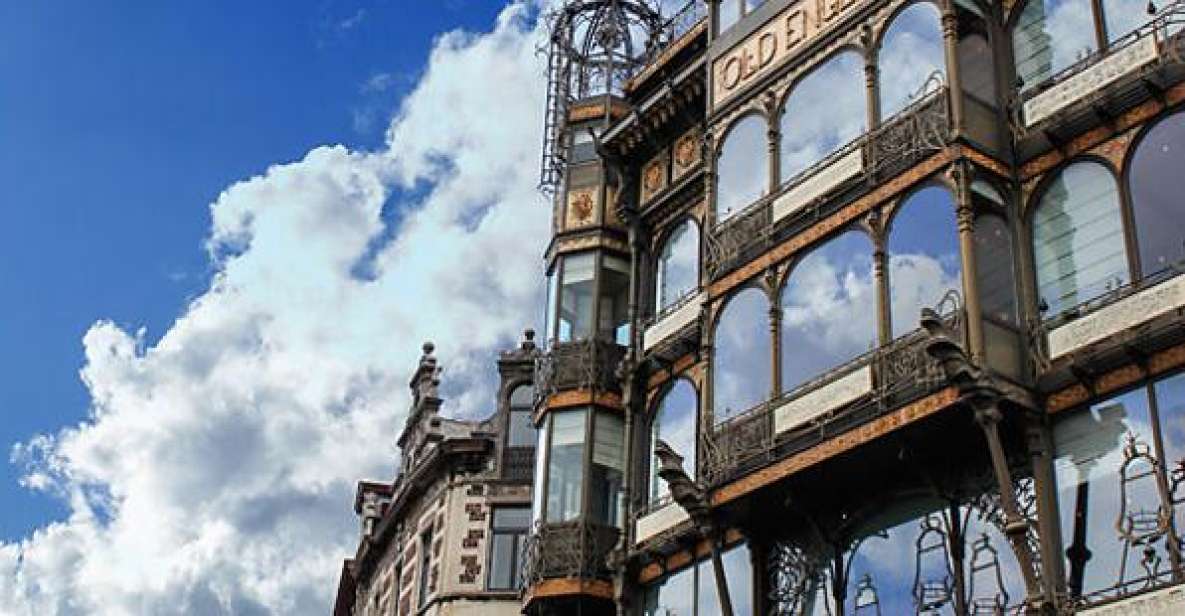
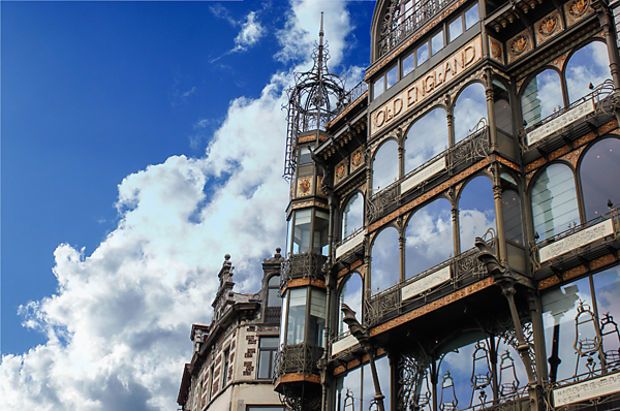
The tour starts building momentum with a stop at the Old England House, also tied to the Music Instrument Museum. Even when you’re only seeing the building from the outside, it gives you context for how Brussels embraced new ideas in design and materials at the turn of the century.
This early placement is useful. It helps you avoid treating Art Nouveau like an isolated “house style.” Instead, you start seeing it as part of a broader shift in how the city thought about modern life, design, and technology.
One note: since museum admissions are not included, don’t plan on doing an in-depth interior visit as part of this stop. Think of it as a warm-up and a framing device.
Victor Horta’s Hotel Tassel: where the ideas become obvious
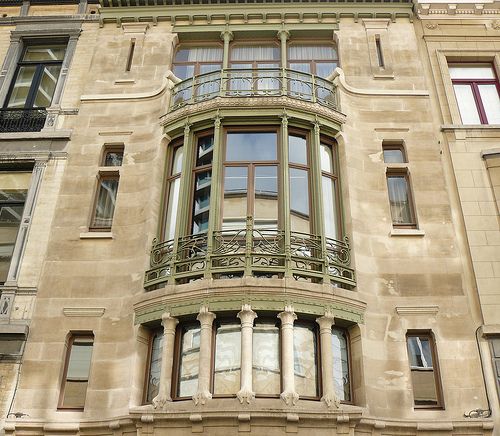
Next up is Hotel Tassel, built by Victor Horta in 1893–1894. If you know Horta’s name, this is the moment where it starts to make sense why he’s credited as a key figure in the Art Nouveau story.
Hotel Tassel is famous partly because it feels like design was engineered, not pasted on. You’ll learn how the building’s elements work together—how light, structure, and detail combine into one visual system. You’ll also get a clearer sense of why iron and glass show up so often in this period: they let the architecture feel both light and dynamic.
I like this stop for first-timers because it gives you a mental anchor. After seeing Tassel, the other houses on the walk start to feel less random. You begin comparing approaches rather than just collecting images.
Bailli highlights: Van Rysselberghe and Otlet, two different takes on the same language
From there, the tour moves through a cluster of major Art Nouveau homes that keep the story moving. You’ll see a Van Rysselberghe House (built by Octave Van Rysselberghe in 1912), Hotel Otlet (1894–1898, by Octave Van Rysselberghe and Henry van de Velde), and then additional celebrated façades.
These stops are where the tour becomes especially rewarding. Art Nouveau is not one single look. By the time you reach Otlet, you’re comparing choices: how different architects express movement, how ornament interacts with the building’s structure, and how the overall façade rhythm can change while still staying recognizably “Art Nouveau.”
If you’re the type who likes patterns, you’ll enjoy the way the tour nudges you to connect design decisions to the material mix you learned earlier. If you only want to photograph, you can still do that—but the tour’s real value is that it turns photographs into understanding.
You can also read our reviews of more tours and experiences in Brussels


The homes of Paul Hankar and René Janssens: creativity in a tight radius
The itinerary includes several stops connected to Paul Hankar. You’ll see Hotel Ciamberlani (1897), the house of painter René Janssens (1898), and the private home of architect Paul Hankar. You’ll also pass by Architect Armand Van Waesberghe.
These are the moments I’d call “pay attention” stops. Hankar’s work tends to show personality in the way façades feel alive—details that reward slow looking. When your guide points out specific elements and explains how they fit the style’s material logic, the houses stop looking like face paint and start looking like engineered expression.
Even though you’re not going inside these residences, you’ll get help through photos the guide uses. That makes a huge difference because many of the most interesting design choices in Art Nouveau live in interior layout and light behavior. When you can’t enter, those images function like a translation tool.
Hotel Goblet d’Alviella and the Beukman house: seeing the style’s range
The tour also covers Hotel Goblet d’Alviella (built by Octave Van Rysselberghe in 1882) and the Beukman house (built by Albert Roosenboom in 1900). This is great for you if you want variety, because you start seeing that Art Nouveau’s “vocabulary” can be expressed in very different dialects.
This part of the route helps you avoid a common mistake: assuming Art Nouveau is all curves and floral whimsy. You’ll learn how other design choices—stone presence, glass rhythm, and ironwork—can shift the mood from elegant to dramatic.
If you’re building your own plan after the tour, this is also useful. Once you’ve seen a few façades from different hands, you’ll know what to seek later, even if you wander on your own.
Finishing at the Victor Horta Museum: your next step after the walk
The tour ends in front of the Victor Horta Museum. That ending is practical because it gives you a natural decision point: you can continue on with the museum visit, or you can head onward with a clearer understanding of what you just saw.
Museum admission is not included in the tour. So if you want to go in, you’ll need separate tickets. One smart move is planning ahead so you’re not stuck outside when the walking part ends. If you’ve got timed entry in your mind, this tour works as an excellent warm-up.
Even if you skip the museum, finishing here still pays off. By the time you reach the museum area, you’ve spent 3 hours training your eye to identify Art Nouveau traits, and that context makes whatever you do next feel more intentional.
Price and logistics: is $35 good value for 3 hours?
At $35 per person for a 3-hour guided walk, this tour is priced in the “affordable splurge” zone. The value comes from two things: the local guide story and the material-focused explanation that helps you learn faster than doing it alone.
You’re not paying for a bus ride and a quick stop at one landmark. You’re paying for a structured route across multiple Art Nouveau buildings, plus guided interpretation. That interpretation is the real cost-saving piece for your brain. Instead of searching for context and trying to decode façades yourself, the guide gives you the translation.
Logistics are straightforward, but the walking is real. You’ll be on your feet and you’ll do a tram transfer. Also, the interior experience is mostly indirect. If you strongly prefer interior access, treat this tour as the architecture education phase, then add museum time based on your interests.
Who this tour suits best (and who may want a different plan)
This tour suits you best if you like architecture and design, and you want a guide to help you see patterns. It’s also a good fit if you’re short on time and want a concentrated introduction to Art Nouveau in the Bailli area.
It may be less satisfying if your top priority is seeing interiors of multiple private homes. The program is built around outside viewing, and you’ll rely on photos for the interior side of the story.
If you’re traveling with mixed interests—someone who likes design and someone who just wants a pretty neighborhood—this can still work. The guide’s narrative tends to connect the buildings to the wider Art Nouveau world, so the walk becomes more than a photo scavenger hunt.
Should you book this Brussels Art Nouveau tour?
Yes, book it if you want a fast, focused way to understand why Brussels Art Nouveau works—especially how materials and design logic create the style. The guide-led explanations and the structured route through key buildings give you an edge over solo wandering.
Skip it or pair it smartly if you’re expecting lots of interior access. Since museum admission is not included, plan a timed museum visit after the tour if interiors matter to you.
FAQ
Where does the tour start?
The meeting point is the Grand-Place in Brussels. You’ll find the guide holding a white umbrella.
What time does the tour begin?
The tour starts at 10:00.
How long is the guided Art Nouveau tour?
The duration is 3 hours.
How much does it cost?
The price is $35 per person.
Is museum admission included?
No. Guided tour is included, but museum admission is not included.
What languages is the guide available in?
The live tour guide offers Spanish, English, and French.
Is the tour wheelchair accessible?
Yes, the tour is listed as wheelchair accessible.
What stops are included on the route?
The route includes stops such as Old England House (Music Instrument Museum), Hotel Tassel, Van Rysselberghe House, Hotel Otlet, Hotel Goblet d’Alviella, Hotel Ciamberlani, the house of painter René Janssens, and more, ending in front of the Victor Horta Museum.
Do I need to buy anything separately for the end point?
Since museum admission is not included, you’ll need separate admission if you want to visit the Victor Horta Museum.
What should I bring?
Wear comfortable shoes, since it’s a walking tour with a tram ride.
Is there free cancellation?
Yes. You can cancel up to 24 hours in advance for a full refund.