REVIEW · BRUSSELS
Bastogne Battle of the Bulge from Brussels (semi-private)
Book on Viator →Operated by Private Tours by Joyce (Belgium & beyond) · Bookable on Viator
WWII hits you in the gut at Bastogne. This semi-private day trip from Brussels is a solid way to understand the Battle of the Bulge without doing it the hard way on your own. I like that your driver-guide, Joyce, brings clear context on how the fighting unfolded, and you also get hands-on stops at the memorials and foxholes rather than just a quick drive-by.
I especially like the comfort factor: hotel pickup, a smooth round-trip plan, and built-in breaks (including restroom time) so you can focus on the sites. The tour is also structured so you see multiple kinds of remembrance—public monuments, civilian stories, and the ground-level “why it mattered” view from Bois Jacques.
One possible drawback: the day is long (about 9 to 10 hours), and the Bastogne War Museum admission is not included—so you’ll want to plan for that extra cost.
In This Review
- Key highlights you’ll feel immediately
- From Brussels hotel pickup to the Ardennes offensive
- McAuliffe Square: where the Nuts! moment lives
- Bastogne memorials and the women who treated the wounded
- Bastogne War Museum: the modern, interactive anchor
- Mardasson Memorial: the star-shaped reminder of resistance
- Bois Jacques foxholes and the Easy Company edge
- Why Joyce’s semi-private guide format is worth paying for
- Price and value: what $1,505.98 actually buys you
- What to plan for: a long day, lunch on your own, and how long to linger
- Should you book this Bastogne day trip from Brussels?
- FAQ
- What is the duration of the Bastogne Battle of the Bulge tour from Brussels?
- How many people are in the group?
- Does the tour include hotel pickup in Brussels?
- What language is the tour conducted in?
- Are museum and memorial admission fees included?
- What about lunch?
- How and where do we meet the tour?
Key highlights you’ll feel immediately
- Semi-private group (max 4) means more flexibility and more time to ask Joyce questions
- Licensed, English-speaking guide Joyce helps connect the dots from pre-war tension to 1944 fighting
- Memorial stops with included admissions at key points like McAuliffe Square, Mardasson, and the Bois Jacques foxholes area
- The War Museum is the anchor with modern, interactive exhibits tied directly to the Ardennes counteroffensive
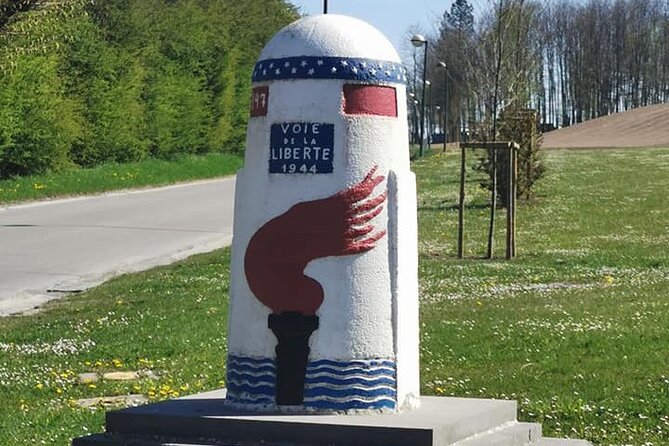
- Real-world context on Patton Liberty Road includes a milestone tied to the route toward Bastogne
- A ground-level WWII feel at the foxholes, where the terrain makes the story make sense
From Brussels hotel pickup to the Ardennes offensive
The tour is built for convenience right from the start. You meet at Brussels-Centraal, but pickup is offered from your hotel, B&B, or any address you choose within Brussels. That matters because it removes the stress of buses, trains, schedules, and “where do we stand?” moments. It’s the kind of start that lets you walk into the day already relaxed.
Transport is private, and that makes a real difference on a long day like this. You’re not waiting for a group to arrive late, and Joyce can pace the day to keep you from feeling rushed at every stop. There’s also a restroom stop on the way to Bastogne plus a complimentary soft drink, tea, or coffee, along with bottled water. It’s small stuff, but it helps you last through the full timeline of the battle sites.
This is also a smart pick if you care about learning. Joyce brings the narrative together—from why Belgium mattered, to what set the stage for the Ardennes fighting, to what happened after. In one of the most useful examples, she doesn’t treat Bastogne like a standalone movie scene. She connects the events that came before, then shows you why these specific locations mattered when everything tightened around the town.
You can also read our reviews of more private tours in Brussels
McAuliffe Square: where the Nuts! moment lives
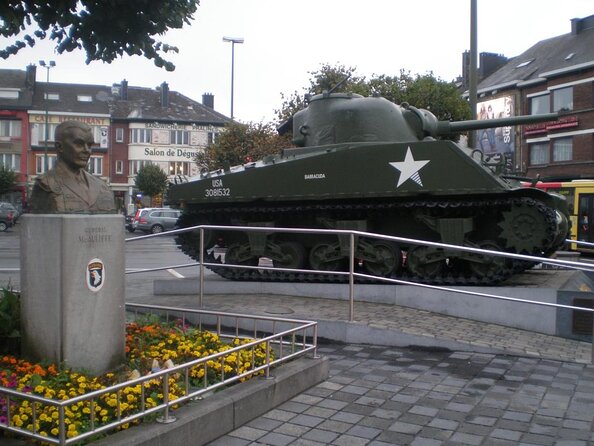
McAuliffe Square is the kind of place where you instantly understand why Bastogne became a symbol. You’ll visit the McAuliffe Memorial, dedicated to General McAuliffe, the defender of the city in 1944. His famous reply—often remembered as Nuts! when the Germans demanded surrender—became a shorthand for stubborn resistance by American troops trapped in the encirclement.
What I like here is that the memorial isn’t just a name on a wall. The square includes more than the “catchphrase.” It features a Patton Liberty Road reference point too: the last memorial milepost on the route from Utah Beach in Normandy to Bastogne. That’s a concrete way to visualize distance and movement across France and into the Ardennes—something you can’t fully grasp by reading alone.
There’s also a surprisingly human, Belgian-American detail behind the monument. The memorial was carved by Miss Silvercruys, sister of the Belgian Ambassador to the US at the time, and the work was inaugurated by General McAuliffe in person. The square was renamed McAuliffe Square in 1947. Small historical facts like these make the place feel anchored in real people, not just war mythology.
The visit is short—about 10 minutes—so treat it as your “orientation stop.” Use it to get your bearings before you move deeper into the story.
Bastogne memorials and the women who treated the wounded
Next you’ll head into Bastogne and visit the Augusta Chiwy & Renée Lemaire memorial. This stop is brief (about 10 minutes), but it shifts the focus in a powerful way. After the war, these nurses were recognized as heroines for their role during the winter of 1944, when civilians and wounded people were trapped in the worst parts of the fighting.
If you’ve only got a limited time in the region, I think this memorial is a key value-add. It reminds you that front lines aren’t the whole story. In a place like Bastogne, care for the wounded happened in makeshift conditions, with limited means, while fighting continued around the town. That context makes the museum visits later hit harder, because you’ll see civilians and medical realities as part of the battle—not background noise.
The admission here is free, which is nice, and it fits well in the rhythm of the day: quick stop, emotional reset, then onward.
Bastogne War Museum: the modern, interactive anchor
The biggest time block on the day is the Bastogne War Museum, around 3 hours. This is where the trip earns its “learning” label. The museum presents World War II through the lens of the Ardennes counteroffensive—the Battle of the Bulge—so you don’t just get dates. You get a guided sweep of causes, events, and consequences focused on this specific crisis.
What I like most is that the museum isn’t only about battles. It gives a clear picture of civilian life during occupation, the battle itself, and what came afterward. That structure helps you understand why the battle was so terrifying to ordinary people: the town wasn’t a distant battlefield. It was homes, work, hospitals, streets, and daily survival.
The museum building itself is described as new and modern with an adventurous architectural concept, and you’re located in the Ardennes area, south-east of Belgium. That location matters because it frames the sense of place—this is a region with scenery and nature, not just a “war zone” stereotype. Even if your brain is focused on history, the setting helps keep the story grounded in geography.
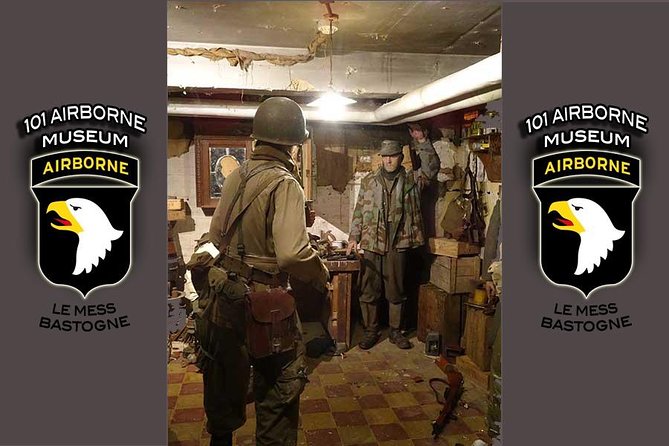
During one visit, I’d also expect the museum to be emotionally taxing in a good way. The exhibits include interactive rooms, movies, and displays of tanks, uniforms, weapons, and medical equipment. There are also activity-style elements like writing a message on behalf of a loved one who fought or lived through that time. If you’re the kind of person who reacts to museum experiences, it’s smart to bring tissues. You’ll see why quickly.
One practical note: the museum admission is not included in the tour price. So budget for that ahead of time.
Mardasson Memorial: the star-shaped reminder of resistance
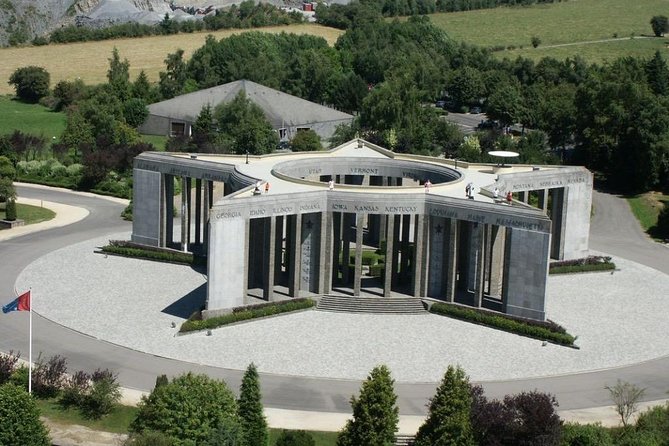
After the museum, Mardasson is a different kind of learning—less interactive, more immediate. The Mardasson Memorial, often called “Mardasson,” is an imposing star-shaped construction. It’s a reminder of the bitter resistance of American soldiers surrounded in Bastogne during the Ardennes offensive winter of 1944–1945.
I like memorials like this because they force you to stand in the story. You see how the battle’s stakes were not theoretical. American troops paid a heavy price, and German troops and civilians did too. That broad scope matters. It keeps the memory from becoming one-sided.
The stop is around 15 minutes. That’s enough time to take in the structure, absorb the scale, and read the key points without feeling like you’re on a strict checklist. Admission is included here, which is a nice value boost.
If you’ve ever visited memorials that feel too quiet to “feel real,” this one is different. The star shape and strong visual presence make it hard to look away.

Bois Jacques foxholes and the Easy Company edge
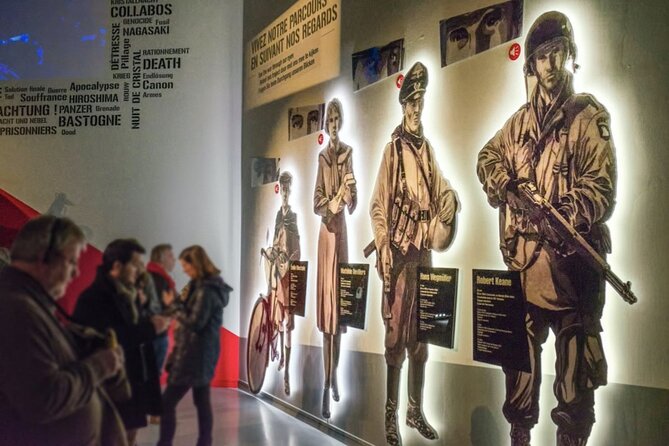
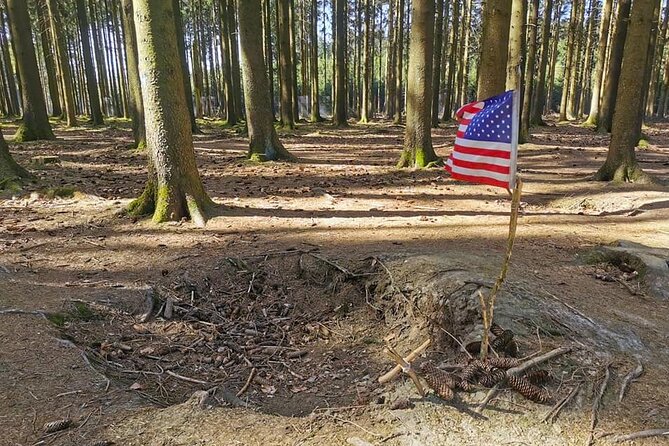
The last substantive stop is Bois Jacques Foxholes, connected to the 101st Easy Company. The foxholes were originally dug by American soldiers to hide from the Germans who were encircling the woodlands, and the foxholes are still visible. Seeing them in person changes the scale of your understanding. It’s one thing to read about positions and concealment; it’s another to stand near earth that once mattered for survival.
This stop is about 30 minutes. It’s also listed with included admission fees. That combination—time plus included entry—makes it a strong closer to the day’s theme: the battle on the ground, not just in museums.
There’s also a “memory of movement” angle near this area. During the Battle of the Bulge, most of Foy was occupied by German forces, and the U.S. 101st Airborne Division held Bois Jacques just outside town. After being relieved by General George S. Patton’s U.S. Third Army, the 101st retook the town. A monument to the American paratroopers was built in 2004 at the edge of Bois Jacques. Even if you don’t spend ages on it, Joyce can use these details to help you stitch together the day’s geography.
If you’re hoping for “quiet contemplation time,” this is where you’ll get it. It’s natural to slow down when the terrain is part of the narrative.
Why Joyce’s semi-private guide format is worth paying for
Price is always the big question, and here the value is less about ticking boxes and more about time with a guide. This tour is semi-private with a maximum of 4 passengers, and only your group participates. That small group size makes your questions feel less like a disruption and more like part of the experience.
Joyce also has a talent for pacing the story. In one case, she talked for the whole ride up about WWII leading into and through WWII. That kind of sustained context helps the sites land in the right order. You’re not just bouncing from monument to museum; you’re building a timeline in your head while you travel.
Another thing I like: guides who can handle both facts and “how to see this place” are rare. Joyce doesn’t just stop at generalities. She brings personal storytelling into the bigger historical framework. For readers who want a human connection—like seeing what it might mean if your family history connects to Easy Company—this format works well.
There’s also comfort and practical care. Multiple people highlighted that Joyce met them on time at their hotel and drove in comfort. One review even mentioned she helped get a family checklist handled. That’s a small signal of how the day is managed: not stiff, not rushed, and focused on getting you what you came for.
Price and value: what $1,505.98 actually buys you
The tour price is listed at $1,505.98 per group (up to 4), with 9 to 10 hours of time. That means cost depends heavily on how many people are in your party.
If you book as a pair, you’re essentially paying for the guide and private vehicle for the day, plus included admissions where applicable. If you book as a group of four, the cost becomes much easier to swallow because you’re spreading transport and guide time across more people.
What you get included, based on the tour details:
- Private transportation and a personal licensed guide
- Entry fees to certain exhibitions and museums (noted as included for 2 pax)
- Bottled water plus a restroom stop and complimentary soft drink, tea, or coffee
- Admission fees included at specific memorial/foxhole stops
What you don’t get included:
- Bastogne War Museum admission
- Lunch (the museum café offers food, but you’ll pay for it yourself)
So the “math” is basically: you’re paying for a guided day with most site admissions handled, and you’re paying separately for the War Museum ticket and your lunch. That’s not bad. The museum is the major time block, so if you care about learning, it’s often worth paying for that entry even if it’s extra.
One extra value tip: this tour is booked fairly far in advance, averaging 83 days. If you’re traveling during busy seasons, plan early so you don’t get stuck with fewer guide/vehicle options.
What to plan for: a long day, lunch on your own, and how long to linger
Expect a full-day schedule. The duration is about 9 to 10 hours, which includes travel time plus stops and the longer museum visit. If your travel style is “move fast,” you’ll be fine. If you prefer unhurried museum wandering, you might want to go easy on any other plans the same day.
Lunch is not included. The museum café has sandwiches, toasties, soup, salad bowls, meat balls, pasta, and more. My advice: eat early or eat efficiently. Don’t turn lunch into a long, wandering event unless you’re happy to shorten time at later stops.
Bring a few practical items:
- A light jacket or layer (winter-era history sites can feel cold, even when the day looks mild)
- A phone camera battery (you’ll want photos at memorials and the foxholes)
- If you’re sensitive to war stories, tissues (people specifically recommend it)
Also, if you’re traveling with anyone who wants a particular monument mentioned—like the Patton Liberty Road milestone detail—tell Joyce early. On one occasion, someone noted a stop they expected wasn’t emphasized. It’s rare, but it’s a good reminder: ask for what you care about before the day starts.
Should you book this Bastogne day trip from Brussels?
I think you should book this tour if you want a WWII day trip that feels structured, emotional, and easy to manage. It’s especially good for first-timers to Bastogne who want the key memorial sites plus the War Museum, without having to sort out transport and ticket logistics.
You’ll also like it if you value small-group attention. The max of 4 passengers keeps the day flexible, and Joyce’s style—using the ride for context and focusing on what you’re seeing—makes the places connect.
You might skip it (or at least adjust expectations) if:
- You really want the War Museum admission to be fully included in the price
- You prefer a shorter outing than 9 to 10 hours
- You’re strict about squeezing every possible extra monument into the schedule and you don’t want to rely on guide interpretation
Overall, this is a strong value for a guided, private-feeling day. You get the big Bastogne names, the ground truth at Bois Jacques, and enough narrative to make the Battle of the Bulge feel understandable instead of just overwhelming.
FAQ
What is the duration of the Bastogne Battle of the Bulge tour from Brussels?
It runs about 9 to 10 hours.
How many people are in the group?
It’s semi-private with a maximum of 4 passengers, and only your group participates.
Does the tour include hotel pickup in Brussels?
Yes. Pickup is offered from your hotel, B&B, or another place of your choice in Brussels.
What language is the tour conducted in?
The tour is offered in English.
Are museum and memorial admission fees included?
Admissions are included for some stops. The tour includes entrance fees for certain exhibition/museum entries (for 2 pax), but Bastogne War Museum admission is not included.
What about lunch?
Lunch is not included. The museum café has food options if you want to eat there.
How and where do we meet the tour?
The start is at Brussel-Centraal, Carr de l’Europe, 1000 Bruxelles, Belgium. The tour ends back at the meeting point, though pickup is offered from your Brussels location.