REVIEW · BRUSSELS
Bruges bus tour from Brussels
Book on Viator →Operated by Buendía · Bookable on Viator
Bruges in one packed day means photo stops. You get scenic canals and medieval lanes plus real time to wander on your own (about four hours), not just a rushed checklist. The trade-off is the day runs long and you’ll do a lot of short walking hops between key spots.
I like that the tour is built around a structured guided loop with quick explanations, then a calm stretch where you can move at your own pace. Your guide is Spanish-speaking, and on some days Bruges rules can require radio headsets, so plan to bring non-wireless 3.5 mm headphones (or pick up disposables).
In This Review
- Key things to know before you go
- Bruges in One Long Day: what this 9-hour plan really gets you
- Price and logistics: what $49.73 buys (and what it doesn’t)
- Getting from Brussels at 8:30: the coach ride and the guide setup
- The guided loop: canals, squares, and quick stories that make Bruges click
- Bargeplein (Katelijnparking): start strong, with a restroom window
- Minnewater Lake (Lake of Love): Bruges’ postcard water
- Begijnhof: the Beguinage and a photo bridge moment
- Walplein and beer history: a surprising Bruges angle
- Stoofstraat: how to spot original medieval houses
- Gruuthusemuseum area: power, family, and architecture
- Saint John’s Hospital: medieval healthcare basics
- Onze-Lieve-Vrouwekerk (Church of Our Lady): Michelangelo connection, from the outside
- Grote Markt (the Markt): buildings, tips, and return timing
- Photo bridges and classic canal corners
- Chocolatiness and craftsmanship: the shop stop and why it matters
- 4 hours of free time: how to use it without feeling rushed
- Who this tour suits best (and who should skip it)
- Should you book this Bruges bus tour from Brussels?
- FAQ
- FAQ
- What time does the Bruges bus tour from Brussels start?
- How long is the tour?
- Is the guide Spanish-speaking?
- Do I get time to explore Bruges on my own?
- Are meals included in the tour price?
- Will I need headphones for the guide audio?
- Can I cancel for a full refund?
Key things to know before you go
- A long day with a smart rhythm: guided highlights first, then ~4 hours of independent time
- Major Bruges stops in one loop: lakes, béguinage, squares, churches, bridges, and two historic theme areas (beer and crafts)
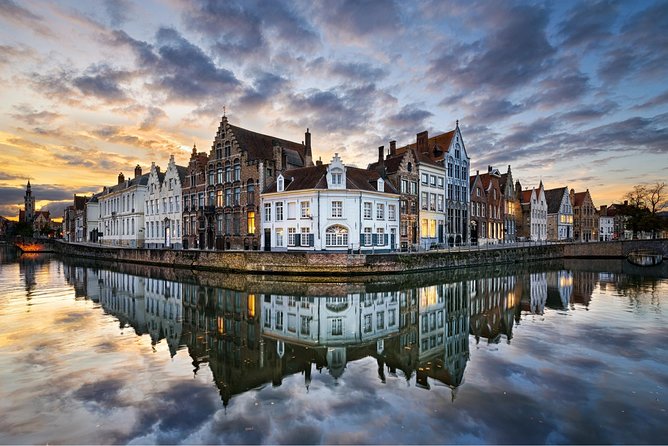
- Photo-friendly timing: multiple moments built for quick pictures at bridges and the most photographed canal quay
- Spanish guide with optional radio support: you may need a headset under local rules
- Good group size for day trips: maximum 45 people keeps it manageable
- You’re back in Brussels the same day: convenient round-trip by air-conditioned coach
Bruges in One Long Day: what this 9-hour plan really gets you
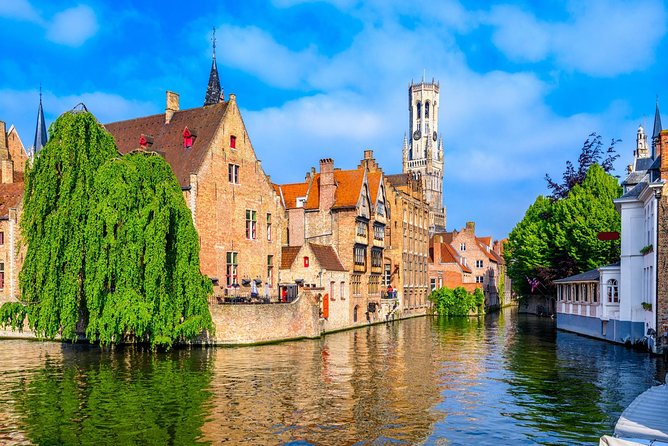
A Bruges day trip from Brussels is always a bit of a balancing act. You don’t have enough time to see everything, but this itinerary does a strong job of showing the city’s look and feel in layers: water first, then medieval lanes, then the big public squares, and finally a chocolate-and-craft finish.
The total schedule is about 9 hours, with a morning start of 8:30 am and return to the same meeting point in Brussels. What makes this tour work for most people is that it isn’t only guided time. After the guided portion (roughly 2.5 hours as noted by the provider), you get around four hours of free time (timing can shift with traffic and group pace). That solo block is where you can slow down, linger, and get the kind of photos that don’t happen when you’re hurrying behind a group.
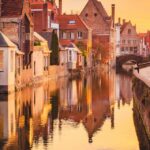
The vibe is also camera-friendly. Bruges rewards patience, and the route includes several classic angles—especially along the canals where the light changes fast. If you’ve got even a little sense of romance for old stone, bridges, and water reflections, this format hits.
You can also read our reviews of more tours and experiences in Brussels.
Price and logistics: what $49.73 buys (and what it doesn’t)
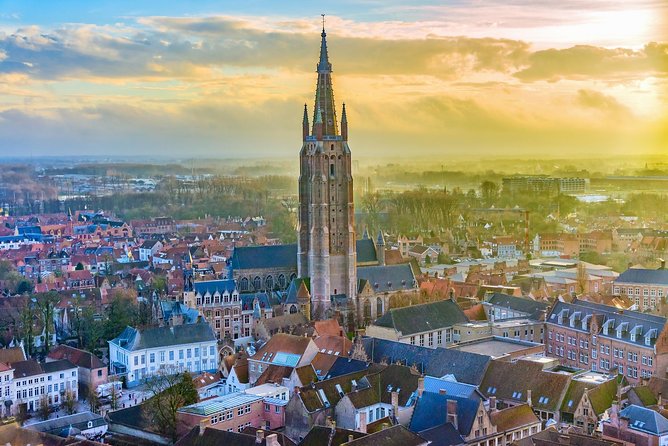
At $49.73 per person, the value is mostly in transportation + a guided loop. You’re paying for the round-trip coach from Brussels and a professional Spanish guide who explains what you’re looking at while you hop between sites. You also get practical city tips (including where to eat and chocolate shopping pointers during the guided part).
What’s not included is food and drink. That matters because Bruges can be pricey, and you’ll likely want to plan lunch during the free time. The tour itself gives you a chance to reset, but it won’t handle your meals.
Also: the tour may use radios with headphones due to Bruges tourist regulations at times. The good news is you can use your own 3.5 mm non-wireless headphones, or buy disposables for €1 from the operator when needed. This is the kind of detail that can make the difference between hearing the guide clearly or spending the day straining to catch every sentence.
A final reality check: it’s a day trip with lots of short stops. If you’re expecting long museum-style time at every site, you’ll be happier if you think of it as a guided sampler that points you toward what you want to revisit during your four-hour free block.
Getting from Brussels at 8:30: the coach ride and the guide setup
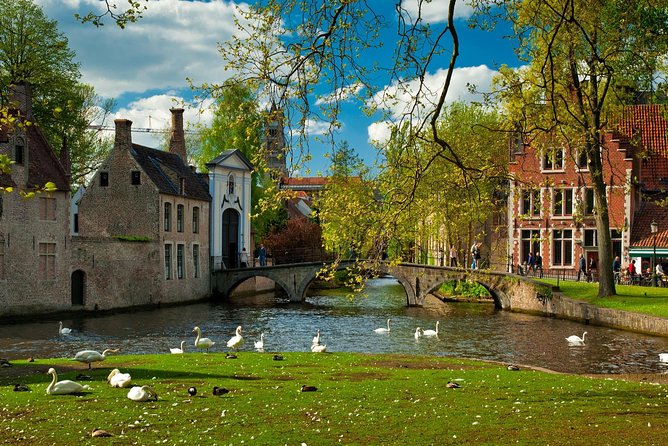
You start at Carrefour de l’Europe (1000 Brussels) at 8:30 am. The meeting point is described as near public transportation, which is handy if you’re bouncing around Brussels before the tour. The tour ends back at the same meeting point, so you don’t need to figure out a second transfer.
On the bus, your best move is simple: charge your phone, bring a light layer, and download offline maps if you like. Even with a guided plan, your free time is where you’ll want to navigate without hunting for your next turn. The group limit is 45, so it’s not a giant cattle-car experience, but you should still expect some waiting at stops.
Language is a key consideration. The guide is Spanish-speaking, and while the operator provides guiding to help you connect with the stories, one guest noted a language mismatch issue. If Spanish isn’t your thing, you’ll still get plenty from visual cues, but you may rely more on your own reading and wandering rather than fully following every explanation.
The guided loop: canals, squares, and quick stories that make Bruges click
The tour is structured like a sequence of “see it, hear it, picture it” moments. Many stops are only 5–20 minutes, so the guide’s job is to give you the meaning fast. That works well because you’ll already be surrounded by the evidence—stone, water, and old signage.
Bargeplein (Katelijnparking): start strong, with a restroom window
The bus drops you at Bargeplein (Katelijnparking). You get about 10 minutes for a restroom break. The guide explains what time to return to the bus. This sounds minor, but it sets the tempo. When you start with a scheduled bathroom stop, you’re less stressed later at crowded sights.

Minnewater Lake (Lake of Love): Bruges’ postcard water
Next up is Minnewater Lake, also called the Lake of Love. You’ll have around 5 minutes and the focus is on the view and the story tied to the lake. This stop is the best kind of quick: it gives you a background mood for the rest of the day. After this, the canals and bridge photos start to make more sense.
Begijnhof: the Beguinage and a photo bridge moment
Then comes Begijnhof (béguinage). Founded in 1245, it’s a historic setting tied to the lives of a remarkable group of women. You get about 10 minutes, and there’s also an opportunity to take photos from a small bridge. If you like gentle, atmospheric corners, this is one of the spots where Bruges feels less like a museum and more like a living neighborhood.
Walplein and beer history: a surprising Bruges angle
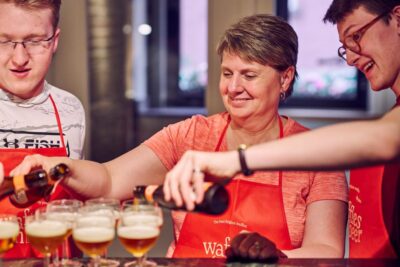
At Walplein, the guide explains the history of Bruges beer. You’ll have roughly 5 minutes. It’s a quick stop, but it adds context to something you can taste later. Bruges is famous for food, chocolate, and crafts; beer is part of that mix, and this little story helps you connect it to the city’s past.
Stoofstraat: how to spot original medieval houses
At Stoofstraat, the guide helps you identify original medieval houses—again, about 5 minutes. This is the kind of stop that pays off later when you’re wandering independently. Instead of seeing every building as just buildings, you’ll start noticing which features are older and how the city grew.
Gruuthusemuseum area: power, family, and architecture
You’ll meet Gruuthusemuseum area for a short briefing about the most famous and powerful family in Bruges between the 17th and 18th centuries. It’s about 5 minutes, and the goal is to connect the grandeur you see on the outside to who lived there and what their influence meant.
Saint John’s Hospital: medieval healthcare basics
At Saint John’s Hospital (Old St. John Hospital), the guide explains how the medieval health system worked. You get about 8 minutes. This stop is small in time but useful in meaning. Bruges didn’t just build pretty buildings; it handled real community needs centuries ago.
Onze-Lieve-Vrouwekerk (Church of Our Lady): Michelangelo connection, from the outside
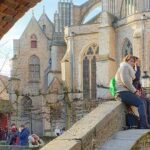
At the church area, Onze-Lieve-Vrouwekerk, you’ll hear curiosities connected to the white marble sculpture of the Virgin and Child created by Michelangelo found inside the church. The instruction here is mainly about what you can see from the outside. Even if you don’t go inside, the guide’s detail is enough to make the church façade feel less generic and more intentional.
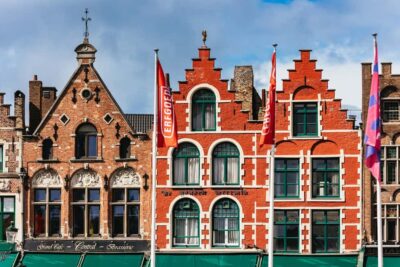
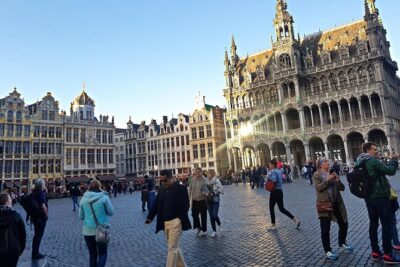
Grote Markt (the Markt): buildings, tips, and return timing
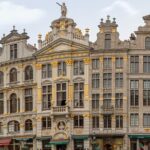
The guided tour’s last point before free time focus is usually Grote Markt (the Markt) with about 20 minutes. The guide explains the buildings around the square and gives tips on where to eat and where to shop for traditional chocolate. They’ll also remind you exactly when and where to be to catch the bus back to Brussels. This is one of your practical moments: you’re not just sightseeing, you’re getting your schedule anchored.
Photo bridges and classic canal corners
After the Markt, the route keeps rolling with postcard locations:
- St Bonifacius Bridge: legend explanation plus photo time (about 5 minutes)
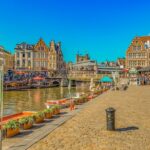
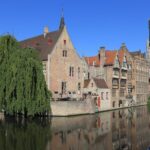
- Rozenhoedkaai: the most photographed place in Bruges, tied to the Muelle de las rosas name, plus photos (about 5 minutes)
- Huidenvettersplein (Tanners Square): learn how tanners worked in medieval Bruges (about 5 minutes)
- Burg Square: Gothic town hall, old courthouse, and the Basilica of the Holy Blood (about 10 minutes)
These are quick, but they build a clear mental map. By the time you reach free time, you’ll know which direction to head for canals, which squares are central, and where the most famous angles are.
Chocolatiness and craftsmanship: the shop stop and why it matters
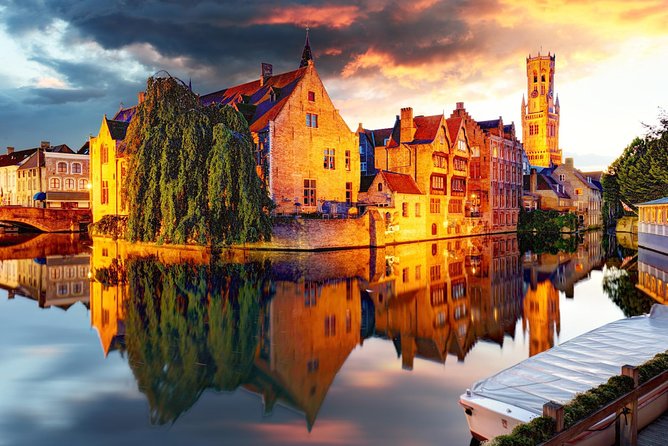
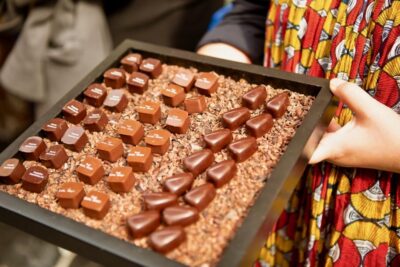
One of the best-feeling parts of this tour is the dedicated chocolate moment at Chocolalino, a certified artisan chocolate shop. You get about 8 minutes, including a chance to taste artisan chocolates.
What I appreciate is that this isn’t just a sales pit. The guide explains Bruges chocolate and gives tips to distinguish handmade from industrial chocolate. Even if you’re not a serious chocolate nerd, learning a few cues means you can shop better during your independent time—and you can avoid paying for something that doesn’t match what you want.
If you’re pairing your day trip with a few extra food stops, save your biggest appetite for this free-time window. One practical clue from experience: when lunch and chocolate are both on the table, your best plan is to eat first, then shop with a calmer head.
4 hours of free time: how to use it without feeling rushed
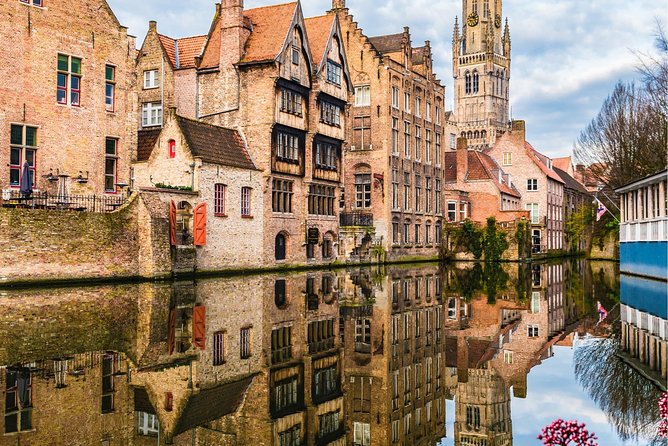
The free time is about four hours, but it can flex depending on traffic and group rhythm. That flexibility is both a blessing and a caution. It’s a blessing because you’re not stuck for every minute. It’s a caution because you should plan like time is precious, even if you’re hoping it stretches.
Here’s a simple approach that keeps you happy:
- Start with canal-area walking while it’s easiest to match the angles from the guided part. The Dijver Canal area and the lake views tie together nicely, and you’ll already know where to find the classic viewpoints.
- Use the squares as your anchors: Grote Markt for the central pulse, and Burg Square if you want the grand civic look.
- Save your “one treat” decision for later. If you tasted chocolate during the tour, you can use free time to compare and decide whether you want more.
If you want one extra thing not included in the standard plan, consider a 30-minute canal cruise. One guest described it as one of the best buys at about €15, and it’s the kind of activity that makes Bruges’ water feel real instead of just scenic.
A rain warning, since Bruges can turn weather fast: the tour includes outdoor walking at many stops. Bring a compact umbrella or rain jacket and accept that the cobblestones plus rain can make it a slower day.
Who this tour suits best (and who should skip it)
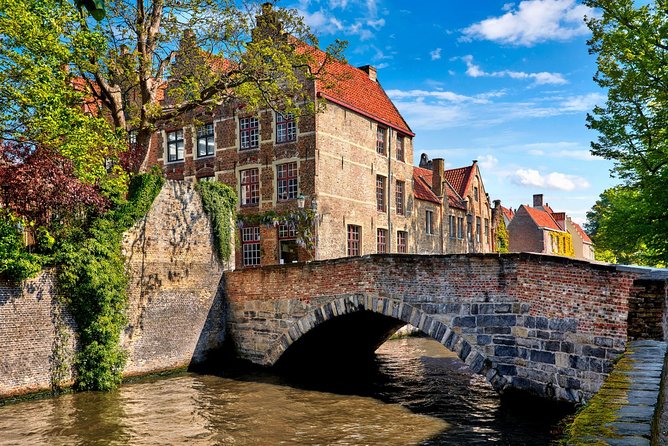
This is a strong fit if you:
- want a first look at UNESCO-listed Bruges without planning transport or route logistics
- like guided storytelling but still want time to wander
- enjoy photo-friendly canals, bridges, and big squares
- prefer a day trip format over trying to manage Bruges logistics from scratch
It may be less ideal if you:
- need the guide in a specific language other than Spanish
- expect long museum stays or deep independent research at every stop
- hate day trips with many short walking hops between locations
The group size cap of 45 is a plus. It usually keeps you moving, but it also means you’ll occasionally wait for the bus and for your turn to gather.
Should you book this Bruges bus tour from Brussels?
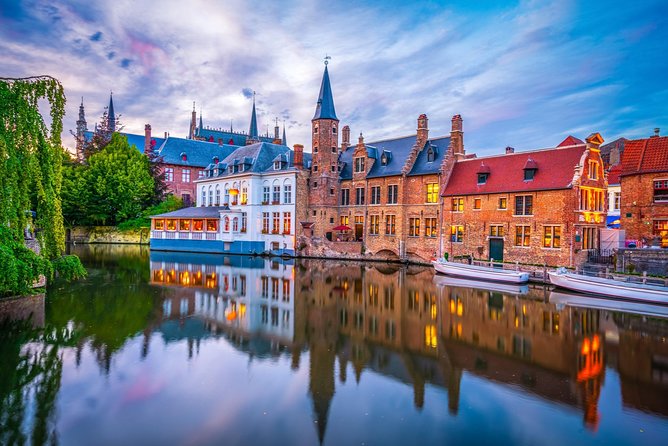
If your goal is to see the best-known Bruges highlights in one efficient day, this tour makes sense. The biggest reason to book is the balance: a structured guided loop for meaning and orientation, then a meaningful chunk of free time so you can slow down where you want to.
I’d book especially if:
- you’re visiting Bruges for the first time and want an easy mental map
- you’re hungry for photos but also want some context (beer history, medieval houses, tanners, and the holy relic site)
- you value the convenience of a round-trip air-conditioned coach from Brussels
I’d think twice if you’re very language-dependent or if you strongly dislike tight timing. In that case, you might prefer a more flexible plan where you control the pace from start to finish.
FAQ
FAQ
What time does the Bruges bus tour from Brussels start?
The start time is 8:30 am, with pickup at Carrefour de l’Europe in Brussels.
How long is the tour?
The tour is approximately 9 hours total.
Is the guide Spanish-speaking?
Yes, the guide is Spanish-speaking.
Do I get time to explore Bruges on my own?
Yes. After the guided part, you get about four hours of free time to explore independently.
Are meals included in the tour price?
No. Food and drink aren’t included, but the guide can point you to good places to eat.
Will I need headphones for the guide audio?
Sometimes. Bruges tourist regulations can require radio guides. You can use your own non-wireless 3.5 mm headphones, or buy disposable headphones for €1.
Can I cancel for a full refund?
Yes. You can cancel up to 24 hours before the experience start time for a full refund. If the tour is canceled due to poor weather, you’ll be offered a different date or a full refund.