REVIEW · BRUSSELS
Brussels Must-See Attractions Walking Tour
Book on GetYourGuide →Operated by Guydeez Tours · Bookable on GetYourGuide
A pee statue and real stories in two hours. On this Brussels Must-See Attractions Walking Tour, you get a guide who keeps the walk moving while pointing out both famous sights and smaller moments most people miss. I especially like the way the tour groups major landmarks with quick, human context, and the fact you’ll see Manneken Pis and then follow up with other stops that make the city feel like a place, not a checklist.
One thing to keep in mind: this is a tight 2-hour route. If you want lots of lingering time for photos, shopping, or a long sit-down pause, you may feel a bit rushed.
In This Review
- Key highlights worth planning for
- Why This 2-Hour Brussels Walking Tour Works So Well
- Starting at Bd Anspach 188 (Vibes Shop) and Getting Your Bearings
- Stroll to St. Nicholas Church: A First Taste of Brussels’ Character
- Maison Dandoy Near Grand Place: Why This Stop Isn’t Just a Photo Op
- Grand Place and the Middle Aged Tavern: The City’s Main Square in Context
- Manneken Pis and Jeanneke Pis: Famous, Infamous, and Actually Useful
- L’Envol (Jacques Brel Statue) and the Royal Galleries: Art Meets Street-Level Brussels
- Royal Theatre Toone: Going Inside (Plus the Resident Cat)
- What You’re Really Paying for: Price and Value at $32
- Group vs Private: Matching the Tour to Your Style
- Tips to Get the Most Out of Every Stop
- Who This Brussels Tour Best Suits
- Should You Book This Walking Tour?
- FAQ
- How long is the Brussels Must-See Attractions Walking Tour?
- Where does the tour start?
- What are the main stops on the route?
- What languages are available for the live guide?
- Is there a private option?
- Is the tour wheelchair accessible?
- How does cancellation work and can I pay later?
Key highlights worth planning for
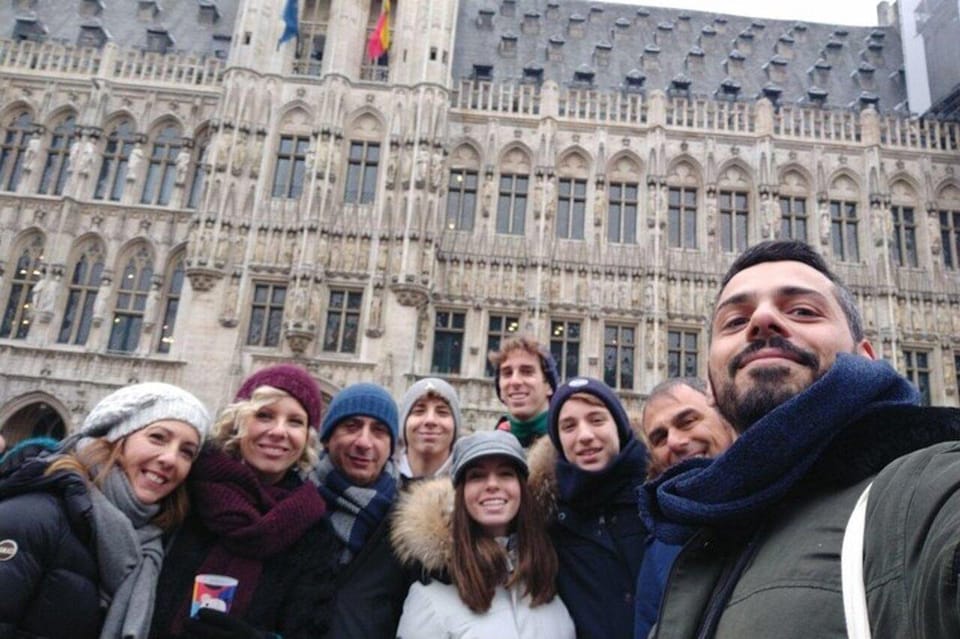
- A guide-led walk that covers the core sights fast so you get oriented without spending a whole day
- Manneken Pis plus Jeanneke Pis, both treated as cultural icons with more meaning than the joke
- Stop at Maison Dandoy on Grand Place, a smart connection between shopping, architecture, and street-level Brussels
- Jacques Brel’s statue (L’envol), a quick artistic moment that adds a different side of the city
- Royal Theatre Toone inside, including a look at the resident cat
- Options for group or private tours, letting you match the pace to your travel style
Why This 2-Hour Brussels Walking Tour Works So Well
A short walking tour in a big city can either feel skimpy or useful. This one lands in the useful category because it’s built around clusters of well-known sights—then stitched together with a guide who explains how they fit into Brussels as a living city.
At 2 hours and around a $32 per person price point, you’re not buying a long museum day. You’re buying something more practical: a guided route that gets you oriented quickly and helps you notice what you’d otherwise breeze past. If you’re only in Brussels for a day (or you hate wasting time figuring out where everything is), this is a strong way to start your trip.
And the vibe is very “walk and learn,” not “stand and lecture.” You keep moving from stop to stop, which helps the sights stick in your head.
You can also read our reviews of more walking tours in Brussels
Starting at Bd Anspach 188 (Vibes Shop) and Getting Your Bearings
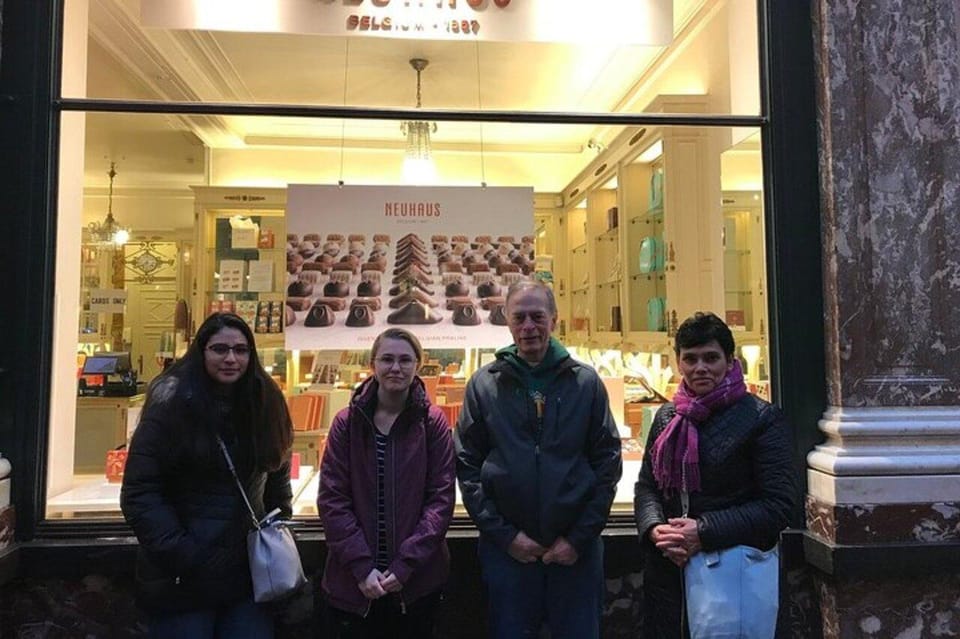
Your tour starts at Bd Anspach 188, right in front of the Vibes shop. That matters more than it sounds. Brussels has lots of major streets and squares, and starting at a clear, central point helps you avoid the awkward pre-tour hunt.
Once you’re with the guide, you’ll get a route that connects several anchors in the city center. The tour is designed so you don’t have to constantly stop to ask where the next place is. You just follow the guide and let the city unfold.
If language matters to you, this tour offers live guidance in French, English, Spanish, and Italian. That’s genuinely helpful for families and for travelers who don’t want to rely on reading plaques for everything.
Stroll to St. Nicholas Church: A First Taste of Brussels’ Character
Early on, you’ll head to St. Nicholas Church. This is one of those opening stops that does two jobs at once: it gives you a sense of place and it sets the tone for the rest of the walk.
What I like about beginning with a major landmark is psychological. It helps you register the city’s scale and style before you hit the big public squares. Your guide also uses this segment to explain history and culture as you go, so the rest of the itinerary feels less random.
Possible drawback: churches and similar stops can be quieter and slower, which is great for learning. But if your group is more photo-focused than story-focused, you might want to balance your camera time with listening so you don’t miss what the guide is connecting to later stops.
Maison Dandoy Near Grand Place: Why This Stop Isn’t Just a Photo Op
Next is Maison Dandoy – Grand Place. Even without getting bogged down in details, the reason this stop works is simple: it places you right in the thick of central Brussels where people actually walk, shop, and linger.
This is also a smart transition. You start with a landmark setting (church), then move toward the heart of Brussels (Grand Place area). By the time you reach the square, you already understand you’re not just visiting buildings—you’re moving through a commercial and social center.
If you enjoy seeing how old-world Brussels meets everyday life, this stop helps. It also gives you a chance to slow down briefly before the tour hits the most iconic names.
Grand Place and the Middle Aged Tavern: The City’s Main Square in Context
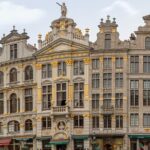
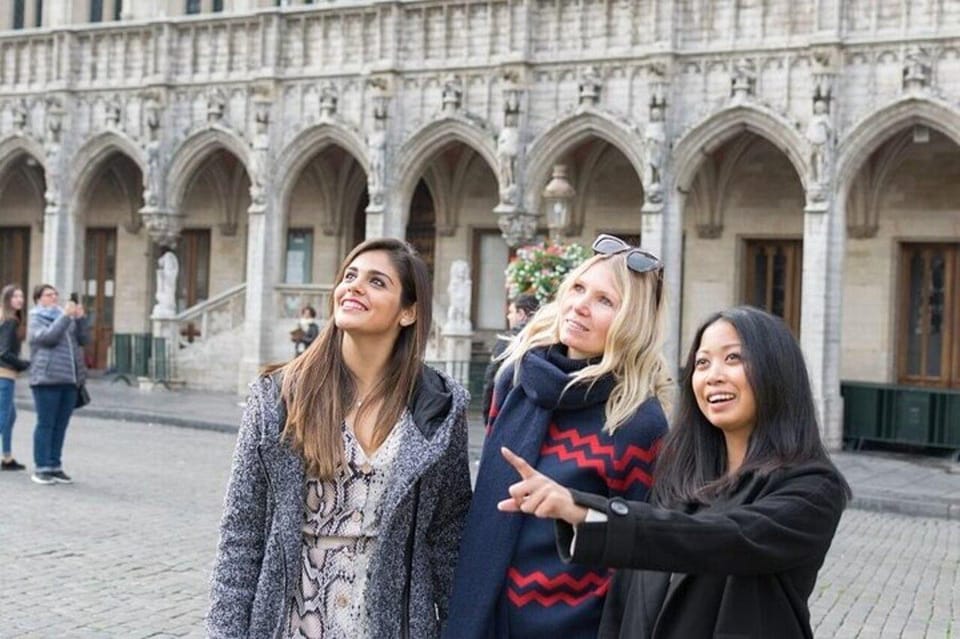
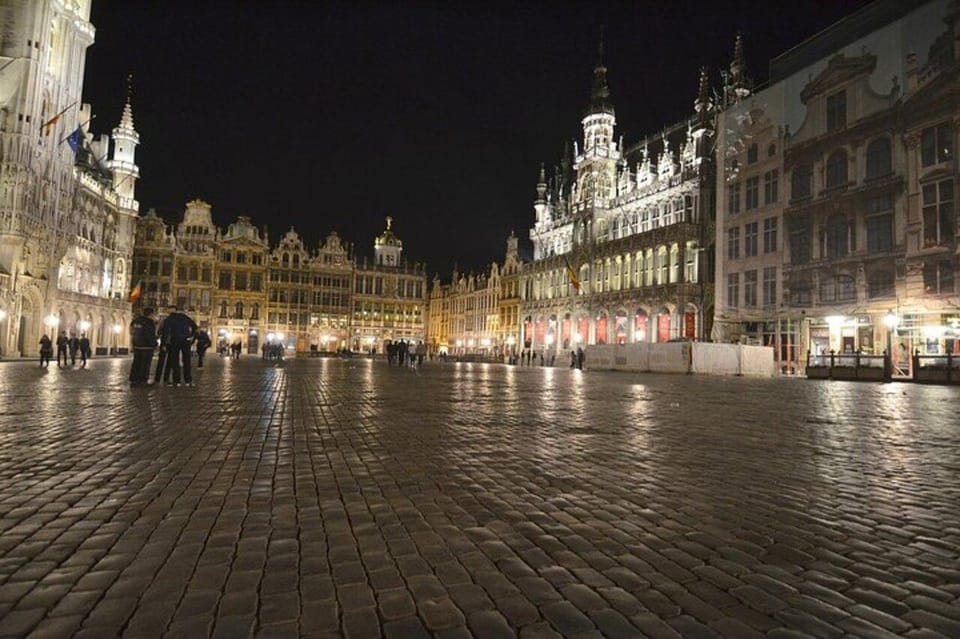
You’ll then spend time at the Grand Place, with guided time that includes the Grand Place Middle Aged Tavern. This is where most people expect to be impressed, and your guide’s job is to make sure you’re impressed in the right way.
I like the way this tour frames Grand Place not as a single postcard moment, but as a center with layers. The guide connects what you’re seeing to what the city values—space, public life, and how Brussels shows off its identity. When the explanation lands, the square stops feeling like a background set for photos and starts feeling like a real gathering place.
One practical consideration: Grand Place is popular. So expect some crowd noise and foot traffic. The tour keeps moving, but if you’re traveling during peak hours, you’ll want to be patient while the guide points things out and you find your angle.





Manneken Pis and Jeanneke Pis: Famous, Infamous, and Actually Useful
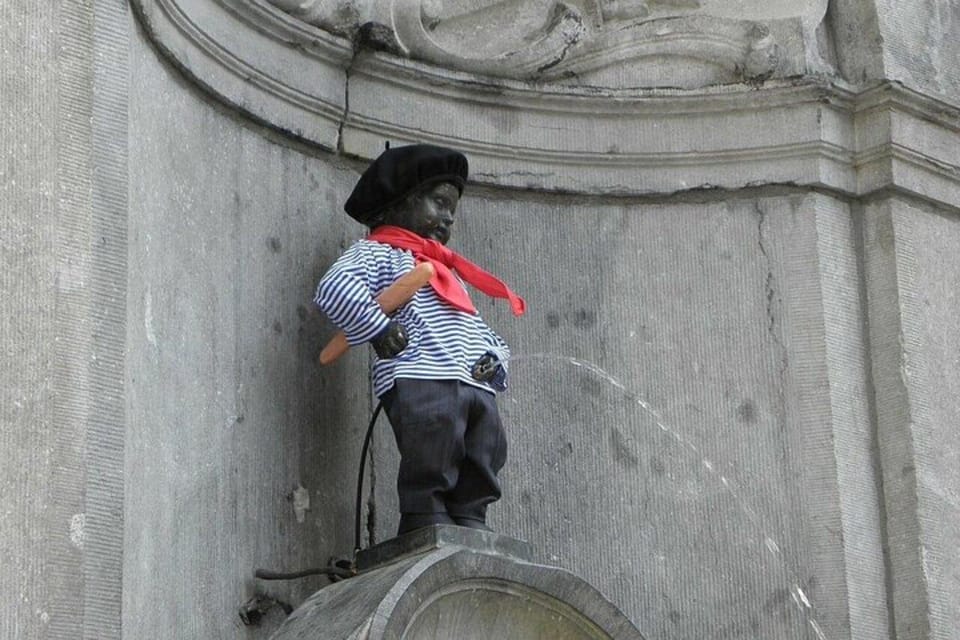
Then comes Manneken Pis, the famous peeing statue. The tour calls out why it’s infamous but also loved. That’s a great framing, because it nudges you to look beyond the cartoon factor.
Your guide treats Manneken Pis as a story you can understand, not just a thing you have to tick off. You’ll also get a chance to see what makes the local attitude toward it such a lasting part of Brussels culture. It’s one of those moments where the guide turns an internet-famous sight into an on-the-ground experience.
After that, you’ll visit Jeanneke Pis. I appreciate having a second stop right after the first. It prevents the visit from feeling like a one-joke punchline. Instead, you start noticing how Brussels uses humor in public life.
If you’re easily embarrassed, no worries: this is all light street culture. Still, it helps to keep a sense of humor. You’ll see people taking photos, and your guide keeps things grounded.
L’Envol (Jacques Brel Statue) and the Royal Galleries: Art Meets Street-Level Brussels
Mid-route you’ll see L’envol – Statue de Jacques Brel. This is a smart pivot. After the comedic statue duo, the tour shifts to a different kind of Brussels presence: artistic tribute and public art.
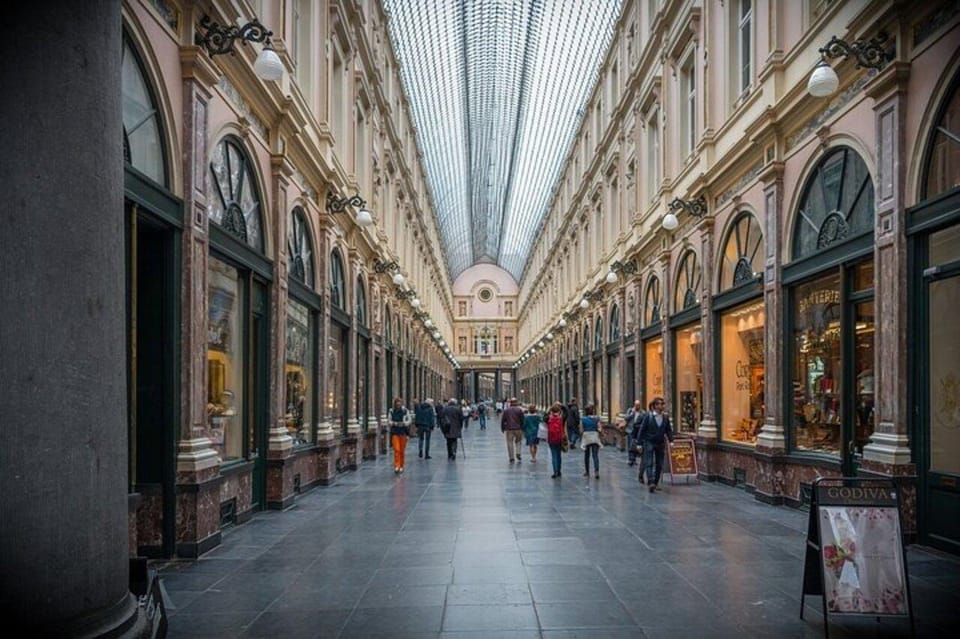
Then you’ll move to Les Galeries Royales Saint-Hubert. This is the kind of place where a guided walk pays off because you can focus on how the streets connect and how the space feels as you pass through. Even if you’ve only ever seen photos, you’ll feel the geometry and the pedestrian flow by being there with a guide who’s pointing out what matters.
This section also keeps the energy up. It breaks the walk into distinct “chapters” so you don’t go from one major sight to the next without any breathing room.
Royal Theatre Toone: Going Inside (Plus the Resident Cat)
The tour concludes at the Royal Theatre Toone, Brussels. Here’s what makes this last stretch memorable: you get the opportunity to explore the interior of the old theatre, and you can see the resident cat.
That cat detail is exactly the kind of thing you’d never plan for on your own, and it’s the reason short tours can still feel special. It adds warmth and charm right at the end, when you’re deciding whether the tour was worth your time.
Interior access is also a real value point. Many walking tours stop at exteriors. Ending with a place where you can look around inside gives you a payoff, not just a photo finish.
After Toone, the tour ends in the heart of Brussels at Grand Place, which is a nice practical wrap. You’re left near the central spot you’ll likely want to revisit for dinner or evening strolling.
What You’re Really Paying for: Price and Value at $32
At $32 per person for a 2-hour guided walking tour, the question isn’t only cost—it’s what you get for it.
You’re paying for:
- a guide who leads you through the route so you don’t waste time finding the next stop
- live interpretation in French, English, Spanish, and Italian
- a set itinerary that intentionally links major landmarks (church, Grand Place, iconic statues, galleries, theatre)
For many visitors, the guide is the difference between seeing Brussels and understanding what you saw. In the feedback, the strongest praise focuses on guides who are friendly, energetic, and skilled at turning big names into clear, human stories.
In particular, names like Savannah, Fabio, and Andrea show up in excellent feedback for competence and energy. That aligns with what you want from a short tour: someone who can keep the pace moving while still sharing those smaller details that make the city feel real.
If your goal is to maximize sightseeing time without scheduling complexity, this price-to-time ratio is sensible. If your goal is a slow, self-guided wander where you control every stop and take long detours, you might prefer a flexible day pass and DIY route. But for a first pass through central Brussels, this is a solid deal.
Group vs Private: Matching the Tour to Your Style
This tour offers group or private options. In my view, this is where the value can shift depending on how you travel.
- Choose a group tour if you like meeting other travelers and you’re happy sticking to a set pace. It’s usually the simplest choice for quick orientation.
- Choose private if your schedule is tight or your interests are specific. You can also get assistance with logistics; for private tours, public transportation costs are included.
Also, the tour is wheelchair accessible, so it’s built to be workable for more people than the typical “all stairs, all the time” city walk.
One consideration: because it’s still a short 2-hour format, even private tours won’t turn into a multi-hour deep crawl. You’ll get focus, but not endless time.
Tips to Get the Most Out of Every Stop
A good walking tour depends on your small choices. Here are a few things that help with this route specifically:
- Wear comfortable shoes. This is a continuous walking experience from stop to stop.
- Be ready for crowd conditions near Grand Place. Keep your pace steady and plan to pause when the guide stops you.
- Listen during the “context” moments. The tour’s big payoff is what you learn along the way, not just what you can photograph.
- Use the indoor theatre stop as your decompression moment. The Royal Theatre Toone segment is where you can slow down a little and enjoy the change of setting.
- Have your camera ready for the iconic statues, then put it away. Manneken Pis and Jeanneke Pis are quick hits; the guide will help you understand what to notice beyond the obvious.
If you’re the type who loves both landmarks and “how people actually talk about the place,” this itinerary fits you well.
Who This Brussels Tour Best Suits
This tour works best if you:
- want a first-time Brussels introduction without planning every stop yourself
- like a mix of famous sights and small, story-driven context
- prefer a guided walking format over museums or long drives
- want a short activity that still feels meaningful, not rushed
It’s also a good fit for couples and solo travelers who want an easy structure. If you’re traveling with kids, the tone at iconic, recognizable sights plus the resident cat at Toone can be a nice blend of silliness and culture.
Should You Book This Walking Tour?
Yes, if you want a fast, guided route that hits the major central sights—Grand Place, Manneken Pis, Jeanneke Pis, the Jacques Brel statue, Royal Galleries Saint-Hubert, and the Royal Theatre Toone interior—while also learning what the city’s stories mean.
I’d skip it only if you’re aiming for a slow-paced, flexible day where you might spend a lot of time lingering in shops or you don’t care much about guided context. For everyone else, this is a smart use of time in Brussels: you get oriented, you get memorable moments, and you come away knowing how to explore the rest of the city on your own.
FAQ
How long is the Brussels Must-See Attractions Walking Tour?
It runs for 2 hours.
Where does the tour start?
The tour starts at Bd Anspach 188, in front of the Vibes shop.
What are the main stops on the route?
You’ll visit St. Nicholas Church, Maison Dandoy – Grand Place, the Grand Place area, Manneken Pis, L’envol – Statue de Jacques Brel, Les Galeries Royales Saint-Hubert, Jeanneke Pis, and Royal Theatre Toone.
What languages are available for the live guide?
The live tour guide is available in French, English, Spanish, and Italian.
Is there a private option?
Yes. Private group tours are available, in addition to group tours.
Is the tour wheelchair accessible?
Yes, the tour is listed as wheelchair accessible.
How does cancellation work and can I pay later?
You can cancel up to 24 hours in advance for a full refund, and there’s a reserve now & pay later option (reserve a spot and pay nothing today).