REVIEW · BRUSSELS
1.5h Belgian Chocolate Workshop in Brussels (bean to bar)
Book on Viator →Operated by The Belgian Chocolate Makers SRL · Bookable on Viator
If you like chocolate, this class feels like insider access. You get bean-to-bar style techniques (including tempering) plus serious cacao tasting, all in a 90-minute Brussels setup built for making.
Two things I really like: you create multiple types of sweets—mendiants, truffles, and a personalized chocolate bar—and you also taste the raw stuff first, from cacao pod juice to very bitter raw beans. One thing to keep in mind: it’s an intro workshop, not a full factory course where you build chocolate from raw cacao all the way through every industrial step.
In This Review
- Key Takeaways Before You Go
- Belgian Chocolate Makers in Brussels: What the 90 Minutes Really Delivers
- Getting There: Check-In at Pl. de la Justice and Then Into the Workshop
- What the Room Feels Like: Hairnets, Cool Air, and Food Safety Notes
- The Cacao Tasting Part: Where This Workshop Gets Serious
- Tempering on Marble: The Technique That Makes Belgian Chocolate Look Right
- Making Your Treats: Mendiants, Truffles, and Your Own Chocolate Bar
- Your chocolate bar (personalized)
- Mendiants
- Truffles
- Ruby Pink Chocolate Secrets: What You’ll Learn (and What to Ask About)
- VIP Upgrade: Champagne Welcome and an Apron You’ll Actually Wear
- Value Check: Is $76.19 Worth It in Brussels?
- Who This Workshop Is Best For (and Who Might Want to Skip)
- Final Verdict: Should You Book It?
- FAQ
- How long is the Belgian Chocolate Workshop?
- Where do I meet for the workshop?
- What language is the workshop offered in?
- What can I make during the class?
- What’s included in the tasting portion?
- Is there a VIP upgrade?
- Do I need to bring anything like a hairnet?
- Is the workshop suitable for severe food allergies?
- Is the workshop accessible?
- How flexible is cancellation?
Key Takeaways Before You Go
- Tempering on a marble table is the real technique demo that makes Belgian chocolate taste right.
- You’ll make several treats (mendiants, truffles, and your own chocolate bar), then pack them in a gift box.
- A big part is cacao tasting: pod juice (mucilage), cacao beans, and cacao liquor.
- The workshop teaches the secrets of ruby pink chocolate, not just standard dark bars.
- VIP adds a welcome glass of champagne and an embroidered apron with the logo.
Belgian Chocolate Makers in Brussels: What the 90 Minutes Really Delivers
This is the kind of Brussels experience chocolate lovers can actually use. You’re not just watching someone else work. You’re learning why Belgian chocolate behaves the way it does, then using that knowledge immediately as you temper, mold, and finish your own confections.
The “bean-to-bar” angle here is handled in a practical way. You start with cacao tasting—raw cacao that’s surprisingly intense, then cacao liquor (the natural cacao paste). After that, you move into the chocolate-making techniques that turn that raw intensity into the smooth, glossy texture you expect from good chocolate.
Also, this is built to be visitor-friendly. Sessions run at 11 AM, 2 PM, and 5 PM, and the workshop space is purpose-made, with an air-conditioned training centre. The total time is about 1 hour 30 minutes, so it fits cleanly into a sightseeing day.
You can also read our reviews of more drinking tours in Brussels



Getting There: Check-In at Pl. de la Justice and Then Into the Workshop
Your starting point is the Belgian Chocolate Makers booking desk at Pl. de la Justice 5, 1000 Bruxelles. You’ll use a mobile ticket, and the class is offered in English.
One practical heads-up: the check-in point and the actual making space aren’t always the same spot. You may be escorted to the workshop location after you check in. So don’t show up right on the dot. It’s smarter to arrive a few minutes early, get your bearings fast, and avoid losing time when the group starts.
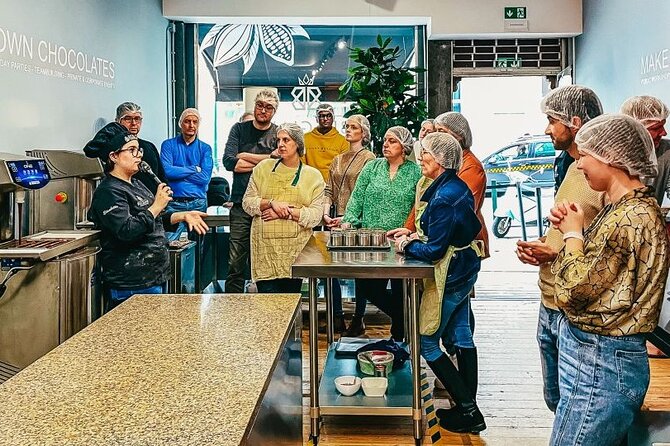
The workshop space is a brand-new 170 m² training centre. It can host up to 60 participants, so you’re not exactly in a private kitchen. Still, the room setup supports a hands-on flow without feeling like you’re lost in a crowd.
What the Room Feels Like: Hairnets, Cool Air, and Food Safety Notes
The room is air-conditioned—and that’s great for comfort, but it can feel cool, especially when you’re standing still for demos and then working with chocolate at your station. Bring something light you can layer.
You’ll be provided a hairnet, and you must wear it during the workshop. Water dispensers are available, and there’s a disabled-access toilet on site. Service animals are allowed too.
Food allergy note, straight from the rules: the workshop is not suitable for severe food allergy. If allergies are mild or you’re okay with tracing ingredients, you’ll still want to ask ahead. Chocolate workshops can involve multiple cacao types, toppings, and cross-contact risks, so this isn’t the place to wing it.
The Cacao Tasting Part: Where This Workshop Gets Serious
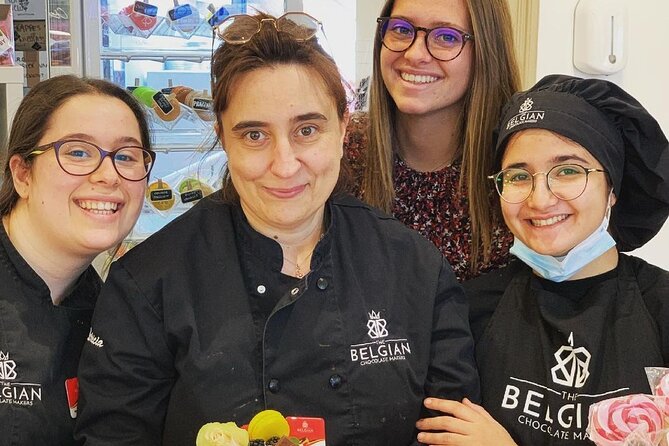
Before anyone molds chocolate, you get educated with your senses. The workshop includes multiple tasting moments that explain why “chocolate” is way more than a brown bar.
Here’s what you can expect to taste and handle:
- A fresh cacao pod in your hands, then tasting raw cacao beans straight from the fruit. These are famously bitter—think less candy, more raw cacao reality check.
- Pure cacao liquor, the natural cacao paste used as the foundation for chocolate. This is not the sweet stuff. It’s the cacao body.
- Cacao from different premium origins, so you can taste how terroir-style differences show up even in cacao.
- Cacao pod juice (mucilage). This adds another layer to your understanding of where flavor comes from.
This is one of the most praised parts because it turns the lesson from theory into direct experience. If you’ve ever wondered why some chocolate tastes fruity, nutty, or deeper, this section gives you a baseline you can actually remember.
And yes, your station will probably get a little messy. When you’re working with chocolate, expect some smudges. That’s not a flaw. It’s part of the deal.
Tempering on Marble: The Technique That Makes Belgian Chocolate Look Right
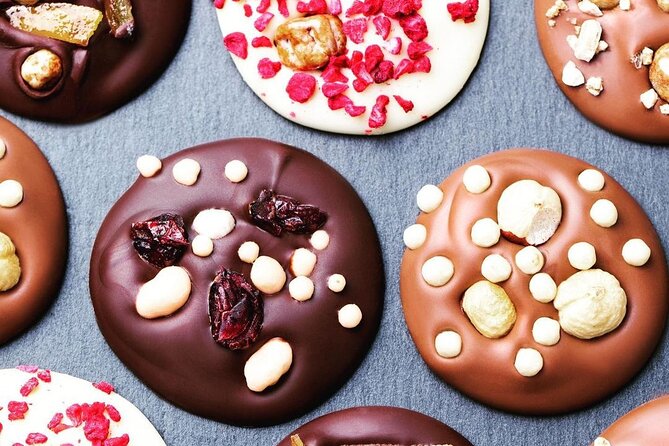
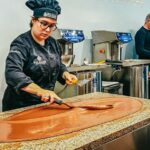
This is the moment where the workshop earns its “maker” status. You’ll watch special techniques, including tempering on a marble table—a classic method for stabilizing chocolate so it sets with that satisfying snap and clean shine.
Why this matters: tempering isn’t just chef theater. If chocolate isn’t tempered properly, it can turn dull, grainy, or fail to set how you expect. Learning the tempering principle helps you understand why Belgian chocolate has that signature texture.
Then you apply it in your own work. You’ll use the techniques you’ve been shown to create your items, so you’re not just collecting facts. You’re building a product and learning the process behind the product.
You can also read our reviews of more tours and experiences in Brussels




Making Your Treats: Mendiants, Truffles, and Your Own Chocolate Bar
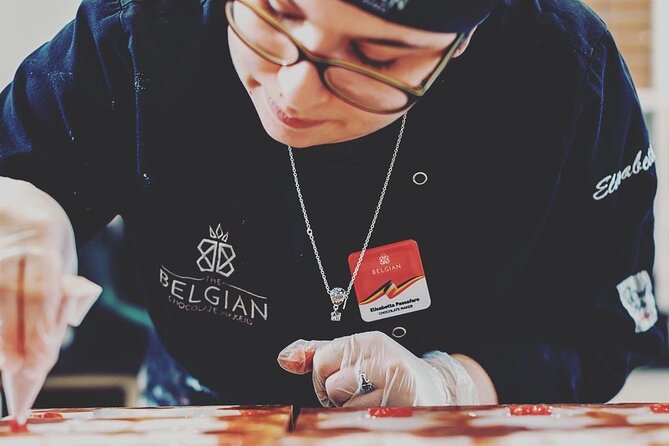
This workshop is built around three concrete creations. That’s a win because it gives you variety, not just one finished chocolate.
Your chocolate bar (personalized)
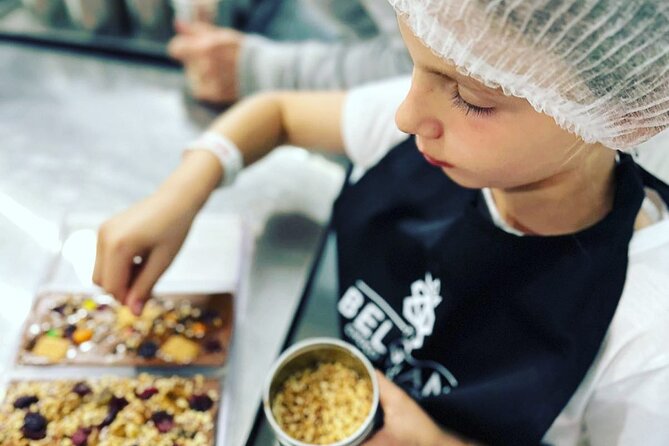
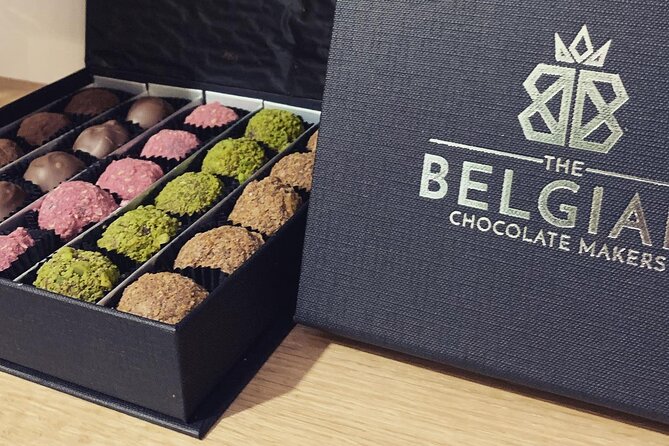
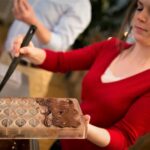
You’ll handcraft your own chocolate bar. The wording is simple, but the point is huge: you get to design something that feels personal instead of generic. At the end, you pack everything in a gift box so you can take it home as a real souvenir, not a messy snack.
Mendiants
You’ll make mendiants—those flat, decorative chocolate pieces typically finished with a topping pattern. In practice, this means you get to work with chocolate plus toppings, which teaches balance: too much topping can overwhelm, too little looks bare.
Truffles
You’ll also make truffles, then you’ll box them up with your other creations. Truffles are a good training target because they show how chocolate behaves after mixing and shaping, not just in a mold.
If you’re thinking about the workshop as a “do I get enough making time?” test, these three items are the answer. It’s structured so you can leave with a meaningful amount of chocolate and a clear understanding of what you did.
Ruby Pink Chocolate Secrets: What You’ll Learn (and What to Ask About)
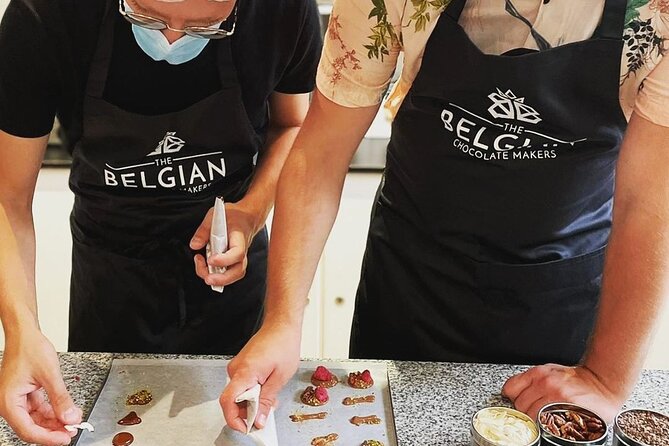
The workshop specifically includes learning the secrets of how ruby pink chocolate is made. That’s a standout topic because ruby pink chocolate is still not common everywhere, and it has a distinct flavor profile compared with milk and dark chocolate.
That said, one practical consideration: some participants note that ruby experiences can vary in what’s actually tasted or demonstrated in detail. So if ruby pink tasting is your top priority, ask your booking questions up front. You want clarity on whether you’ll get ruby samples as part of your tasting set and exactly what the session covers visually.
If ruby is simply a curiosity, you’ll still get the learning portion. The workshop frames it as part of the broader cacao-to-chocolate story, not as a gimmick.
VIP Upgrade: Champagne Welcome and an Apron You’ll Actually Wear
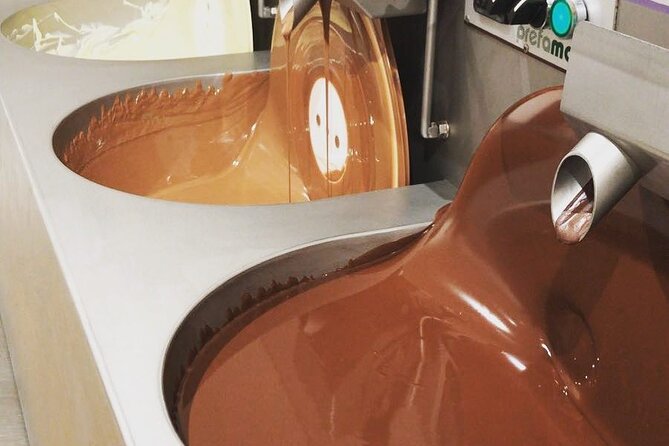
There’s a VIP option that adds two perks:
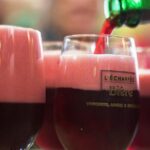
- A welcome glass of champagne
- An embroidered apron with the logo
If you’re doing this as a celebration—birthday, anniversary, or a fun adult day in Brussels—VIP can be an easy way to make the experience feel special right from the start. The apron is also practical. It’s not just a souvenir photo prop. If you’re the type who likes to cook or host at home, it’s a keepsake you’ll actually use.
One more value detail: the standard workshop already includes the gift box and takeaway chocolate. VIP is about making the start feel like an event.
Value Check: Is $76.19 Worth It in Brussels?
Let’s talk straight money and what you get for it. At $76.19 per person for about 90 minutes, you’re paying for a focused, instructor-led format with real cacao tasting and multiple finished chocolate products you take home.
What makes it feel like decent value:
- You don’t leave empty-handed. You take a gift-box set of your own creations.
- You get instruction tied to real techniques like tempering.
- You also get guided tasting: cacao origins, cacao pod juice, and raw cacao tasting that helps you understand what you’re buying later.
Where the value can feel weak is expectation mismatch. If you’re expecting a workshop that feels like you’re “making everything from scratch” in a full production sense, you may be disappointed. This is an intro class that focuses on core techniques and hands-on shaping/finishing, not a total behind-the-scenes factory transformation.
So I’d judge it this way: if you want craft skills plus a souvenir that you genuinely made, it’s strong. If you want a full industrial bean-to-bar manufacturing day, look for a longer, more production-heavy program.
Who This Workshop Is Best For (and Who Might Want to Skip)
This is ideal for:
- Chocolate lovers who want hands-on work, not just tasting.
- People who like learning through senses, especially the cacao pod and raw bean section.
- Couples and families who want a shared activity with a clear payoff: the takeaway box.
It can be a bit adult-leaning, depending on what chocolates end up being dominant in your session. One note from participants: the chocolate you make can be mostly dark, so kids who dislike intense flavors might need a little support. On the flip side, many families enjoy it because tasting makes the experience feel like an adventure, not a school lesson.
Also, if you’re sensitive to dietary restrictions, remember the workshop isn’t suitable for severe food allergy. For mobility needs, there’s a disabled-access toilet available on site, but there may be walking between check-in and the workshop area, and some sessions may involve stairs. If that matters, message ahead.
Final Verdict: Should You Book It?
I think this workshop is an easy yes if you want a fun Brussels activity that ends with your own chocolates—and you want to understand cacao beyond the wrapper. The combination of cacao tasting, tempering instruction, and multiple creations (mendiants, truffles, your own bar) makes the time feel justified.
Book it if:
- You’re excited by the idea of tasting raw cacao and cacao liquor.
- You want to watch and practice a real technique like marble tempering.
- You want a takeaway gift box that feels legit.
Skip it or ask extra questions if:
- Ruby pink tasting is a must for you, and you need to confirm what you’ll taste during the session.
- You’re expecting a full production-from-bean manufacturing experience.
- You have severe food allergies or mobility concerns that could be affected by stairs or walking.
If you fit the first group, you’ll likely leave with both chocolate you made and knowledge you can actually use while shopping across Brussels.
FAQ
How long is the Belgian Chocolate Workshop?
It runs for about 1 hour 30 minutes.
Where do I meet for the workshop?
Start and end are at The Belgian Chocolate Makers booking desk at Pl. de la Justice 5, 1000 Bruxelles, Belgium.
What language is the workshop offered in?
The workshop is offered in English.
What can I make during the class?
You’ll make mendiants, truffles, and a personalized chocolate bar, then pack your creations in a gift box to take home.
What’s included in the tasting portion?
You’ll taste several cacao origins from different countries, cacao pod juice (mucilage), and you’ll also taste raw cacao beans and pure cacao liquor.
Is there a VIP upgrade?
Yes. The VIP upgrade includes a welcome glass of champagne and an embroidered apron with the logo.
Do I need to bring anything like a hairnet?
No. A hairnet is provided, but you must wear it during the workshop.
Is the workshop suitable for severe food allergies?
No. It is not suitable for severe food allergy.
Is the workshop accessible?
A disabled-access toilet is available on site. Service animals are allowed. You should confirm details for mobility needs because there may be walking between points.
How flexible is cancellation?
Free cancellation is available. You can cancel up to 24 hours in advance for a full refund. If you cancel less than 24 hours before the start time, the amount paid is not refunded.