REVIEW · BRUSSELS
From Brussels: The Battle of the Bulge Remembrance Tour
Book on GetYourGuide →Operated by BRUSSELS CITY TOURS · Bookable on GetYourGuide
Cemeteries at first, then foxholes in the woods. This 11-hour Battle of the Bulge Remembrance Tour gives you a moving start at the Neuville-en-Condroz American Cemetery and a meaningful stop at Mardasson Memorial, tying the names on graves to what soldiers actually faced. One heads-up: it’s a long day with lots of standing and walking, so comfortable shoes matter and it isn’t a fit for wheelchair users or anyone with mobility limits.
I like the way the guides keep the story clear and human, with live English commentary that connects locations you can point to on a map. You’ll also get the Bastogne War Museum entrance included, plus transport by coach, so you’re not juggling tickets while you’re trying to pay attention.
In This Review
- Key highlights worth centering your plans
- A long, packed day in the Ardennes (and why that’s a good thing)
- Neuville-en-Condroz American Cemetery: where the story starts
- Bastogne and McAuliffe Square: the town where the battle stayed human
- The M3 Sherman Tank: a symbol you can actually see
- Mardasson Memorial: the star-shaped tribute that hits harder
- Bastogne War Museum (entrance included): how you learn without getting lost
- German cemetery stop: adding the full WWII picture
- Foy foxholes and cavities: seeing protection tactics up close
- Lunch and timing: plan for an 11-hour rhythm
- Price and value: what you’re really paying for at $97
- What the guides do that matters (and why it shows up in reviews)
- Who should book this Battle of the Bulge Remembrance Tour
- Should you book? My practical recommendation
- FAQ
- How long is the tour?
- How much does the Battle of the Bulge Remembrance Tour cost?
- What’s the meeting point in Brussels?
- Is transportation included?
- Is the War Museum ticket included?
- Is lunch included?
- What language is the tour guide?
- Is the tour suitable for wheelchair users?
- What should I bring?
- Can I cancel for a full refund?
Key highlights worth centering your plans
- Neuville-en-Condroz American Cemetery sets the tone with rows of white crosses and a direct tribute to U.S. soldiers
- McAuliffe Square in Bastogne connects the battle to a real town square, with time for photos and browsing
- M3 Sherman Tank photo stop helps you visualize Allied equipment right where the story unfolded
- Mardasson Memorial (star-shaped) gives you a powerful focal point for the American sacrifice
- Bastogne War Museum includes 3D displays and guided context so you understand what you’re seeing
- Foy foxholes and cavities show protection tactics used by American troops on the ground
A long, packed day in the Ardennes (and why that’s a good thing)
This is an 11-hour trip from Brussels into the Ardennes, designed as one continuous WWII story. You’re on the coach for a couple hours, then most of the day is spent visiting sites where you can look, walk, and understand the battle’s geography.
The structure matters. When you start with a cemetery, then move to Bastogne’s landmarks, and end with foxholes in Foy, the day stops feeling like random sightseeing. It turns into a sequence: sacrifice, struggle, and survival.
The other practical point: you’ll want energy for the bus rides and for the stops. Even when you’re only walking short stretches, this is still a full day out of Brussels.
You can also read our reviews of more tours and experiences in Brussels.



Neuville-en-Condroz American Cemetery: where the story starts
You begin at the Neuville-en-Condroz American Cemetery, near the Ardennes area. The setting is stark and straightforward—thousands of U.S. soldiers are honored with rows of white crosses, each one quietly reinforcing the scale of the loss.
What I appreciate here is that the tour doesn’t jump straight into battle details. It starts with remembrance. That changes how you process everything after, especially when you later see memorials and the sites where troops dug in.
If you’re sensitive to memorial spaces, this stop is still appropriate. It’s not loud or showy. It’s reflective, and the guide’s commentary helps you connect the names and the location to the larger WWII context without turning it into a lecture hall.
Bastogne and McAuliffe Square: the town where the battle stayed human
After the cemetery, you head to Bastogne, the key stronghold during the Battle of the Bulge. Bastogne is where the tour shifts from solemn remembrance to place-based context: you’re not just hearing about events, you’re standing in the town tied to them.
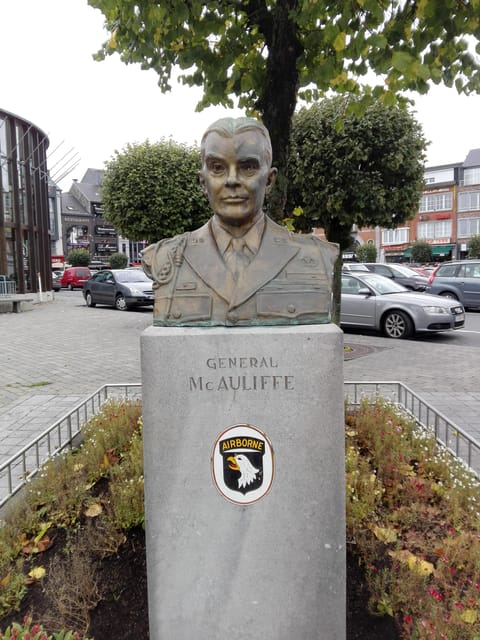
McAuliffe Square is the center of that experience. You get time to walk around, take photos, and soak in the feel of the town square. If you want a break from history talk, this is one of the best moments—because it’s also where you can find nearby dining and shopping before you move on.
One plus: Bastogne isn’t just a stop sign. You’ll see that the square and surrounding area are still everyday Belgium. That blend—battle history inside a living town—is one of the reasons this day trip works as a real experience, not a checklist.
The M3 Sherman Tank: a symbol you can actually see
At Bastogne, you also get a photo stop featuring an imposing M3 Sherman Tank. It’s a simple moment, but it helps your brain make the leap from story to objects.
Here’s the value for first-timers: seeing equipment in person adds clarity to how armies moved, protected themselves, and pushed back. Even if you’re not a tank expert, the sight picture sticks, and the guide can tie it to the broader Allied resilience you’re learning about that day.
Plan on a few minutes for photos. It won’t replace the museum, but it sets you up to understand what the museum later explains in more detail.
Mardasson Memorial: the star-shaped tribute that hits harder
Next comes the Mardasson Memorial, a star-shaped monument honoring American soldiers killed in the battle. The design makes it feel like a landmark you’re meant to approach deliberately, not just pass by.
This is where the tour’s emotional arc becomes very real. You’re no longer only dealing with cemeteries and the idea of sacrifice—you’re at a specifically designed space for remembrance that points your attention toward the American experience of the battle.
If you’re the type who likes to understand meaning through design, spend a moment looking around from different angles. The star shape isn’t just decoration; it shapes the way you read the monument and your own viewpoint in relation to it.




Bastogne War Museum (entrance included): how you learn without getting lost
The Bastogne War Museum is included, and it’s a major reason this tour feels worth the money. You’ll have enough time at the museum to actually follow what you see, not just sprint through.
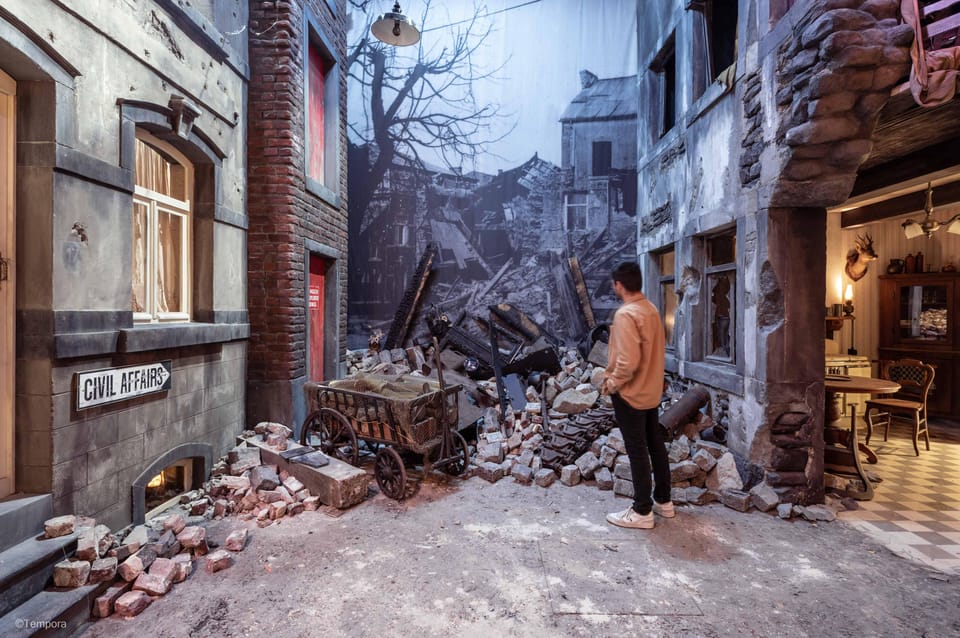
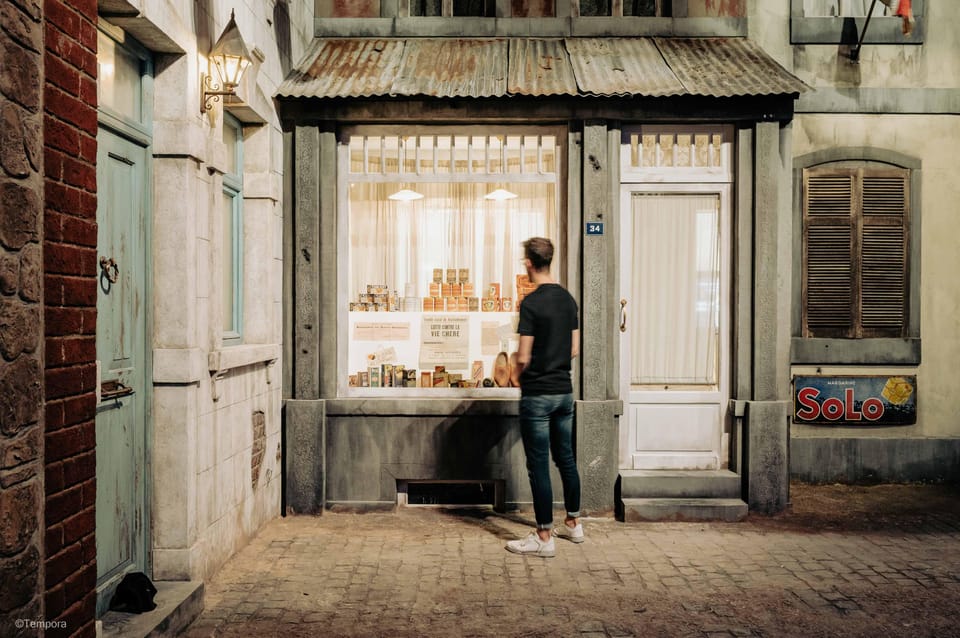
The standout feature noted in the tour description is the 3D displays, paired with powerful stories. That combination is what turns historical events into something you can picture. You understand the battle not only as dates and names, but as movement, decisions, and terrain.
And it helps when the guide’s pacing matches what the museum offers. In this experience, guides like Martin King and Stefan have been praised for explaining the background and how different armies fit into the overall battle story. That matters because the museum can be intense—context makes it easier to digest.
If you’re a history enthusiast, this museum stop will feel like the payoff. If you’re more casual about WWII, the guided approach still helps you stay oriented, so you leave with a clearer mental map than you arrived with.
German cemetery stop: adding the full WWII picture
The itinerary also includes a visit to the German cemetery. This stop changes the focus slightly, reminding you that the Battle of the Bulge wasn’t only about one side’s loss—it was widespread and brutal.
From a learning standpoint, this is one of the more important balance points. It keeps the day from turning into a one-sided story. Instead, you see the battle’s human cost across communities and soldiers, which is what makes remembrance feel responsible rather than selective.
If you prefer tours that stick to one narrative, this might feel like an extra emotional layer. But if you want a complete understanding of what the battle meant, it belongs here.
Foy foxholes and cavities: seeing protection tactics up close
The day’s most visceral stop is in Foy, where you visit foxholes and cavities dug by American soldiers for protection. This is where the battle becomes physical, not just described.
The terrain is the lesson. When you stand near these defensive positions, it’s easier to grasp why survival depended on cover, how soldiers adapted to conditions, and how close the action was. You’re not reading about it—you’re looking at the shapes troops created to stay alive.
The tour notes that the foxholes were linked to the 101st Airborne Division. Even if you don’t know their history before you arrive, the guide can connect the site to what you’re learning about the battle and the units involved. That’s why this stop lands so well at the end of the day: it’s the logical consequence of everything you saw earlier—cemeteries, memorials, and the museum’s explanations.
Lunch and timing: plan for an 11-hour rhythm
Lunch is scheduled at a local restaurant, with time set aside for about an hour. The important detail is that lunch and beverages aren’t included in the tour price, so you’ll need to budget for that meal.
Timing-wise, you’re essentially doing: travel in, two major blocks of remembrance and learning, then travel back. That’s why comfortable shoes are more than a suggestion. You’ll likely walk on uneven ground at outdoor stops, and you’ll be on your feet at memorial sites.
Also note that the tour is not recommended for people with limited mobility. Even if the walking segments are often described as short, the overall day includes several stops where movement and stairs or uneven surfaces can be involved.
Price and value: what you’re really paying for at $97
At $97 per person, this is positioned as a full-day guided WWII experience with transport and museum access. On paper, that sounds straightforward. In practice, the value is the bundling: bus, professional guide, and the War Museum entrance are included.
If you tried to DIY this route, you’d likely spend time coordinating transport and purchasing tickets—plus you’d lose the guided context that connects each location into one story. This tour’s structure is its core value: it saves you planning energy and gives you a coherent narrative for your effort.
One more value point is the guide quality. You’ll hear names like Martin King, Stefan, and Jan in the feedback for strong storytelling and fast, energetic explanations. The best guides don’t just recite facts; they help you interpret what you’re seeing, and that changes the entire day.
What the guides do that matters (and why it shows up in reviews)
Across the experience, the guides are consistently praised for clarity and energy. Martin King is highlighted for being both entertaining and historically grounded, sharing how the different armies involved fit into the battle picture. Stefan is noted for strong explanations that made the museum content easier to understand once you’re inside.
Jan is mentioned for flexibility, even adding a stop to include a town connected to a family member’s service. That’s a real-life detail you’ll appreciate because it shows the tour can adapt to personal context, not just run a rigid script.
Even when you’re not in a moment like that, the guides’ pacing seems to be the key ingredient. You get time at the right places, and you don’t feel rushed through the most meaningful sites.
Who should book this Battle of the Bulge Remembrance Tour
This is a great fit if you want a single day that covers the most important memorial and learning stops in the Bastogne area. It’s especially good for people who like structure: one route, clear storytelling, and a sequence that makes the WWII context click.
You’ll also enjoy it if you’re the type who likes to see history in three forms:
- written and explained context (through the guide),
- visual learning (the museum displays),
- physical reminders (cemeteries and foxholes).
If you’re traveling with limited interest in WWII, you might find the day heavy. But if you’re curious, the town elements—like McAuliffe Square—help keep it balanced.
And if you need step-free access, this one’s not recommended based on the mobility notes. Better to choose a different format that can match your needs.
Should you book? My practical recommendation
I’d book this tour if you want a high-impact Battle of the Bulge day that’s organized around remembrance and understanding, not just driving from point to point. The included museum entrance, the coach transport, and the fact that the stops connect into a single story make the $97 feel like a fair deal rather than a random add-on.
I’d skip it if you’re mobility-limited or if a long, standing-heavy day doesn’t work for you. Also, plan for lunch costs since they’re not included.
FAQ
How long is the tour?
The tour lasts 11 hours.
How much does the Battle of the Bulge Remembrance Tour cost?
It costs $97 per person.
What’s the meeting point in Brussels?
You meet outside the National Bank of Belgium, looking for staff and the Keolis coach.
Is transportation included?
Yes. Transportation by bus/coach is included.
Is the War Museum ticket included?
Yes. Entrance to the Bastogne War Museum is included, and you can skip the ticket line.
Is lunch included?
No. Lunch and beverages are not included.
What language is the tour guide?
The live tour guide speaks English.
Is the tour suitable for wheelchair users?
No. It is not recommended for people with limited mobility, and it is not suitable for wheelchair users or those with mobility impairments.
What should I bring?
Bring comfortable shoes.
Can I cancel for a full refund?
Yes. Free cancellation is available up to 24 hours in advance for a full refund.