REVIEW · BRUSSELS
Visite guidée : Bruxelles, 1000 Ans de Luttes
Book on Viator →Operated by Brussels By Foot · Bookable on Viator
Brussels has a darker side you can walk through. I love how the guide turns street corners into stories about power and everyday survival, and I love the Marolles lens on what life cost people over centuries. One catch: it’s only about two hours, so you’ll get smart stops, not long museum-style time.
This is a compact English guided walk (usually up to 25 people) that moves from landmarks to the nooks of the Marolles district. Names you may see for the guiding team include Francois, Simon, and Thomas, and the common thread is clear: lots of context, room for questions, and a feel for how Brussels works at ground level.
In This Review
- Key highlights you’ll remember
- A 2-hour Brussels walk that explains how people lived
- Stop 1: Église Notre-Dame de la Chapelle and the mix of faith and culture
- Stop 2: Palais de Justice and the story behind the renovation that never ends
- Stop 3: Ascenseur des Marolles for one of Brussels’ best quick views
- Stop 4: Quartier Marolles and the neighborhood that shaped people
- Stop 5: Place du Jeu de Balle and the daily flea market rhythm
- Price and value: why this ticket is so low
- Group size, pacing, and what to expect on the ground
- Tips to make this tour feel personal (not just educational)
- Who should book this Marolles-focused tour?
- Should you book Bruxelles, 1000 Ans de Luttes?
- FAQ
- How long is the Bruxelles, 1000 Ans de Luttes guided tour?
- Is the tour offered in English?
- How much does the tour cost?
- What’s included, and are any site fees covered?
- Where does the tour start and end?
- Do I get a mobile ticket?
- What group size should I expect?
- Can I cancel for a full refund?
- Is it easy to reach, and are service animals allowed?
Key highlights you’ll remember
- A 12th-century church that still feels active (Notre-Dame de la Chapelle, with painting exhibitions and Polish-language Mass on Sundays)
- Palais de Justice as an ongoing “Belgian scandal”—a renovation story that has dragged on for decades
- Ascenseur des Marolles for a fast, rewarding viewpoint from the top of the elevator
- Quartier Marolles on foot—tiny streets, blind alleys, and the “invisible borders” shaped by class and time
- Place du Jeu de Balle and its daily flea market—a place people fight to keep alive and preserved
- Great value for the scope: included site fees, with an inexpensive ticket compared to many guided tours
A 2-hour Brussels walk that explains how people lived
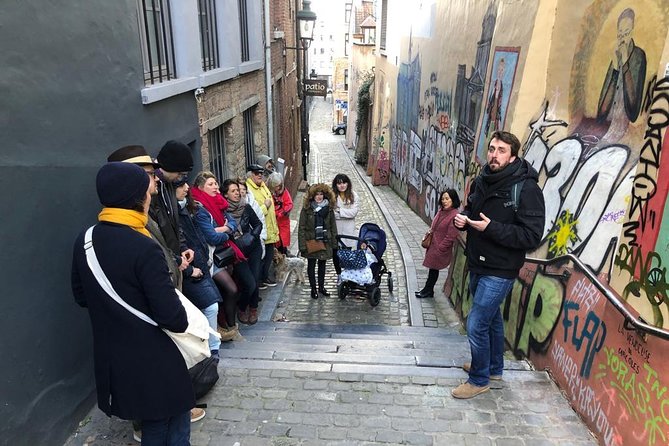
The theme here is struggle—not as tragedy theater, but as a practical way to understand a city. You don’t just see sights. You learn how ordinary people pushed back, adapted, and built community in a neighborhood that sat close to the action but didn’t always get the benefits.
I like this approach because Brussels can feel like a postcard if you only hop between grand buildings. This tour does the opposite. It takes you through the Marolles, where history shows up in small choices: which streets people used, what they preserved, and what institutions decided to ignore or delay.
Your time is tight—about two hours. That means the pacing is brisk by design. If you want hours in one place (or you need a slow, sit-down pace), plan to follow up on your own after the walk. But if you like your history with legs and good storytelling, this format is satisfying.
You can also read our reviews of more tours and experiences in Brussels.


Stop 1: Église Notre-Dame de la Chapelle and the mix of faith and culture
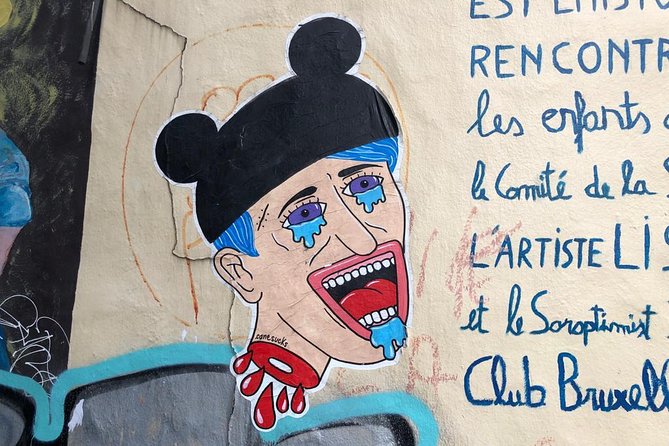
You start at Rue de la Chapelle 21, then head to Église Notre-Dame de la Chapelle, a church dating back to the 12th century. The guide uses it as a warm-up point: old stone, yes, but also a living site.
What makes this church worth your attention:
- Painting exhibitions can take over the space, so it doesn’t feel like a dead monument.
- Mass is held in Polish every Sunday, which brings a real language-and-community layer to the visit.
This stop works well early because it sets the tone. You’re not only learning dates. You’re learning how faith, art, and immigrant life can share the same walls—and how a neighborhood keeps changing without erasing itself.
Practical tip: dress for standing and walking. This isn’t a long church visit; it’s a quick “get the story, then move on” stop.
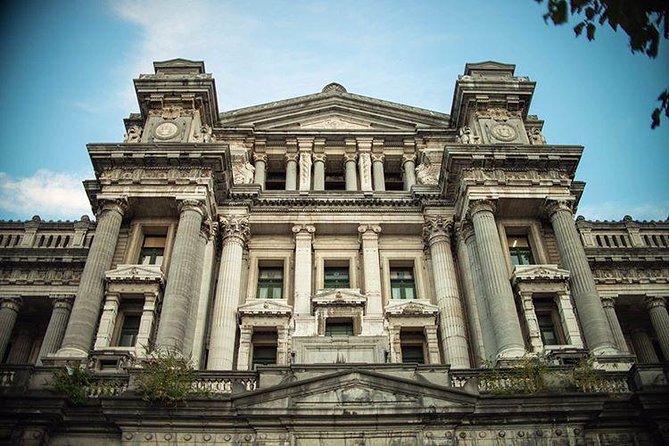
Stop 2: Palais de Justice and the story behind the renovation that never ends
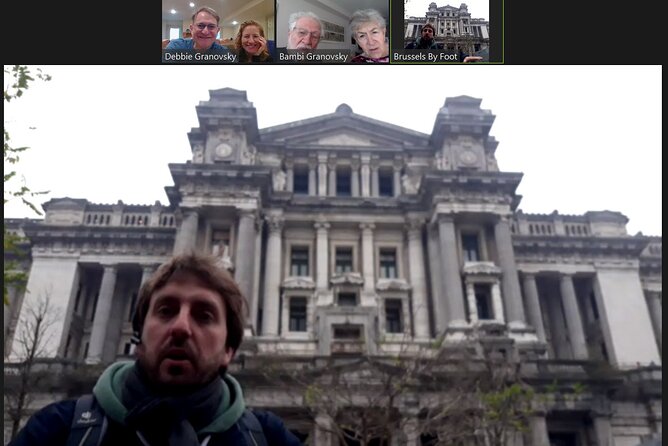
Next is the Palais de Justice. The big idea: this is a landmark you can’t fully understand just by looking up at it. It’s also a warning about public money, planning, and political inertia.
The guide frames it as a long-running issue—renovation work that started decades ago and never seems to finish. You’ll hear it described as a typically Belgian scandal and waste-of-public-money situation.
Why this matters on a walking tour about “1000 years of struggles”:
- It connects civic power to real outcomes.
- It shows how institutions can drag their feet, even when the building is meant to represent justice.
- It’s a reminder that “history” isn’t only the past. It’s how decisions keep echoing.
How to get more out of it: look at the building like a system, not just an object. Ask yourself: what does a stalled project say about priorities, leadership, and accountability? That’s the lens the guide nudges you toward.
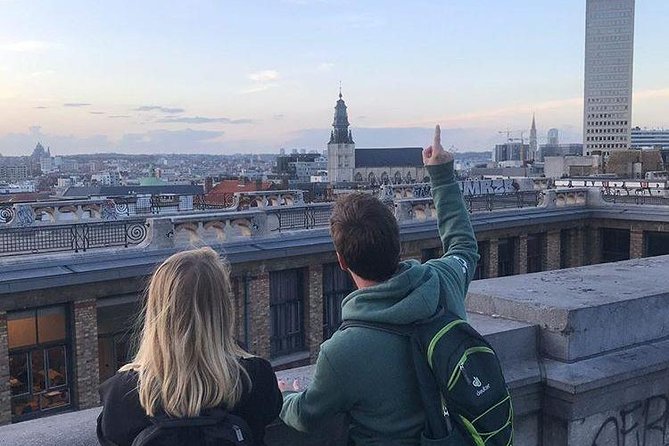
Stop 3: Ascenseur des Marolles for one of Brussels’ best quick views
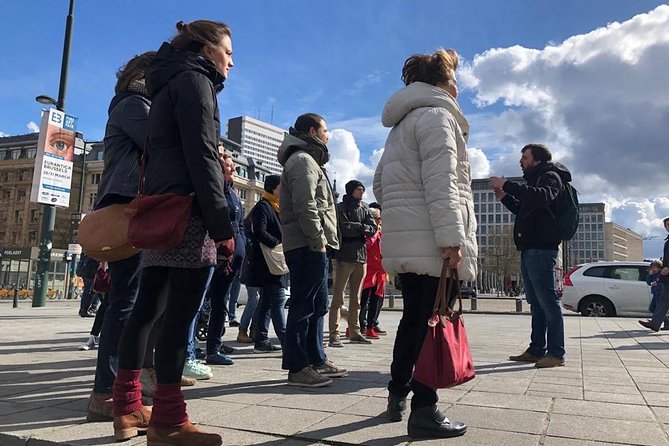
After the heavy theme of justice and delays, you get a breather: the Ascenseur des Marolles. It’s short—around five minutes in the schedule—but it’s the kind of stop that changes how you see the rest of the neighborhood.
The promise is simple: from the top, you get the best view of Brussels in this area. Even if you’ve already seen photos of the city, elevator viewpoints do something street-level walks can’t. They show relationships—how the Marolles sits in relation to bigger structures and how the urban layout creates different feeling zones.
This is also a useful reset for your legs. You’ve been listening for a while. A view lets your brain file the information into the map of the city.
Practical tip: keep your phone/camera accessible, but don’t block other people. Short stops mean everyone wants one clean shot.
Stop 4: Quartier Marolles and the neighborhood that shaped people
Now you’re in the Marolles district itself. This is where the tour earns its title.
The guide talks about the area as an old, central pocket of Brussels that was often poor, with the kind of geography that makes everyday life different: tiny streets, blind alleys, and a layout that doesn’t give you big open spaces to “escape into.” That physical design affects behavior and community.
In this part, you’ll hear a social-history angle that’s more grounded than generic city facts. One strong thread from the guide style is a focus on:
- living conditions across centuries
- people who were disadvantaged, but also independent-minded
- the sense of boundaries—both visible and invisible—inside Brussels
That “invisible borders” idea is surprisingly practical. You start noticing how a city can sort people without signs and walls you can photograph. It’s in the blocks, the street widths, the flow of foot traffic, and what gets maintained versus ignored.
What you should watch for as you walk: pay attention to how the neighborhood feels quieter or narrower as you turn corners. Those turns aren’t just scenery; they’re part of the story.
Potential drawback to keep in mind: because this is a working neighborhood, street-level experiences can be mixed. Some streets can feel less “tour-friendly” than central squares, and the pace is walking-first. If you need a very polished, straight-line route, you might find the alley-like bits a little disorienting.




Stop 5: Place du Jeu de Balle and the daily flea market rhythm
The final stop is Place du Jeu de Balle, finishing near Pl. du Jeu de Balle 64 in the square area. This is where the Marolles theme turns into something you can sense immediately: a place of everyday commerce and local persistence.
You’ll discover the daily flea market and how people have always struggled to keep the place conserved. That conservation struggle is key. It frames the market as more than a fun thing to browse—it’s a cultural practice that needs defense, not just attention.
Then the tour ends in the right setting for a low-key follow-up: there are many bars and restaurants around the square, so you can grab a drink or a bite while the stories are still fresh.
Practical tip: if you’re visiting on a day when the market is active, expect more foot traffic. This is not the moment for slow wandering. Let the group finish, then break away for browsing if you want.
Price and value: why this ticket is so low
The listed price is $3.62 per person, with the important detail that entrance fees/registration fees are included. Gratuities are listed separately (not included), with a suggested €10.00 per person.
That low headline price is the biggest reason to take it seriously. You’re getting a guided narrative with multiple sites, but you aren’t paying the typical “expensive tour” premium.
Here’s how I’d think about value:
- You’re paying for a trained storyteller and a guided route through sites that you might skip on your own.
- You’re paying for interpretation, not just access.
- Since entrance-related costs are included, your budget stays predictable.
Two things to consider:
- The main cost after the ticket is your tipping decision. If you’re the type who tips based on effort and clarity, this is where you’ll feel the difference.
- Because it’s only about two hours, you won’t see everything. This works best when you treat it as orientation and context, not as your entire Brussels plan.
Group size, pacing, and what to expect on the ground
The tour caps at 25 travelers, and that’s a sweet spot for a neighborhood walk. You’re not stuck in a tiny knot, but it’s also not so large that you lose the guide’s attention.
The schedule moves in bite-size chunks:
- a quick church stop
- a landmark conversation at the Palais de Justice
- a short elevator viewpoint
- a longer walk through Quartier Marolles
- a final market square moment
That pacing is why the tour works for both first-time visitors and locals. It’s enough time to feel connected to a neighborhood, but not so long that you burn out.
If you’re coming from central Brussels, build in a little extra time to find the start point. The start address is Rue de la Chapelle 21, 1000 Bruxelles, and you’ll want to arrive ready to walk.
Tips to make this tour feel personal (not just educational)
1) Wear shoes you don’t mind on old streets. The Marolles area is all about tight turns and compact lanes.
2) Bring questions. The best parts of this kind of tour happen when you ask how the city decided what to fund, what to change, and what to leave alone.
3) Use the elevator view as your “map moment.” After you see the panorama, look back at the area with new eyes.
4) Don’t rush the flea market ending. Spend a minute just watching how the square works—then decide if you want to browse on your own.
5) If you’re Sunday-flexible, keep Polish Mass in mind. The church holds Polish-language Mass on Sundays, so timing can add an extra human layer even if you’re there for the tour story.
Who should book this Marolles-focused tour?
Book it if you want Brussels that isn’t only monuments. This is ideal for:
- history lovers who prefer people-and-systems stories
- visitors who want a strong neighborhood introduction in a short time
- locals who think they know the city but haven’t spent time with the Marolles through a social lens
You might skip it if:
- you need long seated time at each stop
- you dislike walking tours where the “main event” is storytelling and interpretation
- you’re looking specifically for major museum collections or long indoor exhibits
Should you book Bruxelles, 1000 Ans de Luttes?
Yes, I think you should book it—especially if you want Brussels with a point of view. The value is excellent for the time, and the focus on lived experience (not just grand façades) makes the city feel real fast.
If your schedule allows it, I’d treat this as your Marolles orientation on day one or day two. Then you can return later with better instincts: where to linger, what to look for, and how to understand what you’re seeing.
If you want a single “Brussels feeling” that’s different from the usual tourist loop, this is a smart pick.
FAQ
How long is the Bruxelles, 1000 Ans de Luttes guided tour?
It lasts about 2 hours.
Is the tour offered in English?
Yes, it is offered in English.
How much does the tour cost?
The price is $3.62 per person.
What’s included, and are any site fees covered?
Entrance fees and registration fees are included. Gratuities are not included (€10.00 per person is listed separately).
Where does the tour start and end?
It starts at Rue de la Chapelle 21, 1000 Bruxelles, Belgium and ends at Pl. du Jeu de Balle 64, 1000 Bruxelles, Belgium in the middle of the square.
Do I get a mobile ticket?
Yes, the tour offers a mobile ticket.
What group size should I expect?
The tour has a maximum of 25 travelers.
Can I cancel for a full refund?
Free cancellation is available. You can cancel up to 24 hours in advance for a full refund.
Is it easy to reach, and are service animals allowed?
The tour is near public transportation, and service animals are allowed.