REVIEW · BRUSSELS
Architecture Tour of Brussels
Book on Viator →Operated by Bruges City Tours · Bookable on Viator
Brussels turns architectural homework into fun. This 2-hour evening walk with an architect guide strings together the city’s big-name sights and the stories behind them, from UNESCO-classic Grand Place to the picture point at Mont des Arts. I like how the guide keeps the buildings readable, not like a museum lecture.
I also like the human scale. The group stays small (max 18), and guides such as Gamaal and Jimmy are the type who answer questions and adjust the pace when you want more detail. You’ll also get a practical payoff: a route that moves fast enough to feel like a full city sampler, but with real stops where you can look up and take photos.
One consideration: it starts at 8:00 pm and you’re mostly on the move, with short time blocks per stop. If you’re the type who wants long interior visits, treat this as your architecture orientation plus photo time, then add museums later.
In This Review
- Key things that make this Brussels architecture tour click
- Why an architect guide turns Brussels into a readable city
- Getting your bearings: Godiva Grand Place at 8:00 pm
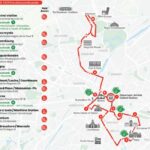
- Grand Place and Saint-Hubert arcades: where style shifts tell the story
- La Monnaie, De Brouckereplein, and La Bourse: civic power in stone
- Manneken Pis, Jacques Brel, and Sablon’s chocolate-and-church pairing
- BOZAR walls and Mont des Arts: the photo payoff
- Price and value: what $30.10 really buys you
- What the guide style feels like in real life
- How to get the most out of the 2-hour route
- Who this Brussels architecture tour is best for
- Should you book this architecture tour of Brussels?
- FAQ
- How long is the architecture tour of Brussels?
- How much does the tour cost?
- What time does the tour start and where does it meet?
- Is the tour offered in English?
- Is there an admission fee for the stops?
- Is transport included in the price?
- How many people are on the tour?
- Do I need a mobile ticket?
- Can I cancel for a full refund?
Key things that make this Brussels architecture tour click
- Architect-led storytelling that links facades to the people and events that shaped them
- Small-group vibe (up to 18) that keeps the questions flowing
- Free-entry stops focused on major sights and viewpoint moments
- Mont des Arts photo time with classic city views and strong framing
- Guide personalities that keep it light (Gamaal and Jimmy are both highlighted for humor and pacing)
- A well-paced loop that hits key architectural styles without wasting time in transit
Why an architect guide turns Brussels into a readable city
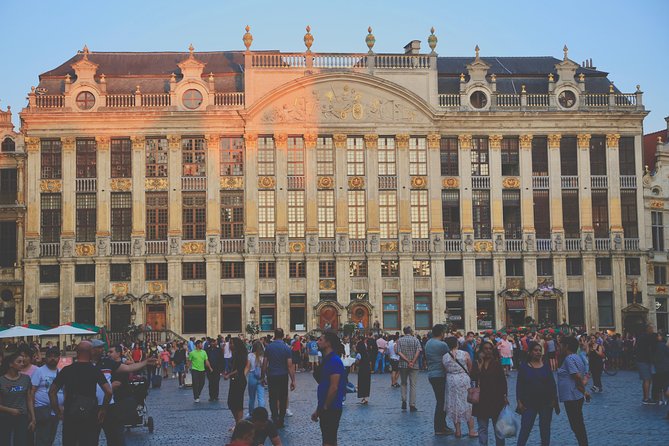
Brussels can feel like a mix-and-match bag: ornate squares here, grand arcades there, and streets that suddenly jump from old to new. The value of this kind of tour is that you don’t just see the look of a building. You learn what caused it—trade, wealth, politics, and the practical goals of the people building it.
This route works especially well at night. Evening lighting makes stone textures pop, and you’re often looking at the same facades you’d see in daylight, just with a calmer rhythm. That matters on an architecture tour because your attention is the main tool. When the guide points out what to notice, you end up seeing the city’s logic.
The other big win is that the tour keeps you outdoors and moving. Every stop is designed to be quick and focused, so you get lots of variety—Gothic and Baroque at the square, grand civic buildings, theater architecture, and viewpoints—without the stress of long gaps.
You can also read our reviews of more tours and experiences in Brussels.
Getting your bearings: Godiva Grand Place at 8:00 pm
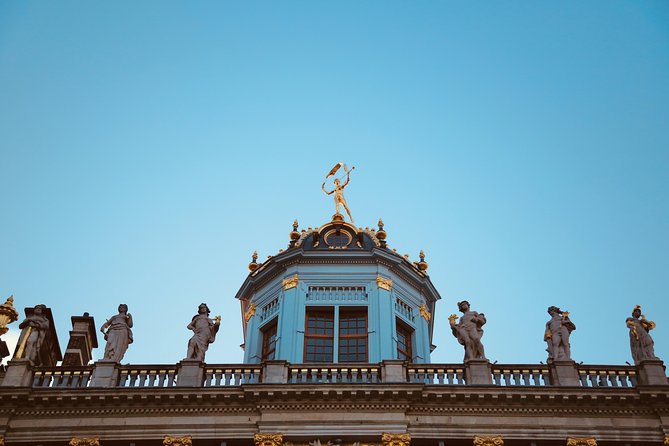
The tour starts at Godiva Grand Place, at Grand Place 21/22 (1000 Bruxelles). The timing is 8:00 pm, and the tour ends back at the same meeting point. That makes planning easier: you don’t have to figure out late-night transport across town at the finish.
A mobile ticket is part of the package, and the tour is offered in English. It’s also set up as a walking experience, and transport isn’t included. So if you’re relying on public transit, give yourself a little buffer getting to the meeting area.
One detail I appreciate for evening tours: you’re not stuck deciding which building to prioritize. The itinerary already strings together the key “look up” moments, so you can relax and just follow along.
Grand Place and Saint-Hubert arcades: where style shifts tell the story
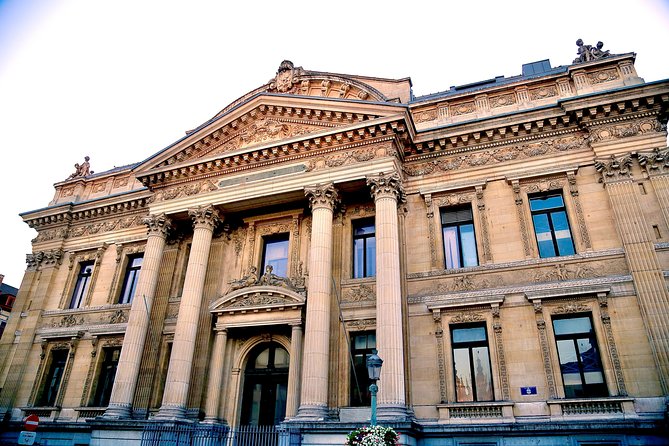
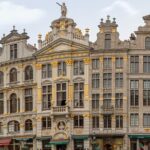
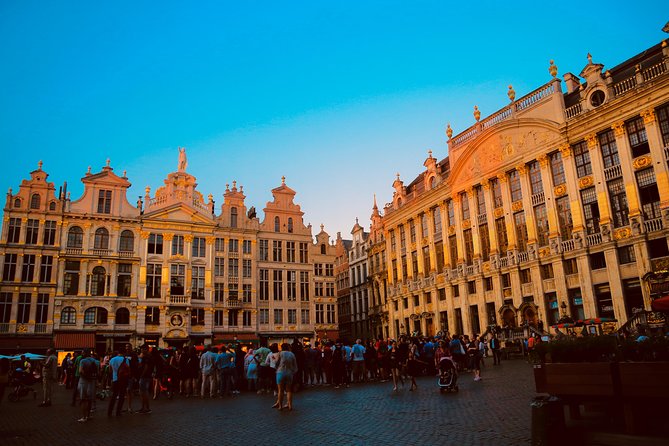
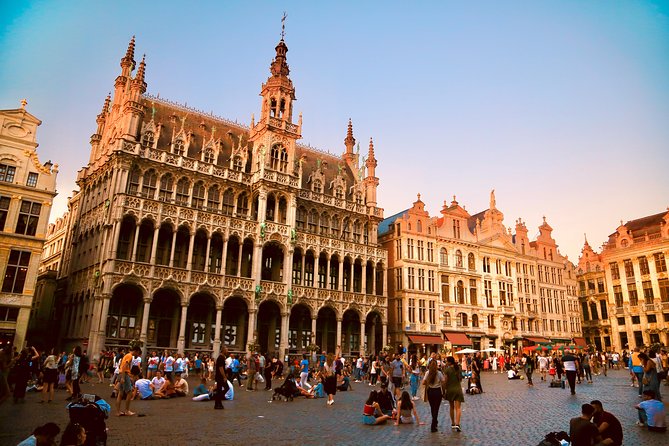
Stop 1 is Grand Place, the most visited spot in Belgium and a UNESCO heritage site. The guide starts with the place as a market—wooden houses at the beginning—then traces how it developed into the Gothic and Baroque architecture you see today. This is where the architecture tour pays off fast: you’re not learning “random pretty buildings,” you’re learning how the city grew and what that growth looked like in stone and facade design.
You’ll also cover famous people who lived there, which helps the facades feel human. It’s the sort of context that makes it easier to remember what you saw, later when you’re back in your hotel and trying to sort out which square was which.
Stop 2 is Les Galeries Royales Saint-Hubert, described as the first shopping mall in the world. The tour frames it as more than a historic arcade: it connects the building to Belgium’s era, and to the architect’s ambition and the network of contacts that helped the project happen. You’ll also pass cafés where famous authors enjoyed coffee and composed work tied to world literature.
Practical takeaway: this stop is perfect if you like your architecture with a side of culture. Also, it’s a nice rhythm change. After the open grandeur of Grand Place, you shift into a covered, elegant space where details are easier to focus on without getting bumped by crowds.
La Monnaie, De Brouckereplein, and La Bourse: civic power in stone
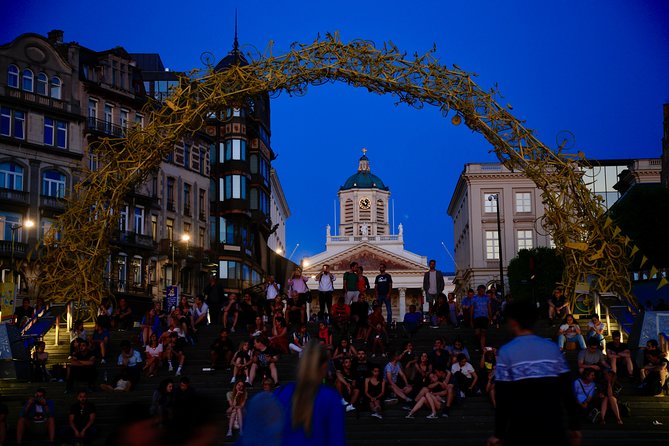
Next comes La Monnaie. The Royal Theatre has a long story, and the tour’s goal is to connect the theatre’s role with the wider changes in the area—pointing out the surrounding shopping street and the revolutionary shift that affected the neighborhood. Even if you don’t linger long, this is a useful “spotlight” stop because theaters often sit at the intersection of culture and politics.
Then you head to Place De Brouckereplein, where the tour highlights the De Brouckere palace and the old river route inside the city. This is one of those moments where Brussels stops being only a pretty postcard and becomes a city with infrastructure behind it. The guide discusses how water shaped defense and how the city used its waterways as a backbone.
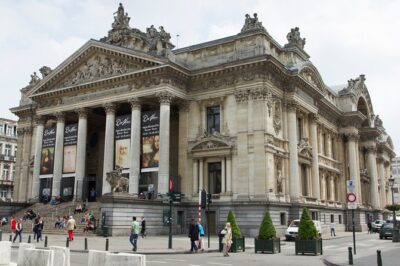
Stop 5 is La Bourse de Bruxelles. The tour connects its development to other locations (including Bruges), then brings you back to this specific square and building. The point here is to show how Brussels civic architecture evolved into something you can recognize as an art-related setting today.
What to expect: each of these stops is short (around 10 minutes). The value is not deep museum-style coverage. It’s direction—what to look for, what to connect, and how to put each building into the same “story of the city” folder in your mind.
Manneken Pis, Jacques Brel, and Sablon’s chocolate-and-church pairing
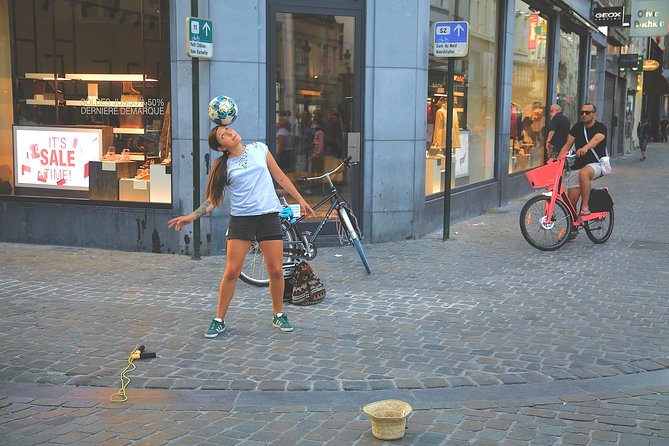
Stop 6 is Manneken Pis, and yes, the tour leans into the fact that it can feel like a disappointment at first glance. But the explanation is what makes it worth your time. You’ll hear multiple stories behind the little boy and learn about the famous wardrobe museum with over 1,200 uniforms. If you enjoy quirky cultural traditions, this stop is genuinely fun because it mixes legend, local identity, and an unusual collecting habit into one package.
The tour also includes time to climb the hill up to the wardrobe museum. So you’re not just doing a quick photo and moving on—you get a chance to go one level deeper.
Stop 7 is a short stop at the Jacques Brel statue. The question the guide raises is simple: why is there a sculpture of Jacques Brel in Brussels? That kind of prompt is exactly how the tour keeps you awake and looking instead of passively walking.
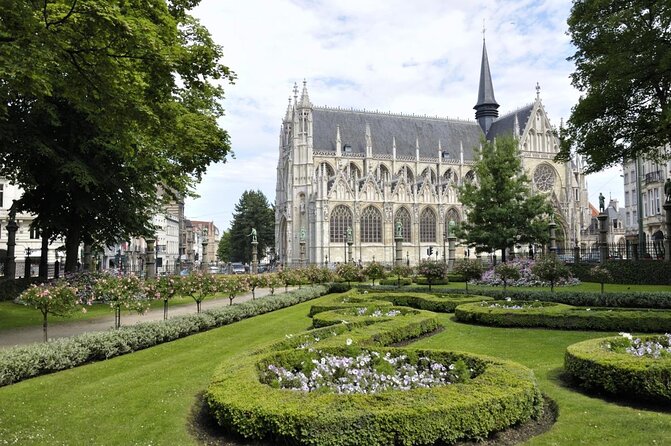
Then you shift to Notre Dame Des Victoires Au Sablon. This stop blends two things you can actually enjoy: chocolate and the church area around Notre Dame du Sablon. The tour’s angle is that this is a place where sacred architecture and everyday indulgence coexist. Even if you’re not a religious-architecture diehard, the Sablon area is a solid place to pause and reset.

BOZAR walls and Mont des Arts: the photo payoff
Stop 9 is BOZAR Centre for Fine Arts, where you “discover what waits behind the big walls.” The stop is brief, but it’s a useful reminder that Brussels has modern cultural engines alongside the older cores of the city.
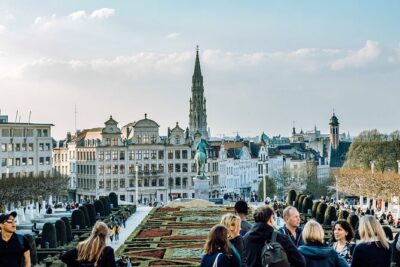
Then comes the finale: Mont des Arts. This is one of the best ways to close a walking architecture tour because it gives you context. The viewpoint is designed for panorama viewing over Brussels, including the walls and the tower of the city hall as the main focus for photos. On the other end, you’ll look toward the royal palace.
If you’re trying to remember the tour later, this viewpoint helps you map the route. Your brain loves a final framing moment, and Mont des Arts provides it: you see the city’s layout and understand how the buildings you visited fit into the broader picture.
Price and value: what $30.10 really buys you
At $30.10 per person, the big value is that you’re not paying for entrances during the walk. Each listed stop shows admission ticket free, which means your money goes toward the guide and the time on the street. You’re also getting an architect guide plus a professional local guide setup, which is where the “why” comes from.
The duration is about 2 hours, and it’s commonly booked around 45 days in advance. That tells me this isn’t a last-minute gamble if you want a spot, especially for the 8:00 pm start. With a maximum group size of 18, the tour can stay interactive rather than turning into a herd.
One more value angle: the guides highlighted in the reviews, especially Gamaal and Jimmy, are described as funny and willing to tailor the experience. That matters. If you show up interested in churches, civic buildings, or quirky details, a guide who asks what you want to focus on improves the entire loop.
What the guide style feels like in real life
Two guides are repeatedly mentioned: Gamaal and Jimmy. The standout pattern in the feedback is how they keep the tour engaging without turning it into a script. They explain the architecture in depth, but in a way that stays conversational.
Jimmy is described as extremely knowledgeable and funny, with the ability to keep things moving even when conditions got tough—there’s a note about accommodating a group during extreme wind. That kind of practical energy matters on an evening walk, where weather can change your comfort level.
Gamaal gets highlighted for customizing the experience. One description includes that he asked what the group wanted to learn and adjusted what he emphasized. Another point: the guide can connect building styles across the route, so you don’t leave with a list of sights. You leave with a pattern.
How to get the most out of the 2-hour route
This tour is short by design, so you’ll enjoy it most if you use the time like a scavenger hunt for details. Here’s how to make that work:
- Bring a camera or phone ready, but also lift your eyes first. Many of the lessons are about facades and placement.
- Expect quick stops. The goal is overview plus direction, not long interior time.
- Wear comfortable shoes. You’ll be walking across a central historic area with uneven old-city surfaces.
- If you care about a specific style—churches, civic squares, arcades—tell the guide early so he can prioritize your interests.
Also, keep your expectations aligned with the format. The tour is an architecture orientation with major sites and a viewpoint finish, not a deep-dive museum schedule.
Who this Brussels architecture tour is best for
This is a great fit if you:
- Want a tight way to learn what you’re seeing in Brussels without reading a guidebook on the spot
- Like a mix of famous sights and smaller, specific stories (like the Manneken Pis wardrobe detail)
- Prefer evening atmospheres and a relaxed walking pace
It’s less ideal if you:
- Want lots of indoor time at each stop
- Are planning to spend hours at a single site and build the day around it
Should you book this architecture tour of Brussels?
I’d book it if you want an efficient, high-feedback way to understand Brussels’ architectural “why.” The route hits the city’s most recognizable layers—Grand Place, the historic arcades, royal theater and civic buildings, the quirks of Manneken Pis, and a strong viewpoint finish at Mont des Arts. With a small group, an English guide, free-entry stops, and guides like Gamaal and Jimmy who keep the tone fun, it’s strong value for the price.
Skip it only if your priority is long museum hours or you can’t do an 8:00 pm start. Otherwise, this tour is one of those smart foundations that makes the rest of your Brussels wandering feel easier.
FAQ
How long is the architecture tour of Brussels?
It runs for about 2 hours.
How much does the tour cost?
The price is $30.10 per person.
What time does the tour start and where does it meet?
It starts at 8:00 pm and meets at Godiva Grand Place, Grand Place 21/22, 1000 Bruxelles, Belgium.
Is the tour offered in English?
Yes, it’s offered in English.
Is there an admission fee for the stops?
The tour lists admission ticket free at each of the stops included in the itinerary.
Is transport included in the price?
No. Transport isn’t included, so you’ll need to handle getting to the meeting point on your own.
How many people are on the tour?
The maximum group size is 18 travelers.
Do I need a mobile ticket?
Yes, the tour uses a mobile ticket.
Can I cancel for a full refund?
You can cancel for a full refund if you cancel at least 24 hours before the experience’s start time.