Brussels packs a lot into two hours. I love how this route links Grand-Place with the city’s royal and merchant highlights, and I like the small-group feel that makes questions easy. One caution: the depth of storytelling can vary depending on your guide, so if you want lecture-level history, manage expectations.
For the price ($38), you’re not just paying for marching around. All the featured stops are listed with free admission, so your money mainly goes to the guide’s route, pacing, and the quick context that helps everything click fast. And yes, the walk includes famous stops plus a couple of surprise moments that keep it from feeling like a photo checklist.
This is a simple, well-paced orientation through central Brussels. Expect about 2 hours total, roughly 20 minutes at each big stop, lots of cobblestones, and plenty of chances to grab photos if your group moves at a comfortable tempo.
In This Review
- Quick take: what makes this tour work
- Why This 2-Hour Brussels Loop Feels Like a Shortcut
- Grand-Place: The UNESCO Square You’ll Want to Photograph
- Royal Galleries Saint-Hubert for Shops, Glass Roofs, and Quick Breaks
- Bourse de Bruxelles: When Money Meets Neoclassical Drama
- Royal Palace of Brussels: Ceremonial Belgium on a Hilltop Setting
- Éverard t’Serclaes and Manneken Pis: The Legend Side of Town
- Getting Value: Guides, Pace, and What to Ask
- Walking Conditions, Time for Photos, and Easy Day Planning
- Is $38 a Fair Deal for This Guided City Orientation?
- Should You Book This Brussels Walking Tour?
- FAQ
- How long is the Brussels walking tour?
- What is the price per person?
- Is the tour offered in English?
- Where does the tour start?
- How does the admission work for the stops?
- Does the tour include a guided component?
- What group size should I expect?
- Is tipping included in the price?
- Can I cancel for a full refund?
Quick take: what makes this tour work
- Grand-Place first: start in the one square that instantly explains Brussels’ style and power.
- Royal Galleries Saint-Hubert: a historic indoor arcade with an old-school glass-roof vibe.
- Bourse de Bruxelles: neoclassical architecture that gives the city’s money story a face.
- Royal Palace area: see the monarchy side of Belgium from the hilltop setting.
- Éverard t’Serclaes + Manneken Pis: mix medieval legend and playful Brussels tradition.
- Small group (max 15): easier questions and less standstill time at busy corners.
Why This 2-Hour Brussels Loop Feels Like a Shortcut
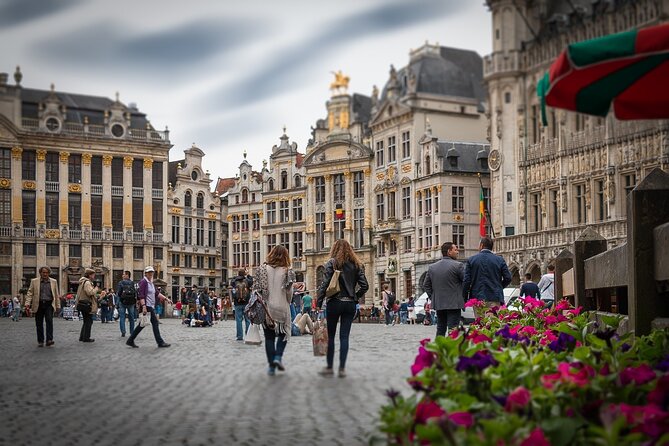
I like short walking tours when you want bearings fast, not a slow burn. This one is built around a tight central route, so you get a clean cross-section of Brussels: the civic square, the shopping arcade, the financial landmark, the royal presence, then the folklore-adjacent moments.
At about 2 hours, it’s also a nice fit for your day planning. You can do this in the morning to map the center, then let the rest of the day be your own: wandering between landmarks, ducking into chocolate shops, or grabbing a Belgian lunch without feeling lost.
You’ll also feel the group structure. With a maximum of 15 per guide (and an overall cap of 45), you get a guided experience that stays manageable. Some guides have been praised for being friendly and funny, and for answering questions as you go, which is exactly what you want on a first pass.
You can also read our reviews of more walking tours in Brussels
Grand-Place: The UNESCO Square You’ll Want to Photograph
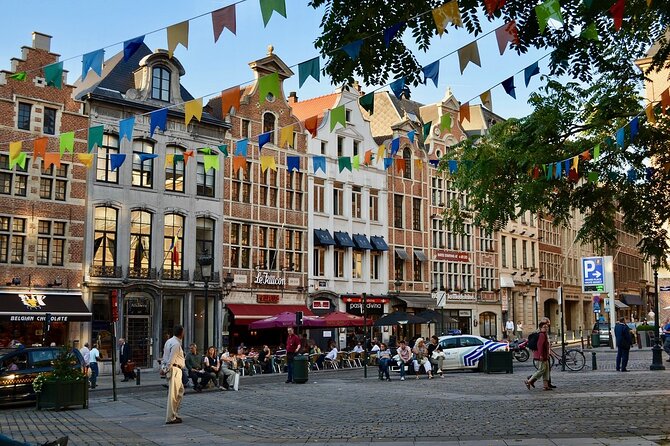
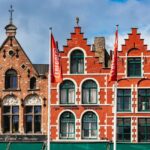
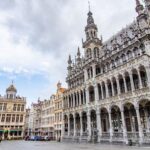
You start where Brussels can’t help but impress: Grand-Place. This is a UNESCO World Heritage square dating back to the 15th century, and it’s surrounded by ornate guildhalls, the Town Hall, and the King’s House. The architecture mix matters here—Gothic, Baroque, and Louis XIV style details show up together, so you’re not just looking at one era. You’re seeing how different powers wanted Brussels to look.
What I like most is that this stop is not only pretty. It’s a reference point. Once you stand here and understand the layout, the rest of the center starts to make sense. The square also plays a role in city life, with cultural events like flower carpet displays mentioned as part of what makes the place feel alive.
A practical note: Grand-Place is a top photo spot, so if your group is rushed, your camera time may feel short. If you care about photos, I’d treat the first minutes here as your “set up” time—get your bearings, then shoot.
Royal Galleries Saint-Hubert for Shops, Glass Roofs, and Quick Breaks
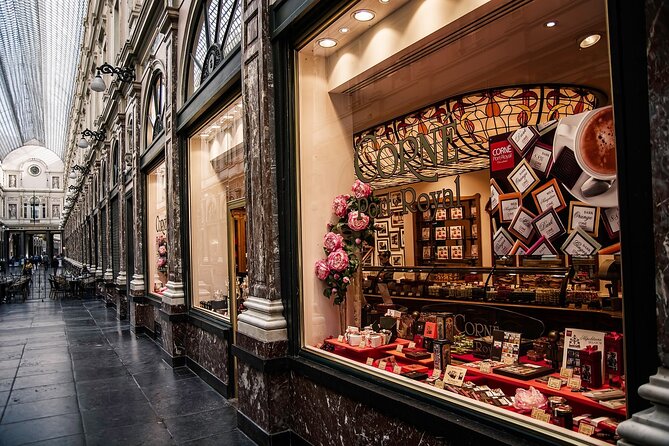
Next you move into Les Galeries Royales Saint-Hubert, one of the world’s oldest shopping arcades. It dates to 1847, and it has that classic old-world look: ornate architecture plus a glass roof that makes the whole passage feel special even if you’re just passing through.
This stop is good for two reasons. First, it’s a change of pace from outdoor cobblestones. Second, it connects history to everyday life. You’re walking in a commercial space that has been part of Brussels for a long time, and you’ll notice how the arcade supports the city’s rhythm—chocolatiers, theaters, and boutiques all fall into the same sheltered corridor.
From the way guides have been described, I’d also expect practical suggestions while you’re here. Some guides have offered eating and sweets pointers as they walk by, and the arcade is exactly where those tips tend to land.
If you’re sensitive to crowds, the arcade can be busy because it’s central and easy to find. Going with a guide helps you keep moving without losing the thread of what you’re seeing.
Bourse de Bruxelles: When Money Meets Neoclassical Drama
Then the tour shifts from civic pride to commerce with La Bourse de Bruxelles, the Brussels Stock Exchange. It’s described as a mid-19th-century neoclassical building, and the facade and Corinthian columns do most of the talking.
This is one of those places where architecture quietly tells you what a city values. You’re not just staring at a government-style building or a palace. You’re looking at the architecture of money and finance, and how Brussels wanted that world to look: ordered, formal, and intentionally impressive.
I think this stop is especially valuable for first-timers because it widens your understanding of Brussels beyond the postcard scenes. Grand-Place gives you civic identity; the Bourse gives you commercial identity. Together, you get a fuller picture of what shaped the city’s center.
The caution here is timing. Because the tour is tightly scheduled (about 20 minutes per main stop), you’ll want to decide quickly what you want from the Bourse: quick photos outside, or more focus on facade details. Either is fine, but trying to do both can make it feel rushed.
Royal Palace of Brussels: Ceremonial Belgium on a Hilltop Setting
After the finance stop, you head toward the Palais Royal de Bruxelles, the Royal Palace. It’s described as neoclassical, built in the early 20th century, and positioned above the bustle of the city on a hilltop.
This part matters because it reminds you Brussels isn’t only about squares and shopping arcades. It’s also the setting for state ceremonies and official monarchy roles. Even if you don’t plan to spend much time inside (your tour is a walking experience), the outside presence and landscaped gardens give you the mood: formal, ceremonial, and intentionally grand.
A guide who’s good at storytelling can make this stop feel more than visual. Some guides have been praised for blending history and modern context, and that’s where the Royal Palace is useful. It’s a symbol you can understand quickly once you have the basic context in your head.
One practical point: this is the kind of area where people want photos from different angles. If your group is moving too fast, you’ll feel it. So if photos matter, don’t be afraid to ask the guide for an extra minute to step back for a wider shot.





Éverard t’Serclaes and Manneken Pis: The Legend Side of Town
The tour brings in Brussels’ quieter, more human side with the Éverard t’Serclaes Monument near Grand-Place. This statue commemorates a medieval hero who defended Brussels in the 14th century. The emotional hook here is that the monument is also wrapped in legend: touching the statue is said to bring good fortune, and the statue’s worn look reflects countless hands seeking luck.
That matters because it makes history feel touchable. You’re not only learning a date; you’re seeing how people keep telling the story through ritual.
Then comes Manneken Pis. The description keeps the exact details light on purpose, saying there are a few more stops along the way and that Manneken Pis is part of the surprise. I like this approach because it breaks up the routine. You get the major landmarks, then a playful pivot that helps the day feel lighter.
If you’re traveling with kids, this is another reason the tour can work well. In past experiences with guides, keeping younger visitors engaged has been called out as a strong point, and Manneken Pis is the kind of stop that tends to land.
Getting Value: Guides, Pace, and What to Ask
The biggest factor in your outcome is your guide. The strongest feedback I’ve seen around this kind of route points to a few traits: guides who stay friendly, explain clearly, and help you spot things you would miss on your own. Some names that have come up include Rosh, Tom, Majib, Peter, and Asefeh. What they have in common is an emphasis on making the center feel navigable and understandable.
But there’s also a legitimate risk to note: a couple of people felt the commentary was mostly brief, more like walking with a pleasant local than an in-depth historical tour. Another complaint was that the pace felt rushed, especially if you want time for photos.
So here’s how you make it work for you:
- Ask the guide one or two questions early, like what to prioritize next in the city once you finish.
- If you care about photos, tell your guide at the start that you want a quick pause at the big squares.
- Use the route as orientation first, then go deeper later on your own if you love history.
You might also get food and drink direction. Some guides have been praised for recommending places for waffles, beer, and chocolate, and even pointing out specific dining like Chez Leon for mussels. Even if those exact spots aren’t mentioned on your day, it’s common for good guides to give practical nearby options.
Walking Conditions, Time for Photos, and Easy Day Planning
You’ll be on foot for about 2 hours total, and it’s central Brussels. That means cobblestones and short distances that feel longer than you expect if you’re in stiff shoes. I’d bring comfortable footwear even if you think you are a confident walker.
The tour’s schedule is fairly structured: about 20 minutes per main stop, plus walking time between them, and a couple of added surprises. That structure is a plus because it reduces decision fatigue. You don’t have to plan the route in your head; you just follow and learn.
The downside is obvious: 20 minutes can disappear fast if the group is slow, if it’s crowded, or if your guide is spending extra time answering questions. If you get the sense your group is moving too quickly, speak up politely. The best guides respond well to small course corrections.
If you’re trying to fit Brussels into a tight itinerary, this tour gives you a strong foundation without eating your entire day. It’s a good first activity, then you can expand based on what grabbed you: architecture details, shopping arcades, royal setting, or the funny folklore moments.
Is $38 a Fair Deal for This Guided City Orientation?
For $38, I think the value depends on what you want out of the walk. If you want a quick overview and a guided route that helps you understand what you’re looking at, this is a sensible deal. The listed stops have free admission, so your payment mostly supports the guide and the time-saving logic of having a planned circuit.
Also, the small group size matters. A max of 15 per guide reduces the “herding cats” feeling you get with very large groups. That makes it easier to hear explanations and ask questions without playing phone-tag across a crowd.
Where the value can feel weaker is if you’re expecting long, deep, site-by-site storytelling. In the feedback you shared, some people wanted more historical context, more narrative, and more answers to basic questions. If that’s you, I’d treat this as an orientation tour rather than your only Brussels history class.
My practical take: this is worth booking if you like seeing highlights, learning the basics, and leaving with a mental map. If you want to go heavy on history and lore, consider pairing this with a second, more focused activity later.
Should You Book This Brussels Walking Tour?
I’d book it if it’s your first time in Brussels and you want an efficient walk that covers the core center: Grand-Place, the Saint-Hubert arcade, the Stock Exchange, the Royal Palace area, plus Éverard t’Serclaes and Manneken Pis.
I’d think twice if you need deep commentary at every stop or if you’re likely to get frustrated by a rushed pace. In that case, plan to slow down yourself after the tour, and spend extra time at the one or two places you loved most.
If you do book, wear comfy shoes, bring your best photo angle mindset, and be ready with at least one question for your guide. With the right guide, this is exactly the kind of 2-hour Brussels experience that helps you stop feeling like a tourist and start feeling like you know where you are.
FAQ
How long is the Brussels walking tour?
It’s about 2 hours in duration.
What is the price per person?
The price is $38.00 per person.
Is the tour offered in English?
Yes, it’s offered in English.
Where does the tour start?
The tour starts at Grand Place 4, 1000 Bruxelles, Belgium.
How does the admission work for the stops?
The tour’s listed stops show free admission tickets.
Does the tour include a guided component?
Yes. You get a 2-hour guided walking tour with a professional tour guide.
What group size should I expect?
The maximum is 15 participants per guide, with an overall maximum of 45 travelers.
Is tipping included in the price?
No. Gratuities are optional and not included.
Can I cancel for a full refund?
Yes. You can cancel up to 24 hours in advance for a full refund.