REVIEW · BRUSSELS
Historical Walking Tour: The Story of Brussels – by Legends
Book on Viator →Operated by Legends of Bruges Free & Private Tours · Bookable on Viator
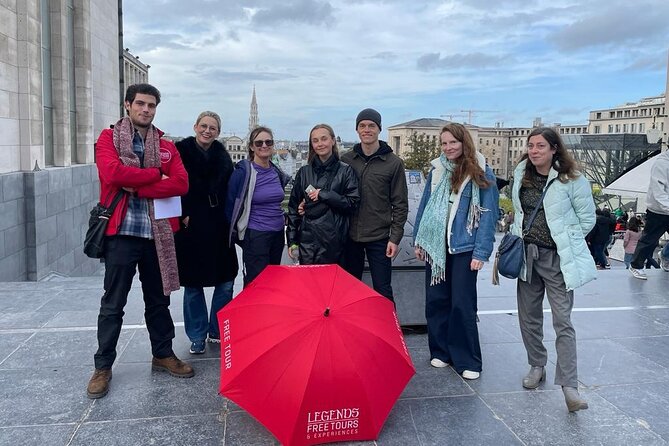
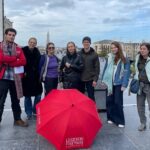
A red umbrella marks your Brussels lesson. This 2.5-hour Legends walk strings together the city’s best-known sights with guide-led stories in English, using a mobile ticket and starting right at Grand Place. You’ll see why Brussels feels both grand and goofy, often in the same block.
I love the mix of stops: Grand Place, Manneken Pis, St. Michael & St. Gudula Cathedral, and the Mount of Arts viewpoint. I also like the pacing—about 10 to 15 minutes per stop—so you get context without feeling trapped in a lecture.
One thing to plan for: it runs outdoors and depends on conditions, so if weather turns foul, wear something that handles it. The tour also ends on Mont des Arts, which is a short uphill finish—fine for most people, but it helps to wear comfortable shoes.
In This Review
- Key Points You’ll Actually Use
- Starting at Grand Place: how the meet-up sets the tone
- Grand Place and the Town Hall: seeing power up close
- Comics and Manneken Pis: Brussels folklore with a wink
- St. Nicolas Church and La Monnaie: faith and spectacle in the same walk
- Galeries Royales Saint-Hubert and Saint-Géry Island: architecture with a daily rhythm
- St. Michael & St. Gudula Cathedral: Brabant Gothic and the legend behind it
- Parc de Bruxelles, Royal Square, and Mont des Arts: your payoff viewpoint
- Price and value: paying for a guide, not a checklist
- Who should book this Legends Brussels walk
- Should you book this tour?
- FAQ
- Where does the tour start and end?
- How long is the walking tour?
- Is the tour offered in English?
- What’s the group size limit?
- What does the $3.62 price cover?
- Are admission tickets included for the stops?
- Are food and drinks included?
- Does the tour run in bad weather?
- Is free cancellation available?
- Are service animals allowed?
Key Points You’ll Actually Use
- Red umbrella meet-up at Grand Place in front of the City Hall area makes it easy to locate your guide.
- Free admission listed for every major stop, so you’re not hunting ticket counters all morning.
- A story-focused route that goes beyond postcard facts and connects monuments to legends.
- Small-group feel (up to 35 travelers) for a tour that still moves at city-walking speed.
- A built-in viewpoint finish at Mont des Arts with a quick walk from the end point.
Starting at Grand Place: how the meet-up sets the tone
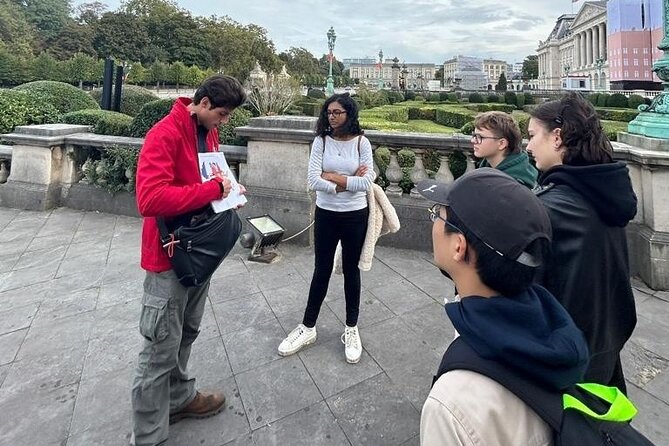
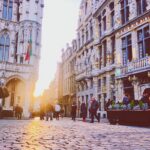
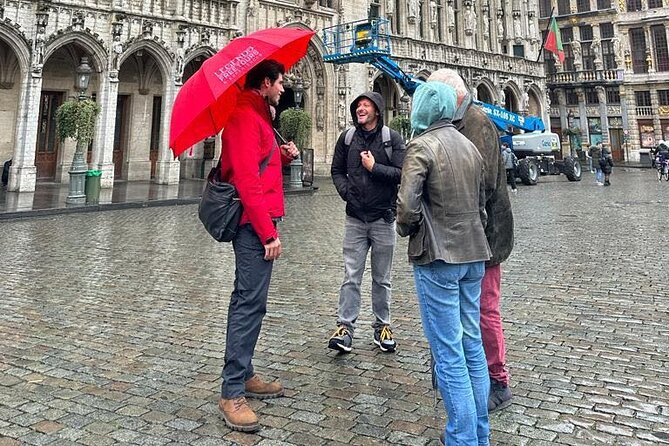
Brussels can feel like three cities stacked on top of each other: royal-and-formal, chocolate-and-comic, and nightlife-and-people-watching. This tour starts in the biggest stage—Grand Place—so you get the mood immediately. Your guide will be waiting with a red umbrella in front of the City Hall area, which is a small detail that pays off fast.
The format is simple: you walk, you pause, your guide explains what you’re seeing and why it matters. The whole thing takes about 2 hours 30 minutes, with each stop getting roughly 10 to 15 minutes. That’s a sweet spot for a first visit because you leave with a map in your head, not just photos on your phone.
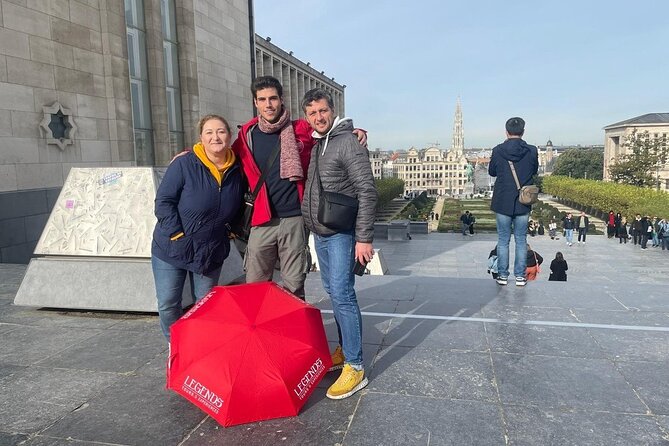
The ending point matters too. You finish at Mont des Arts, close enough to walk back toward central areas, with a “thank you for climbing” view over the city.
You can also read our reviews of more walking tours in Brussels
Grand Place and the Town Hall: seeing power up close
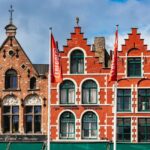
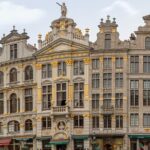
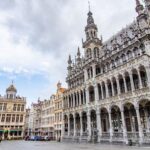
Grand Place is a UNESCO World Heritage site, and the tour makes it worth standing still. You’ll be looking at opulent guildhalls and the impressive Town Hall—an architectural blend that feels both Gothic and Baroque. In other words, it’s not just pretty stone. It’s what a wealthy city chose to show off.
What I like here is that you don’t just get a title for each building. Your guide frames the square as a place where civic identity was performed in public—who mattered, who funded what, and how the city protected its image. If you like stories, this is your anchor point for everything else you’ll see later.
Practical tip: spend a little extra time looking up. From street level, Brussels architecture can look like a lot of ornament. Up close, you’ll start noticing patterns, figures, and details that your guide points out.
Comics and Manneken Pis: Brussels folklore with a wink
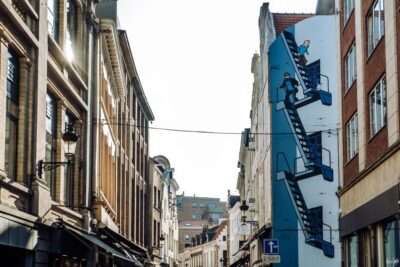
Right after the grandeur, the route turns playful. You’ll pass and learn about Brussels’s comic heritage, including famous characters like Tintin and the Smurfs shown in murals around town. This is a smart shift because it explains Brussels as a living culture, not a frozen museum.
Then comes Manneken Pis—an iconic bronze statue of a little boy urinating. The tour treats it like a real landmark, not a silly stop. The big value is the history: the statue dates back to the 17th century, and your guide connects it to what people in Brussels found funny, stubborn, and memorable.
Here’s the trick I’d use if you’re on your first day: treat Manneken Pis as a starting point for noticing Belgian humor. Once you see how the city builds legend around small things, you’ll catch the same logic in other corners later—especially when you hit church and theater architecture.
St. Nicolas Church and La Monnaie: faith and spectacle in the same walk
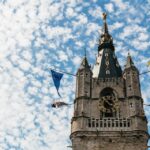
The tour’s next beat is older and more serious. You’ll visit Church of St Nicolas, one of the oldest churches in Brussels, with foundations laid in the 12th century. A standout detail is the belltower history: the church used to carry the one and only belltower of Brussels to display the city’s wealth and independence.
That’s a useful lesson for travelers. It explains why certain places are positioned the way they are. When a town had only one belltower, the church wasn’t just spiritual—it was informational and political. So as you look at the building, you’re also reading the city’s power signals.
Then the tour switches from church stone to performance glamour at La Monnaie (Théâtre Royal de la Monnaie), the famed opera house. Even if you don’t speak music-theory, the building’s presence lands. It’s recognizable as a place meant for major events, and your guide helps you see the architecture as part of Brussels’s identity, not just a backdrop.
If you’re choosing what to keep for later, remember this pairing. St Nicolas teaches you how Brussels used public structures to signal independence. La Monnaie shows the city investing in spectacle.
Galeries Royales Saint-Hubert and Saint-Géry Island: architecture with a daily rhythm
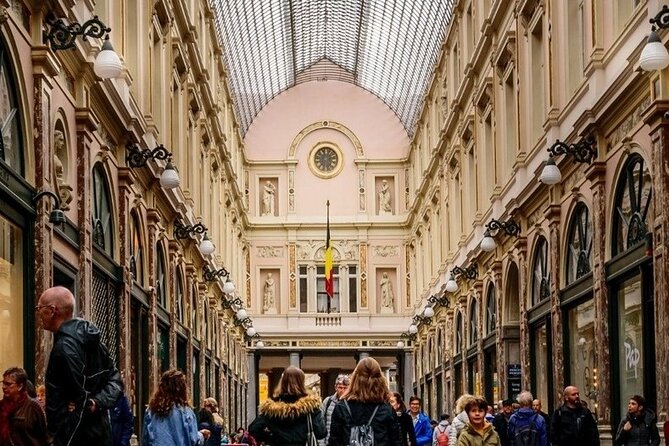
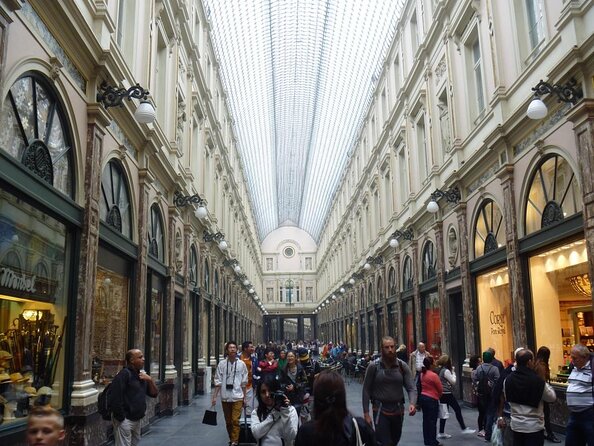
You’ll then enter Les Galeries Royales Saint-Hubert (Galeries Royales Saint-Hubert), known for being among the world’s oldest shopping galleries. It’s not an empty corridor. It’s an arcade with luxury boutiques, theaters, and cafes. The tour gives it a historical lens, so you’ll notice how the space was designed for people to wander, shop, and linger indoors while still feeling connected to the street.
A practical note: this stop is one you’ll want to “feel” slowly. Even if you don’t shop, pause long enough to notice the light and how the arcade shapes your path. It’s one of those places where Brussels looks like Brussels—stylish, practical, and slightly theatrical.
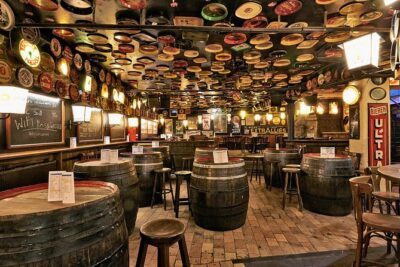
Next is Saint-Géry Island, described as a trendy district with nightlife and cultural spaces, in a former market area. This stop works because it resets your mood after the indoor arcade. You get a taste of how the city lives now, not just how it looked centuries ago.
If you’re the type who wants photos, this is a great area for street scenes. If you’re the type who wants dinner ideas, this is a good place to ask your guide for where to eat nearby—many guides are happy to point you to good options based on what you like.
You can also read our reviews of more historical tours in Brussels


St. Michael & St. Gudula Cathedral: Brabant Gothic and the legend behind it
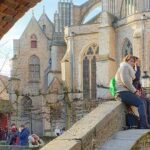
One of the tour’s biggest emotional hits is St. Michael & St. Gudula Cathedral. You’ll hear how it’s built in Brabant Gothic style and how it connects to legends told around the city.
This stop is worth it even if you’re not a church-architecture superfan. The cathedral gives you scale: Brussels isn’t only squares and shop arcades—it has a major religious monument that helped shape the city’s skyline and identity.
What I like about guided stops like this is that you get something to look for besides art. Your guide helps you connect features to the stories people attached to them over time, so the cathedral becomes part of the city’s narrative rather than a stop with a quick photo and a walk-away.
If you’re into details, the group’s questions can matter here. In English tours, I’ve seen guides tune their explanations to interests—like explaining special points inside the church when someone asks. If you care about religious art or symbols, don’t be shy about asking your guide what to look for inside.
Parc de Bruxelles, Royal Square, and Mont des Arts: your payoff viewpoint
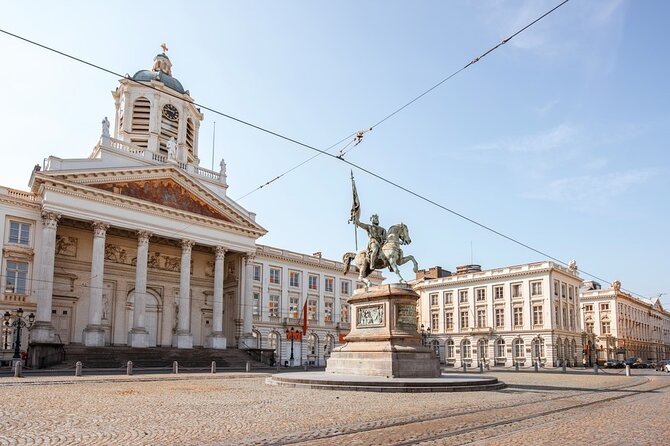
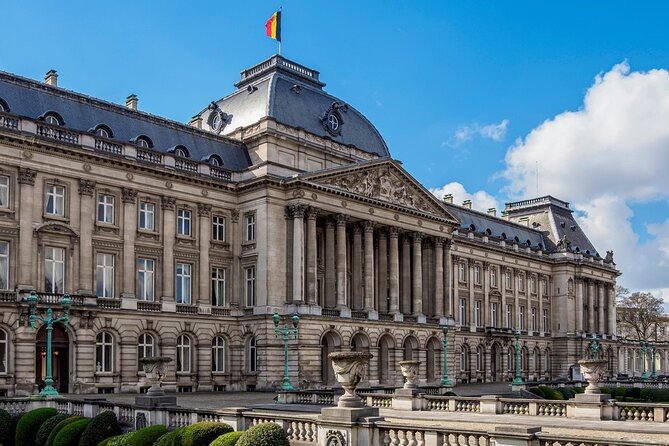
Near the end, the route becomes a “walk-and-breathe” section. You’ll visit Parc de Bruxelles, a green space located between the Royal Palace and the Belgian Parliament area. Even if you’ve just learned about statues, guilds, and opera houses, this park works as a reset. It’s a good moment to take a slower look at the city’s official buildings from a calmer vantage.
Then you’ll head toward Royal Square, anchored by an imposing statue of King Albert I. The tour situates the square within the broader royal-and-government context, including neoclassical buildings like the Royal Palace and the Belgian Parliament.
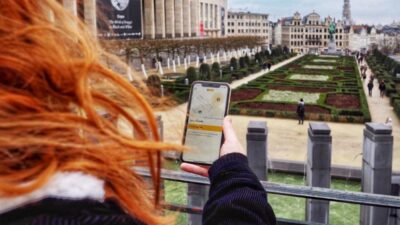
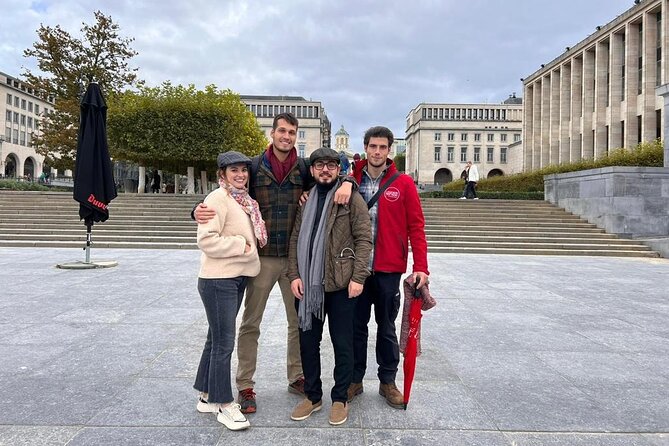
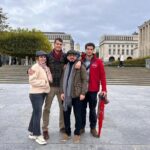
Finally, you’ll reach Mont des Arts, the Mount of Arts, where the guide leaves you with a view over Brussels. The tour ends there, and it’s close enough to the starting area that you still feel like you’re in the center of things. But the view is the main event.
This is where I’d recommend you take your time. Don’t just snap a photo and rush away. Look for how neighborhoods connect visually—straight lines, rooftops, and the way civic buildings show up as anchors. That’s the mental map you’ll use for the rest of your trip.
Price and value: paying for a guide, not a checklist
The price is listed at $3.62 per group (up to 6), for an experience lasting about 2 hours 30 minutes with a local/professional guide and all fees and taxes included. That’s unusually low for a guided walking tour, and it’s worth thinking about how value works here.
You’re not paying for entrance tickets at each stop—every listed stop shows free admission. You’re paying for:
- a guide who can connect sights to stories,
- a route that keeps you from wasting time figuring out what to see,
- and a timed structure that brings you to a viewpoint at the end.
Also, the tour includes mobile tickets and is offered in English, so you’re not stuck with translation headaches. And the group size has a practical limit of up to 35 travelers, which helps keep things from turning into a herd.
One more value point: you’re not just getting facts. People mention guides who are friendly and attentive, and some guides tailor the walk based on what you’re curious about. In plain terms, it’s the difference between a recording and a conversation.
Who should book this Legends Brussels walk
This is best for you if:
- it’s your first time in Brussels and you want major highlights in one go,
- you like your history as stories, not only dates and labels,
- you want a walk that’s long enough to matter but short enough to still enjoy the rest of your day,
- you’d rather have a guide point out what’s worth noticing than wandering randomly.
It’s also a good fit across ages because the structure is straightforward and most travelers can participate. Just plan for outdoor walking and bring comfortable shoes.
If you’re very sensitive to weather or you hate being outside when it’s unpleasant, you should consider timing your visit for better conditions. The tour runs in all weather conditions, but it still says to dress appropriately, and that advice is not the kind you ignore.
Should you book this tour?
If you want a first-day Brussels overview that feels fun, story-driven, and well paced, I’d say yes. This tour gives you the big hitters—Grand Place, comics, Manneken Pis, a major cathedral, royal sites, and a viewpoint finish—without dragging you into ticket lines or long detours.
Book it early in your trip if possible. Then you can use what you learn to decide where you want to go back for a second look, whether that’s a closer wander in the galleries or time sitting in the park with the city spread out in front of you.
If you want a highly structured museum-style day, you might prefer something indoor. But if you want Brussels to make sense fast, this walking route is a solid choice.
FAQ
Where does the tour start and end?
The tour starts at Grand Place (Grote Markt, 1000 Brussel, Belgium) and ends at Mont des Arts 1, 1000 Bruxelles, Belgium.
How long is the walking tour?
It lasts about 2 hours 30 minutes.
Is the tour offered in English?
Yes, it’s offered in English.
What’s the group size limit?
The tour has a maximum of 35 travelers.
What does the $3.62 price cover?
The price is per group (up to 6) and includes all fees and taxes, plus a local/professional guide.
Are admission tickets included for the stops?
The stops listed show admission ticket free, and the tour includes all fees and taxes.
Are food and drinks included?
No. Food and drinks are not included unless specified.
Does the tour run in bad weather?
It operates in all weather conditions, and it asks you to dress appropriately. It also notes that if canceled due to poor weather, you’ll be offered a different date or a full refund.
Is free cancellation available?
Yes, you can cancel for a full refund up to 24 hours before the experience’s start time.
Are service animals allowed?
Yes, service animals are allowed.