REVIEW · BRUSSELS
Brussels, 1000 Years of Struggles
Book on GetYourGuide →Operated by Brussels By Foot SRL · Bookable on GetYourGuide
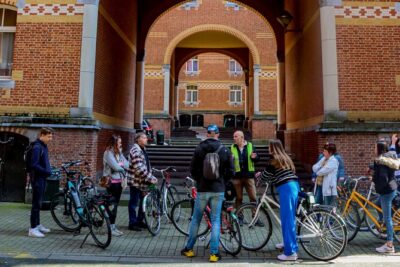
Protest has a street address in Marolles. This 2-hour walk turns a neighborhood ramble into social struggle storytelling, bouncing from older clashes to more recent ones in real city streets.
I really like the playful, funny tone and how it keeps the history human instead of textbook. I also like that the route works beyond the big sights, nudging you into less-known alleys and dead ends where you can feel how everyday spaces shape conflict.
One thing to consider: the advertised low ticket price can come with a possible small extra payment at the end (a 3-euro add-on has been reported). I’d confirm the total cost before you go, just to avoid surprises.
In This Review
- Key things you’ll notice on this tour
- Marolles District: Why 1000 Years of Struggles starts with a neighborhood
- The 2-hour walk: how the pacing and layout really work
- The Battle of the Marolles (1969): street-level tension, explained simply
- The Mattress War (1989): chaos, creativity, and neighborhood energy
- Less-known alleys and dead ends: where the message becomes physical
- Social change and gentrification: reading Marolles as it shifts
- What you actually get: a live guide, not a lecture
- Price and value: $3.53 for a 2-hour guided story
- Who should book this tour (and who might not love it)
- Should you book the Brussels By Foot 1000 Years of Struggles tour?
- FAQ
- How long is the Brussels 1000 Years of Struggles tour?
- Where does the 1000 Years of Struggles tour meet?
- What languages is the live guide available in?
- Is the guided tour included in the price?
- Is food or drinks included?
- Is hotel pickup included?
- How much does it cost per person?
- Can I cancel for a full refund?
- Can I reserve and pay later?
- What events does the tour cover?
Key things you’ll notice on this tour
- Marolles-first route: you criss-cross the district instead of sticking to the usual center-of-town loop
- Two anchor events: the Battle of the Marolles (1969) and the Mattress War (1989) give the tour clear “chapters”
- Humor + interaction: the stories land with laughs, not lecturing
- Important places plus back-streets: you’ll see both known spots and quieter lanes that most people miss
- English or French live guide: plan around an actual speaking guide, not an app
- Great value for a guided 2-hour walk: the price is low for what you get—assuming no surprise fees
Marolles District: Why 1000 Years of Struggles starts with a neighborhood
Marolles is Brussels with the volume turned up. It has long been a place where working-class life, politics, and big-city pressure collide. This tour leans into that reality, using the streets as a map for protest—then fastens onto two moments that shaped local memory.
The best part is how the tour treats history like something you can walk through. Instead of handing you names and dates, it connects conflict to everyday life: housing, neighborhoods, who gets heard, and who gets pushed out.
You can also read our reviews of more tours and experiences in Brussels.



The 2-hour walk: how the pacing and layout really work
You’re in motion for about 2 hours, criss-crossing Marolles and bouncing between more important spots and lesser-known corners. The route includes alleys and even dead ends, which matters because those tight street patterns are part of how a neighborhood functions—socially and politically.
A practical note: bring shoes for real pavement and turns. Dead ends mean you’ll often double back or re-route, so comfort matters more than speed. Also, since it’s a guided walking experience, it’s built for attention—when the guide pauses, it’s usually where the story payoff is.
The Battle of the Marolles (1969): street-level tension, explained simply
The tour’s first big anchor is the Battle of the Marolles in 1969. You’ll approach it like a neighborhood episode—what people were fighting for, why tempers rose, and how the area became a stage for larger forces.
What I like about this kind of event being taught in the streets is that you stop thinking of it as distant drama. You start seeing it as a chain of choices and pressures that grew teeth over time: social divisions, power imbalances, and the sense that rules were being written by someone else.
Expect the guide to point out context in plain terms—more “what happened and why it mattered here” than “how to interpret a textbook.” It’s also the kind of segment that benefits from the tour’s humor and playful style, because it keeps the topic from becoming too heavy to follow.
The Mattress War (1989): chaos, creativity, and neighborhood energy
Next comes the Mattress War in 1989, a title that instantly signals this is not your usual political story. The name alone suggests improvisation, local attitude, and a conflict fought with whatever tools are at hand.
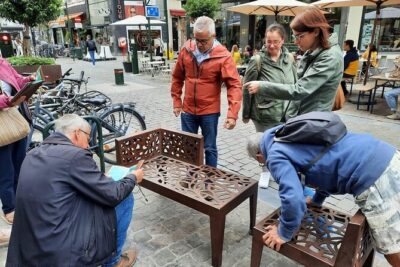
This is where you’ll feel the tour’s personality most strongly. The guide uses the odd details and the human angle to make the event click. You’re not just learning about a confrontation—you’re learning about the neighborhood’s way of reacting when people feel boxed in.
For me, that’s the point of covering two very different episodes: it shows how conflict can look different in different eras while still coming from the same underlying ingredients—identity, scarcity, and power.
Less-known alleys and dead ends: where the message becomes physical
A lot of walking tours stay on the main streets. This one intentionally detours into quieter lanes. That’s not just for photos. It changes how you understand the stories.
Side streets and dead ends compress space. They force slower walking, closer listening, and a more “in it” feeling. And since social struggles often depend on movement—gathering, hiding, blocking routes, spreading news—the street layout becomes part of the explanation.
If you enjoy noticing details—doorways, building fronts, the way streets connect or cut off—you’ll get more out of these segments. Even if you don’t consider yourself a history person, you can still “read” the neighborhood like a lived environment.



Social change and gentrification: reading Marolles as it shifts
One theme the tour brings up clearly is gentrification—the idea that neighborhoods change when wealthier residents move in and the local social and economic balance shifts. You don’t need a degree to understand the basic mechanics the guide lays out: prices rise, services change, old routines get disrupted, and “who belongs” becomes contested in softer and harder ways.
What makes this section valuable is the connection between protest past and present. You start to see that today’s debates aren’t invented out of thin air. They’re often the same tensions, just updated with new vocabulary and new pressures.
This is also a good reason to choose the walking format. Sitting and reading never shows you the scale of change. Walking shows you what stays, what transforms, and how the neighborhood’s shape can influence both conflict and adaptation.
What you actually get: a live guide, not a lecture
This is a guided tour with a live guide. The tour runs in English and French, so you’ll want to pick the language that matches how you like to listen. It’s a big difference between following a story through a headset and hearing it spoken with real pacing.
A detail worth noting: I’ve seen the guide name Simon connected to this tour. If your guide is Simon, expect the storytelling to lean into passion and clarity, with an approach that keeps it entertaining rather than stiff.
Price and value: $3.53 for a 2-hour guided story
At $3.53 per person for a 2-hour guided walk, the value is hard to ignore. In Brussels, where tours can easily cost much more, this pricing makes it easier to say yes—especially if you’re curious but not trying to overbook your days.
That said, here’s the practical consideration: a small extra payment at the end has been reported (3 euros was mentioned). With a tour this affordable, that’s exactly the kind of thing you don’t want to figure out mid-tour.
My advice: confirm what the total includes when you book, and if you can, carry a bit of cash for any last-minute add-ons. If you do, you’ll avoid the awkward moment of realizing you’re short right at the end.
Who should book this tour (and who might not love it)
This tour is a great fit if you:
- like learning history where it happened, not only behind museum glass
- enjoy stories that mix serious themes with humor
- want to understand social change in real neighborhoods
- prefer walking tours with clear “chapters,” like the 1969 and 1989 events
It may be less ideal if you:
- only want big-ticket monuments and postcard views
- dislike walking through dense residential streets
- prefer a strictly chronological, lecture-style approach (this one plays with tone and humor)
If you’re trying to balance a Brussels trip—museums on one day, neighborhood stories on another—this belongs in the “neighborhood” half of your plan.
Should you book the Brussels By Foot 1000 Years of Struggles tour?
I’d book it if you want something that feels closer to daily life than to staged sightseeing. The combination of two major protest episodes, the focus on Marolles itself, and the route into alleys and dead ends makes the experience feel more grounded than most “history walks.”
But do one thing first: verify whether there’s any small extra fee at the end beyond the stated price. Once you’ve got that straight, the math works in your favor. For a low-cost, 2-hour guided walk in English or French, it’s a smart add-on for anyone who wants Brussels beyond the usual highlights.
FAQ
How long is the Brussels 1000 Years of Struggles tour?
It lasts about 2 hours.
Where does the 1000 Years of Struggles tour meet?
The meeting point may vary depending on the option booked.
What languages is the live guide available in?
The guide is available in English and French.
Is the guided tour included in the price?
Yes. A guided tour is included.
Is food or drinks included?
No. Drinks and food are not included.
Is hotel pickup included?
No pickup is included.
How much does it cost per person?
The price listed is $3.53 per person.
Can I cancel for a full refund?
You can cancel up to 24 hours in advance for a full refund.
Can I reserve and pay later?
Yes. You can reserve now and pay later.
What events does the tour cover?
It highlights the Battle of the Marolles (1969) and the Mattress War (1989).