REVIEW · BRUSSELS
Guided tour: Brussels Crime Scenes
Book on Viator →Operated by Brussels By Foot · Bookable on Viator
Crime in Brussels leaves a mark.
This guided look at Brussels, Scene of Crimes follows notable criminal cases that shaped the capital in the 19th and 20th centuries, told with care and tied to the city’s changing society and customs. You’ll walk between real streets and squares, with stories that can be frightening and occasionally bloody, while the overall tone stays respectful and fact-faithful.
What I really like is how the guide keeps the narrative grounded in context, so you understand not just what happened but how people and institutions worked in each era. I also like the pacing and the stops: you’re not stuck in one area, and key moments happen right where the events played out, including the stretch around Rue de l’Amigo and Place Saint-Géry.
One consideration: if you’re sensitive to grim details, this is a crime-focused tour. It’s not gory for shock value, but it does describe murders and violent incidents, so go into it with the right mindset.
In This Review
- Key things to know before you go
- Where this tour fits in a Brussels visit
- The start at Rue de l’Etuve 1: setting the tone
- Grand Place: crimes start in the brightest rooms
- Rue de l’Amigo stops: where the city’s scandals got real
- Stop around the hotel history
- The crime of passion at the corner
- Le Coin du Diable: a 17th-century legend adds flavor
- Place Saint-Géry: the case that shocked mid-1800s Brussels
- Place du Jardin aux Fleurs: a crime with unusual loot
- The guide’s approach: respectful, fact-faithful, and (often) captivating
- Price and value: is $23.26 worth it?
- Who should book this tour
- Practical tips so your walk goes smoothly
- Should you book Brussels, Scene of Crimes?
- FAQ
- How long is the Brussels Crime Scenes guided tour?
- How much does it cost?
- Where do you meet and where does the tour end?
- Is a mobile ticket provided?
- What’s included in the price?
- What is the cancellation policy?
Key things to know before you go

- Short and focused route: about 2 hours with multiple historic stop points
- Small group feel: maximum 25 travelers (easy to hear the guide)
- Prime locations: you cross Grand Place and end at the center of Place Saint-Géry
- Story-first atmosphere: the emphasis is on history and social context, not spectacle
- A mix of legends and crimes: Devil’s Corner adds a 17th-century layer to the darker timeline
- Mobile ticket included: you’ll have an easier check-in during your walk
Where this tour fits in a Brussels visit
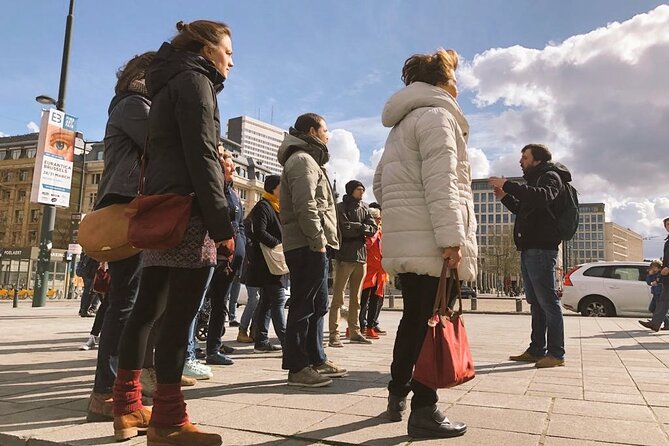
Brussels can feel like a city of grand facades and quick café stops. This tour nudges you to look at the other side: how crime, public order, and everyday life intersected as the city changed over time. The route connects major public spaces and recognizable streets with incidents that left people shaken and fascinated.
You don’t need a criminal-history background. The tour’s strength is practical: it explains the setting—what the police, the public, and society were like—so the stories land in a real place, not as random dark trivia.
If you like walking tours that teach you how a city works, this one makes sense. If you want pure fun or shopping stops, you’ll be happier with a different itinerary.
You can also read our reviews of more guided tours in Brussels


The start at Rue de l’Etuve 1: setting the tone
Your meeting point is Rue de l’Etuve 1, 1000 Bruxelles, right in the city center. This matters because you begin close to the action, with an easy walk through central Brussels instead of a bus ride or long transit.
From the start, the tone is built for storytelling. You’re moving between stops rather than standing still for long stretches, so you get that steady rhythm that keeps a 2-hour visit from dragging.
Tip: wear comfortable shoes. Even with a short route, you’ll be standing near corners and squares long enough to listen, and Brussels pavements can be a bit uneven.
Grand Place: crimes start in the brightest rooms
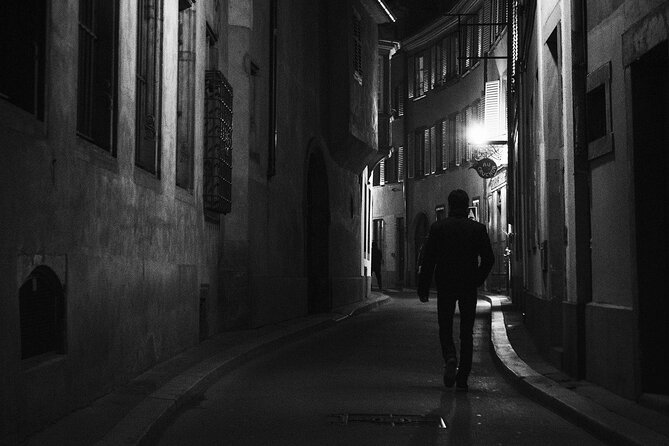
The first big visual anchor is Grand Place, and it’s a smart choice. You begin in one of Brussels’ most iconic spaces, which helps you understand how crime isn’t just a back-alley theme. It’s part of city life that touched everyone—from elite buildings to ordinary streets.
Even if you’ve seen Grand Place before, watching it through the lens of public fascination and social change makes it feel different. You’re not just looking at architecture. You’re thinking about how people gathered, how news spread, and why certain cases became city conversations.
Then you move on toward the darker, more specific streets.
Rue de l’Amigo stops: where the city’s scandals got real
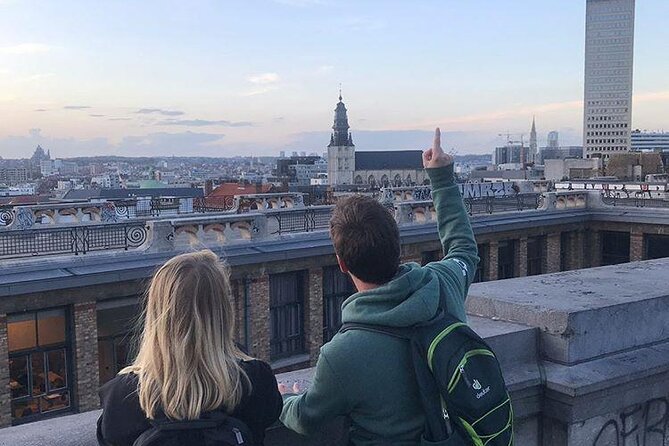
Rue de l’Amigo is where the tour gets sharply specific. You’ll make multiple stops on this street, with two key moments built around the Hotel À la Ville de Courtrai and an incident tied to a crime of passion.
Stop around the hotel history
One early stop focuses on a hotel that, as the story goes, hasn’t always welcomed prestigious visitors. That detail is more than atmosphere. It clues you into the idea that buildings evolve, and reputations can shift as a city grows and changes who it attracts.
You’re also in a street area that feels like it could hold secrets—narrow enough to feel human, not like a museum corridor. That’s part of what makes the facts feel grounded.






The crime of passion at the corner
Next, the tour points out the famous case connected to a crime of passion at the corner on Rue de l’Amigo, linked to Hotel À la Ville de Courtrai. This is one of those stops where the guide uses the location to show you how places become part of public memory.
A helpful way to listen here: don’t only focus on the emotional drama. Let the guide’s framing explain the social expectations around the era. That’s where you start to see patterns in how crime was understood—and how people talked about it.
Le Coin du Diable: a 17th-century legend adds flavor
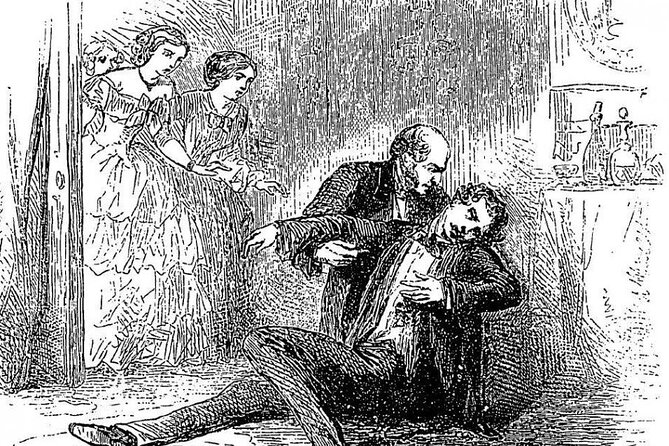
Then comes Le Coin du Diable, the Devil’s Corner legend dating to the 17th century. This stop shifts the tone slightly. Instead of a strictly documented crime case from the 19th or 20th century, you get a story with the kind of local folklore that cities build around fear and moral warnings.
Why include it in a crime tour? Because legends are part of how cities process danger. Even when a story is more mythic than clinical, it reveals what people worried about and what they needed to explain.
If you like variety, you’ll appreciate this change of pace. It gives your brain a breather without breaking the theme.
Place Saint-Géry: the case that shocked mid-1800s Brussels
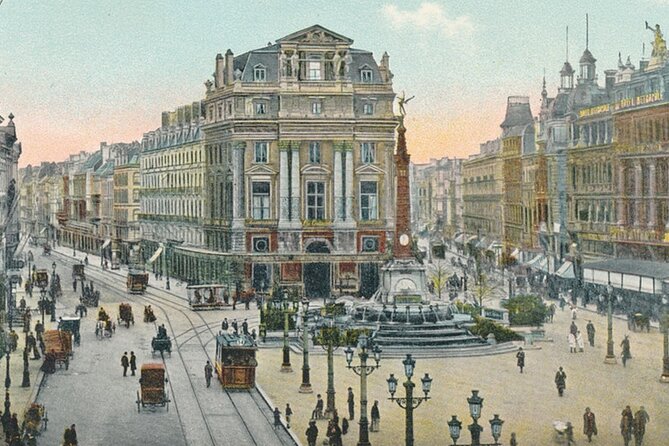
The most intense stop is Place Saint-Géry. This is where the tour highlights a particularly atrocious crime that left three dead and captured Brussels’ attention in the middle of the 19th century.
This stop works because it’s not just a story point. It’s a real public space where you can look around and imagine how crowds might have moved, where people could have gathered, and why this would have been impossible to ignore.
Listen for the guide’s emphasis on why the case fascinated people. The tour doesn’t treat crime as entertainment. It treats it as a window into the era—what violence meant to the community, how public reaction formed, and how police and society responded.
Practical note: since this is the emotional peak, if you’d rather skip the heavier moments, this is the place to decide your comfort level.
Place du Jardin aux Fleurs: a crime with unusual loot
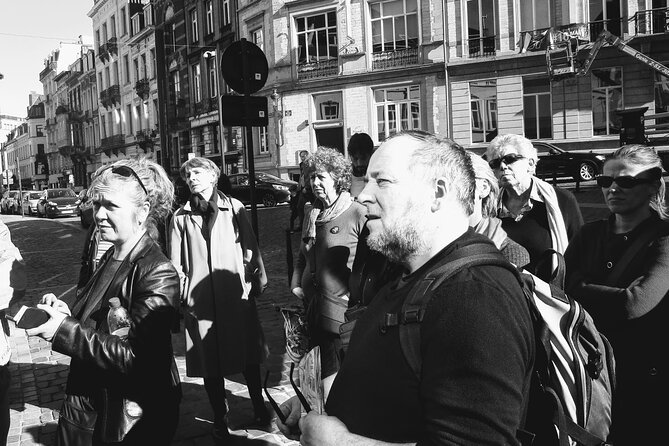
After the major shock comes a different flavor of wrongdoing at Place du Jardin aux Fleurs. Here the tour describes a villainous crime involving rather unusual loot.
This stop is a useful reminder that criminal cases aren’t always the same shape. Some are remembered for the violence, others for the spectacle of what was taken, others for what the incident reveals about the society that allowed it.
If you’re the type who likes details, this is where you’ll enjoy how the story turns. The guide’s approach keeps it tied to the city rather than drifting into general crime talk.
The guide’s approach: respectful, fact-faithful, and (often) captivating
From the way the experience is described, the guiding style is a major part of why people rate it so highly. The tour is built to be respectful even when the subject matter turns dark. That matters, because a crime story can easily slide into sensationalism—this one aims to avoid that.
You’ll also notice that the guide brings historical context into the telling. That’s the difference between knowing a headline and understanding why a case mattered. The tour frames events as reflections of social customs and institutions across eras.
One more thing to consider: if you’re hoping for theatrical costume work or audience participation, you might find the tour leans more toward straightforward storytelling and historical explanation. It’s still engaging, but it’s not presented as a full performance with actors.
Price and value: is $23.26 worth it?
At $23.26 per person for about 2 hours, the value depends on what you want from Brussels.
If you’re trying to see a few key neighborhoods quickly on foot while learning something less typical than art and beer, this price feels fair. You get a structured route, multiple stop points in central locations, and a guide who focuses on context—not just spooky details.
This also helps if you like small group tours. With a maximum of 25 people, you’re less likely to lose the story to background noise.
Also, the ticket includes all fees and taxes, which is one less thing to worry about during budgeting.
Where it may not fit: if you only want light, cheerful sights, or you dislike crime narratives. In that case, you may feel like you paid to walk through heavy subject matter.
Who should book this tour
This experience is a great fit if you:
- like walking tours with a strong story thread
- enjoy history through real streets and places
- want the city’s past beyond the postcard version
- can handle frightening topics without needing them sugarcoated
It’s also a good match for solo visitors who prefer a guided group structure but still want to move at a human walking pace.
Who should skip or think twice: anyone who is uncomfortable with violence-focused stories or who wants costumes, theatrics, and playful interaction as the main event.
Practical tips so your walk goes smoothly
Bring water if it’s warm. The tour doesn’t include coffee or tea, and the most comfortable option is to plan a stop afterward. Wear shoes you trust on cobblestones.
Also, keep your expectations aligned with the format:
- It’s a guided walk with multiple stops.
- You’ll likely spend time listening at corners and squares.
- The content is serious and tied to real incidents.
If you want to get more from it, take a quick glance at the locations before you meet—just to connect names to streets. It helps the stories click faster as you go.
Should you book Brussels, Scene of Crimes?
I think you should book this tour if you want Brussels with sharper edges—crime stories told with restraint and historical framing. For the price and time, it’s an efficient way to see central sites like Grand Place and Place Saint-Géry while learning how society and police responded to major events in the city’s modern past.
If you’re easily spooked by violent descriptions or you’re looking for a playful, costume-heavy experience, choose another tour. The tone here is respectful, not theatrical.
If you’re on the fence, the best litmus test is simple: do you like history that includes the uncomfortable parts? If yes, this one is worth your time.
FAQ
How long is the Brussels Crime Scenes guided tour?
The tour is approximately 2 hours.
How much does it cost?
It costs $23.26 per person.
Where do you meet and where does the tour end?
You meet at Rue de l’Etuve 1, 1000 Bruxelles, Belgium, and the tour ends at Pl. Saint-Géry 1, 1000 Bruxelles, in the center of Place Saint-Géry.
Is a mobile ticket provided?
Yes, the tour uses a mobile ticket.
What’s included in the price?
The price includes all fees and taxes.
What is the cancellation policy?
Free cancellation is available. You can cancel up to 24 hours in advance for a full refund.