REVIEW · BRUSSELS
Brussels: The comic book walls walking tour
Book on GetYourGuide →Operated by Curiositas Mundus · Bookable on GetYourGuide
Comic walls can turn a city walk into a story. This tour strings together real street art, classic Belgian characters, and quick lessons on how French-Belgian comics work. I especially like the focus on Tintin’s house and the way the guide makes the whole route feel like you’re inside a panel. One thing to consider: it’s Spanish-only on this option, and it’s not a great fit if you need audio or visual support.
If you want Brussels beyond the postcard center, this route helps you get your bearings and then move outward on foot. I also like that the group stays small (up to 25), so questions land and the guide can keep the pace moving without losing people. The route is active—this is a walking tour—so wear shoes you trust.
In This Review
- Key Things I’d Focus On Before You Go
- First Steps: Finding the Mural Next to Brousaille
- What 2.5 Hours Actually Feels Like on Foot
- Comic Walls 101: Learning the City Through Its Art
- The 1991 Wall Stop: Seeing Brussels Comic Origins in Public
- Tintin’s House: When Characters Meet Real Addresses
- Beyond the Center: Streets That Make Brussels Feel Bigger
- Smurfs in the City: Big Public Art, Easy Recognition
- Where to Find Comics in Your Language
- The App Add-On: Multimedia Info You Can Review Later
- Price and Value: $17 for 150 Minutes of Street Learning
- Who This Tour Suits Best (and Who Should Skip It)
- A Quick Guide to Timing and Comfort
- Should You Book the Brussels Comic Book Walls Tour?
- FAQ
- How long is the tour?
- Where is the meeting point?
- Is the tour offered in Spanish or English?
- How much does it cost?
- What’s included in the ticket?
- What is the group size limit?
- Is the tour wheelchair accessible?
- Is the tour suitable for visually or hearing-impaired participants?
- Can I cancel for a full refund?
Key Things I’d Focus On Before You Go
- Tintin’s former home stop that connects the character to the real Brussels address.
- The first comic wall in Brussels (1991), the kind of detail you miss when you only wander.
- French-Belgian comic “schools” and main techniques explained in plain terms as you walk.
- Streets beyond the center, so you’re not just circling the same few blocks.
- A Smurfs statue moment that anchors the tour in recognizable public art.
- App add-ons via Curiositas Mundus Telegram channels to refresh what you see.
First Steps: Finding the Mural Next to Brousaille
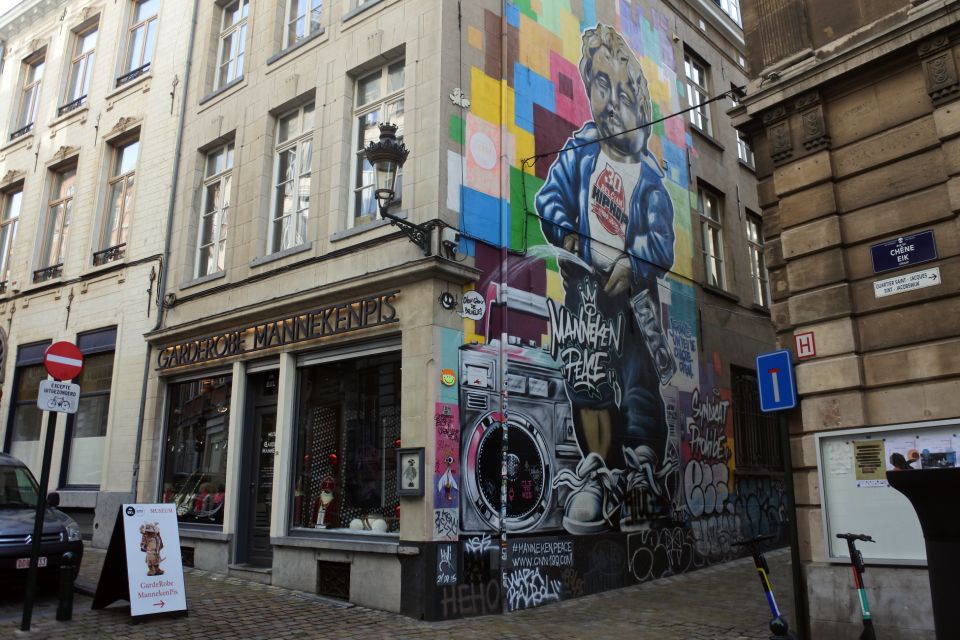
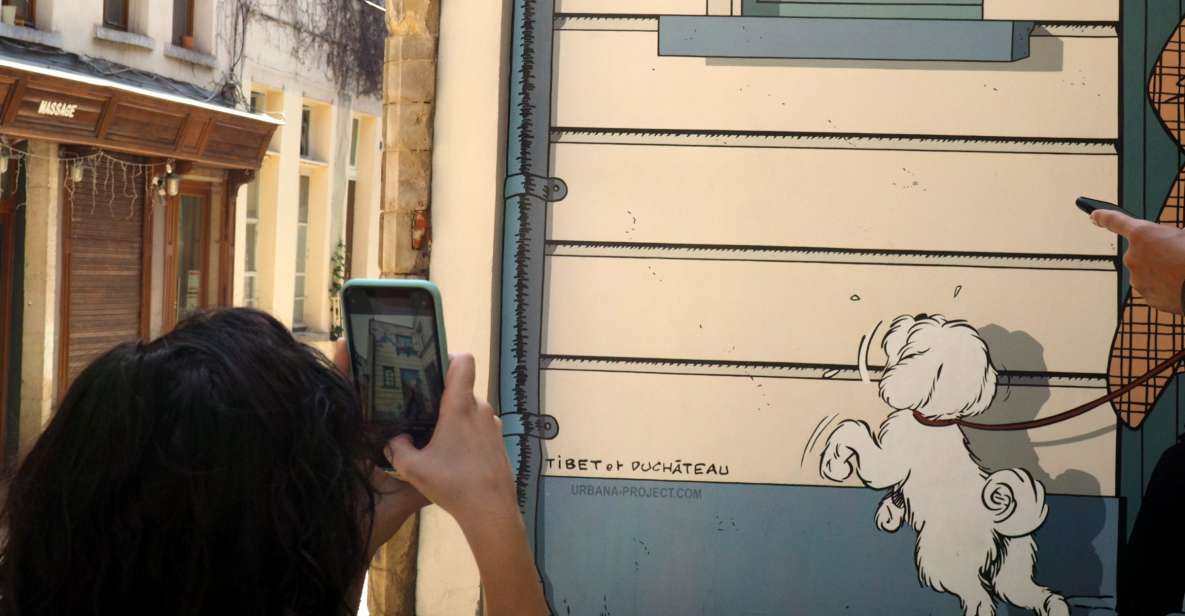
You start at Rue du Marché au Charbon, 40, right by the mural of Brousaille. It’s a useful meeting point because it’s already in comic-world territory, and your guide will be easy to spot with a Curiositas Mundus distinctive.
Plan to arrive a few minutes early. This tour runs for 150 minutes, and the group size is capped at 25, so once you miss the start, you’ll feel it. If you’re using the app materials, open them before you meet up—don’t save it for later when you’re standing in the street.
Also note the language reality: this specific experience runs with a live guide in Spanish. The operator mentions Spanish-only or English-only depending on the day/language, so choose the day that matches you. If your Spanish is basic, you’ll still likely follow, but the tour is built for people who can listen and read along.
You can also read our reviews of more walking tours in Brussels
What 2.5 Hours Actually Feels Like on Foot
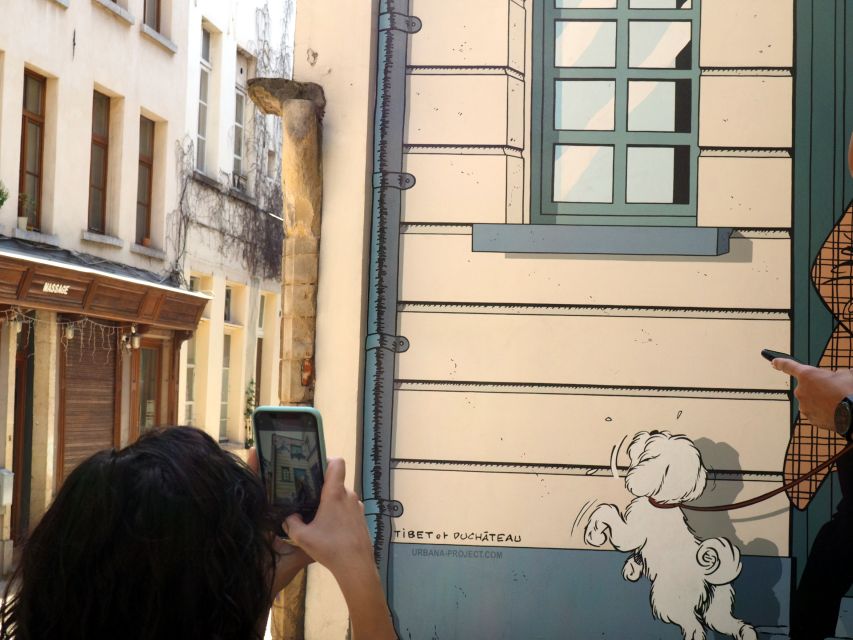
This is a walking tour through Brussels’ comic walls, designed for about 2.5 hours of steady movement. That timing matters because you’ll cover enough ground to see multiple walls and landmarks, but not so much that you feel stranded halfway through.
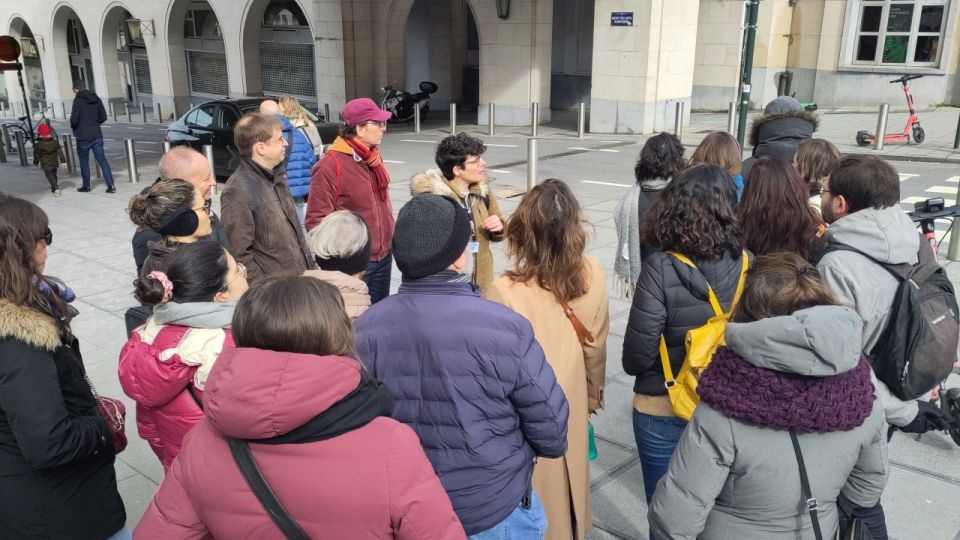
Because it’s a group walk, the pacing is guided. You’ll get stopped often—long enough to read, look closely, and listen—then move on at a city-walk rhythm. The upside: you won’t spend the whole time asking yourself what you’re looking at. The drawback: if you’re expecting a slow, sit-down museum pace, this will feel more active than that.
Good to know: the tour is wheelchair accessible. It also says it works with wheelchairs or strollers and is accessible for reduced mobility. Still, it’s a street route, so you’ll want to think like you’re walking around town: smooth enough in many places, but not a perfectly flat hallway.
Comic Walls 101: Learning the City Through Its Art
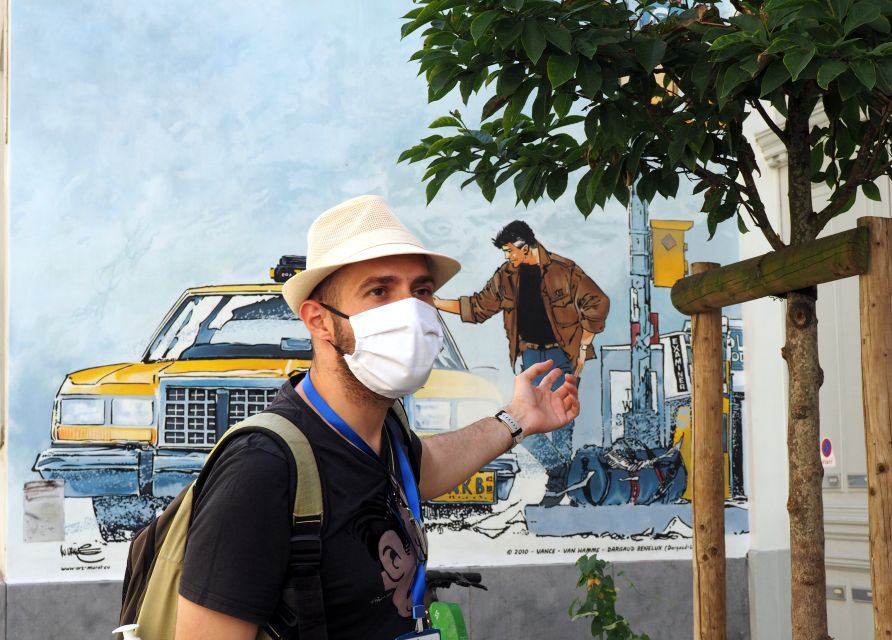
The big idea here is simple: Brussels has dozens of comic-related murals and walls, and the tour uses them like chapters. You don’t just see characters. You learn how the city visually tells comic-story style—composition, pacing, and the way panels and faces communicate.
You’ll also get a question-and-answer kind of route built into the walk. For example, you’ll learn which wall was the first comic wall in Brussels, created in 1991. That single fact changes how you look at everything after it. Instead of seeing random art, you start recognizing the timeline.
Another stop angle is authorship and “schools” of French-Belgian comics. Expect the guide to explain the main directions in how these comics are made—what differentiates styles and why certain approaches stuck in Belgium. Even if you’ve never studied comics, the tour tries to make the logic feel obvious once you’re standing in front of the art.
The 1991 Wall Stop: Seeing Brussels Comic Origins in Public
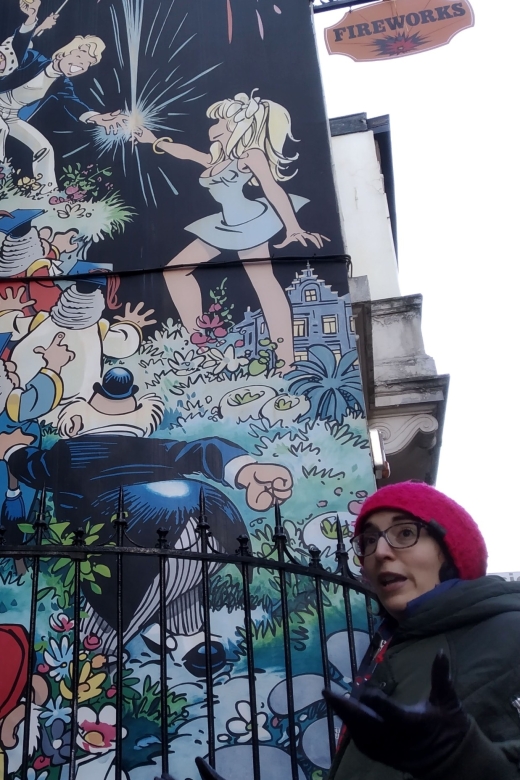
One of the tour’s strongest moments is the focus on the earliest comic wall created in Brussels, from 1991. It’s a great choice for two reasons.
First, it anchors you in time. When you’re walking past murals, it’s easy to assume they all appeared around the same era. The guide separates them, so the city starts to feel like it’s evolving.
Second, it’s a learning moment that doesn’t require a museum ticket. You’re getting “comic history” in the open air, with the real street around it. That means you can match the art to the setting—building materials, street scale, and how the wall fits the neighborhood.
If you like trivia, this is where you’ll feel satisfied. If you dislike trivia, it still works because it becomes a lens for every next wall.
Tintin’s House: When Characters Meet Real Addresses
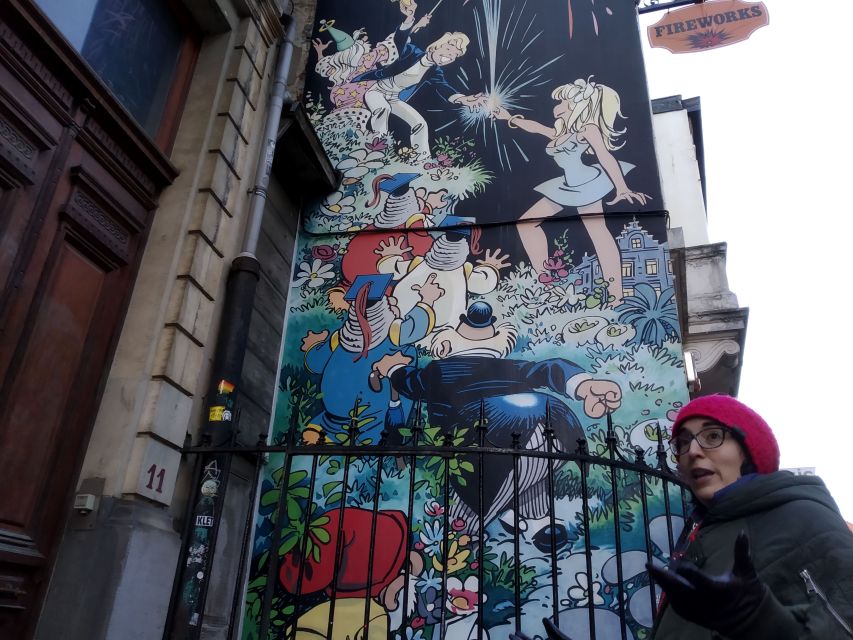
This tour has a dedicated moment for Tintin’s house—the place where Tintin lived before he moved to the Moulinsart castle. Even if you know Tintin from albums, this stop makes the character feel grounded and weirdly close to home because it connects narrative to a specific Brussels location.
What I like about this kind of stop is how it turns passive sightseeing into a kind of detective work. You’re looking at a real-world site, then connecting it back to a familiar story. It also gives you a reason to slow down: you’re not just collecting images; you’re matching an idea to an address.
It’s also one of those experiences where the guide’s explanations matter. The value isn’t just seeing a wall or a facade—it’s the story thread that gets tied from comics into the city.




Beyond the Center: Streets That Make Brussels Feel Bigger
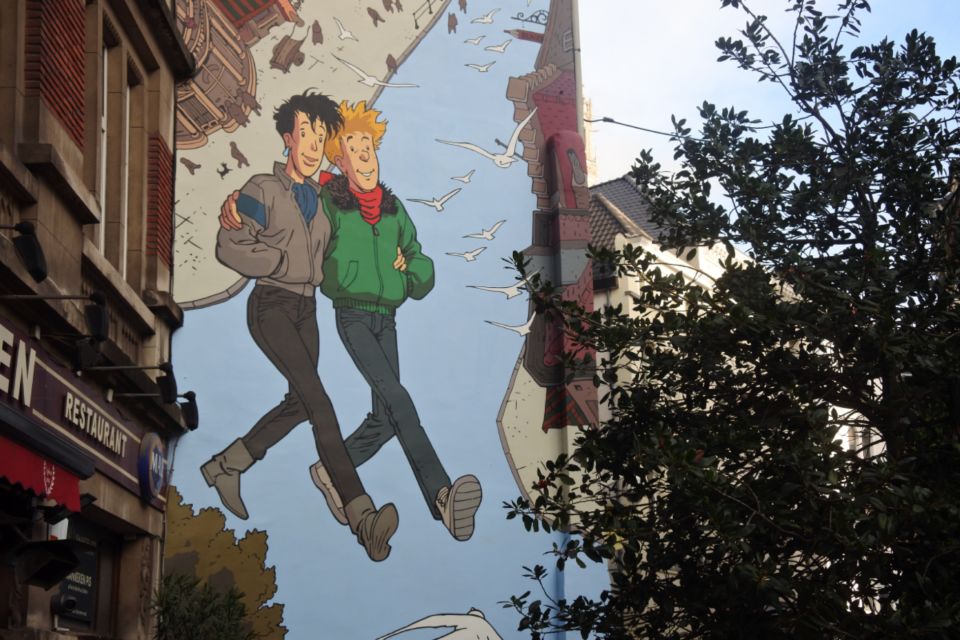
A common problem with city comic hunts is that people stay in the center and call it done. This route intentionally pushes beyond the core center areas, so you see streets that most visitors walk right past.
This part is about perspective. Brussels starts to feel less like a single main square and more like connected neighborhoods with their own visual language. You’ll also notice how comic art sits within everyday life: not only on big tourist backdrops, but on streets where people actually pass by.
If you’re the type who likes photos, this section helps. The angle shifts, the background changes, and you get more variety than the center-only loop.
Smurfs in the City: Big Public Art, Easy Recognition
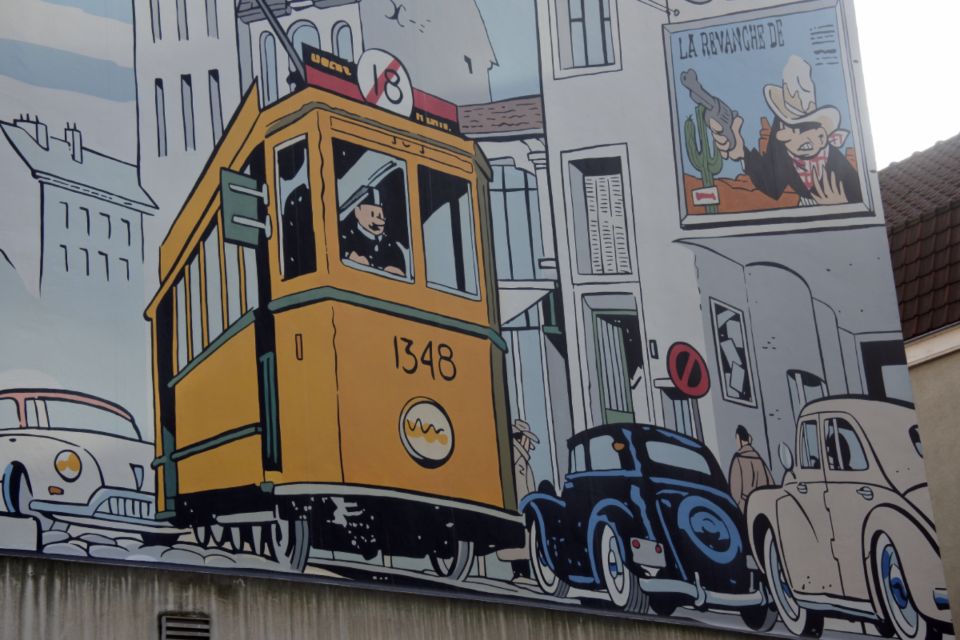
Yes, there’s a Smurfs statue moment in the city center, and it’s the kind of landmark that works even if you aren’t a die-hard fan. It’s instantly recognizable, which gives you a quick emotional “hook” mid-walk.
This matters because pacing can slip in any walking tour. A highly recognizable pop-art moment resets attention. After that, the guide can steer you back toward the deeper comic lessons—techniques, schools, and authorship—without losing the group.
Think of it like the tour’s palate cleanser: playful and easy to understand, while still keeping you moving.
Where to Find Comics in Your Language
A practical surprise at the end (or near the end) is the guidance on where to get comics in your language. That’s a small detail, but it’s the kind of useful travel tip that pays off long after the tour.
You’re not just leaving with photos. You’re leaving with a path to keep reading while you’re still in Belgium—or to continue the theme back home.
Because the tour is taught in Spanish on this option, the guide’s language tips are especially helpful if you read comics in Spanish. If you chose an English option instead, you’ll likely get similar guidance in that language.
The App Add-On: Multimedia Info You Can Review Later
The tour includes complementary multimedia information in an app. The info is available through Curiositas Mundus Telegram channels, with one link for Spanish and another for English:
- Spanish: https://t.me/curiositasmundusES
- English: https://t.me/curiositasmundusEN
I like add-ons like this because they work as a memory jogger. During the walk, you can only absorb so much. Later, the app-style content helps you reconnect names, styles, and the timeline you just heard.
Just don’t rely on it to replace the live guide. The tour’s real value comes from your guide pointing out what matters as you see it. The app is the booster shot.
Price and Value: $17 for 150 Minutes of Street Learning
The listed price is $17 per person for this 150-minute tour. There’s also a child option: free for ages 0 to 10, and from 11 years old and up the option is €15.
For a city walking experience, the value is fairly strong because you’re paying for three things:
- A professional guide who explains what you’re looking at
- Time-efficient coverage of multiple comic-related sites
- The multimedia app materials to reinforce the details
If you’re a solo traveler, a guided walking tour can feel like a basic purchase. Here it doesn’t. It feels like a guided interpretation of street art that you could try to do alone—but would take longer, and you’d miss the “why this wall matters” parts.
The only value-risk is if you’re the kind of traveler who hates walking tours or doesn’t care about comic art at all. Then you might feel the time, because this tour expects you to look and listen.
Who This Tour Suits Best (and Who Should Skip It)
This works best if you like:
- Comics and want the Belgian comic timeline
- Street art with a narrative angle
- Learning through a walk, not through a lecture
- A Spanish-led experience that keeps the group engaged
It might be a frustrating fit if you rely on audio or visual support. The tour is noted as not suitable for visually impaired people and hearing-impaired people. Since it’s focused on what you see and depends on the guide’s explanations, those limitations are important.
A Quick Guide to Timing and Comfort
Because it’s 150 minutes, you’ll want to treat it like a light activity day. Wear comfortable shoes and bring water if you’re walking in warmer weather. The walking route includes streets beyond the center, so you’ll be grateful for shoes that handle uneven ground.
If you’re using your phone for the app, bring a charged battery. You’ll want it mostly for review, but it can help during the walk too.
Should You Book the Brussels Comic Book Walls Tour?
I’d book it if you want Brussels to tell you a story as you walk. The combo of Tintin’s house, the 1991 first wall, and the guide’s explanations of French-Belgian comic styles makes this more than a photo scavenger hunt. The price is reasonable for the time and the guide-led learning, and the app adds a useful aftertaste.
I’d skip it if you strongly prefer self-paced sightseeing, need heavy accessibility accommodations beyond standard wheelchair access, or you’re not comfortable with a Spanish-only guided format for this option.
If you like comics even a little, this is one of those tours that turns ordinary streets into readable panels. And once you see one wall as an origin point, the rest of Brussels clicks into place.
FAQ
How long is the tour?
It lasts 150 minutes.
Where is the meeting point?
You meet at Rue du Marché au Charbon, 40, next to the mural of Brousaille. Your guide from Curiositas Mundus will have a distinctive sign.
Is the tour offered in Spanish or English?
This option is in Spanish. The operator indicates the tour is available in Spanish only or English only depending on the day/language, so choose the correct day for the language you need.
How much does it cost?
The price is listed as $17 per person. Children from 0 to 10 years old are free, and from 11 years old and up the option is €15.
What’s included in the ticket?
You get a professional guide plus complementary multimedia information via app (through the Curiositas Mundus Telegram channels for Spanish or English).
What is the group size limit?
The tour has a maximum group size of 25 people.
Is the tour wheelchair accessible?
Yes. It is listed as wheelchair accessible and suitable for people with reduced mobility, wheelchairs, or strollers.
Is the tour suitable for visually or hearing-impaired participants?
No. It is specifically noted as not suitable for visually impaired people and not suitable for hearing-impaired people.
Can I cancel for a full refund?
Yes. Free cancellation is available up to 24 hours in advance for a full refund.