REVIEW · BRUSSELS
Historic Ypres WWI Sites – Tour from Brussels
Book on Viator →Operated by History Wolf Tours · Bookable on Viator
Ypres WWI hits different with a historian. This tour strings together the key sites around Ieper (Ypres) so you don’t just see exhibits, you understand what you’re looking at and why it mattered. I especially like the historian-led pacing, with time to ask questions and connect the dots across different battle areas.
I also like that admission tickets are built in for most stops, and you’re not scrambling for lunch because lunch and snacks are provided. One consideration: this is a long day (about 7 to 10 hours) with plenty of walking, so bring comfortable shoes and expect early starts.
In This Review
- Key Highlights You’ll Care About
- Entering Ypres WWI Country From a Brussels Morning
- Hooge Crater Museum: Why This Private Museum Feels Personal
- Hill 62 and Sanctuary Wood: The “Sanctuary” That Became One of the Best Preserved Trench Areas
- Menin Gate Memorial and the 8 p.m. Last Post Moment
- Lunch in Ieper (Ypres): A Recovery City With WWI DNA
- In Flanders Fields Museum: Cloth Hall Story + the Belfry View
- Passchendaele Museum: Trench Life Through Dugouts and Trenches
- Tyne Cot Cemetery: The Largest Commonwealth Cemetery Feeling Like a World
- Price and Value: What $701.35 Buys You in Real Terms
- What to Bring and How to Survive the Walking
- Who This Tour Fits Best
- Should You Book Historic Ypres WWI Sites From Brussels?
- FAQ
- Is the Menin Gate Last Post included in the tour?
- What time does the tour start?
- How long is the tour?
- Are museum tickets included?
- What meals are provided?
- Is pickup available?
- What should I wear?
- Is cancellation free?
- What age is this tour for?
Key Highlights You’ll Care About
- A historian guide who stays in “explain + answer questions” mode, not “read the plaque and move on”
- Menin Gate and the 8 p.m. Last Post, the ritual moment tied to the memorial’s names
- Multiple major museums with hands-on or visual formats (including trench-dugout style displays)
- Meals included (lunch, snacks, soda/pop) so you can focus on the sites
- All the big-ticket stops packed into one route around Ieper/Ypres
Entering Ypres WWI Country From a Brussels Morning
The day starts early, with a start time of 8:00 a.m. and pickup offered, plus travel by air-conditioned vehicle. That matters here because the Ieper (Ypres) region is spread out, and a car saves you the stress of routing buses and trains while you’re trying to stay on schedule.
You’ll be touring with a historian who is set up for more than museum narration. The best part of this kind of day is that each site explains a slice of the Western Front story, and then the guide helps you stitch those slices together—how the war shifted, what troops faced, and how remembrance works today. For instance, one guide named István has been praised for tailoring conversations to what people want to understand, including politics and the economic forces around WWI.
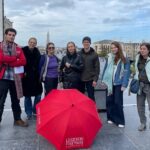
The tour is also described as a private tour/activity, meaning only your group participates. That tends to make questions easier and helps the day feel less like you’re being herded.
You can also read our reviews of more historical tours in Brussels

Hooge Crater Museum: Why This Private Museum Feels Personal
The first stop is Hooge Crater Museum, and it’s a strong opener. You get admission included and about 30 minutes inside, which is long enough to absorb the main scenes without feeling rushed.
What makes Hooge Crater worth your time is the way it uses life-size reconstructions of battle scenes. Instead of only reading about fighting, you can look at the gear and environments in a more physical way. There’s also an extensive collection of weapons, equipment, and photographs, so it works for both history buffs and people who want context fast.
A quiet practical tip: bring your camera, but also take one minute to step back and look at the overall scene before you shoot. The first photos you take will make more sense once you understand where the lines and spaces are supposed to be.
Hill 62 and Sanctuary Wood: The “Sanctuary” That Became One of the Best Preserved Trench Areas
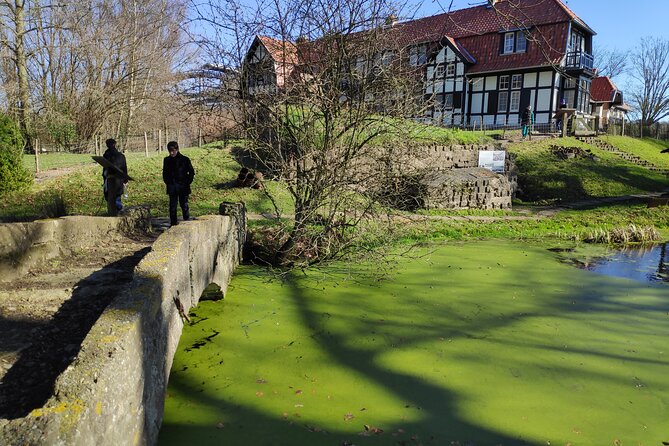
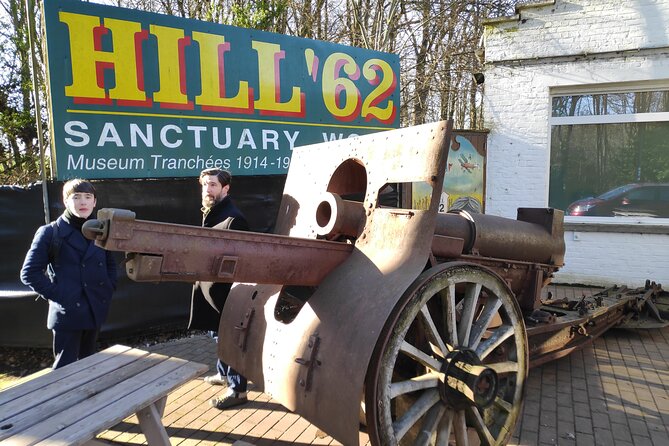
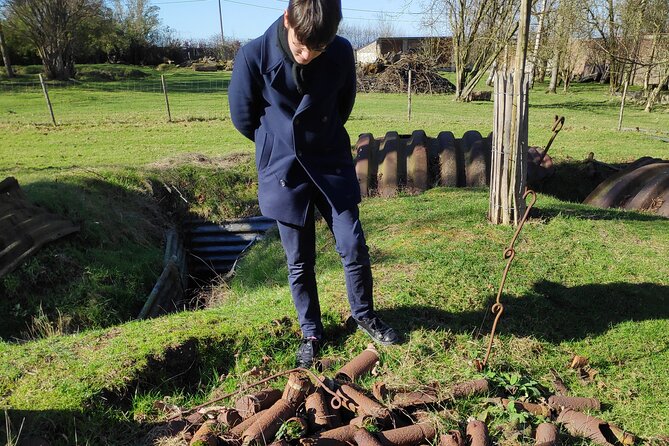
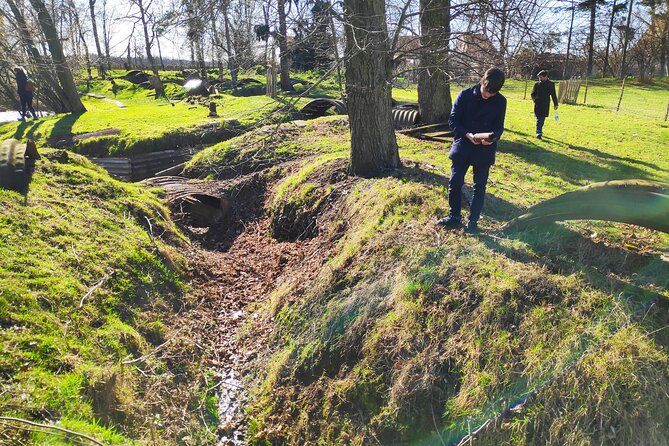
Next up is Hill 62 and the sanctuary wood area, including Sanctuary Wood and the Canadian Memorial. Expect about 45 minutes, and again, admission tickets are included.
This stop carries a specific story. In October 1914, Sanctuary Wood earned its name because it was used as a place of safety—almost like a waiting point—for stragglers trying to rejoin their units. The landowner family, seeing how many visitors and pilgrims were drawn to the place, helped enclose trench lines and dugouts early on. That’s why you can still see the remains today in a way that feels unusually intact.
A museum detail worth noting: the interior includes 3D stereoscopic photographs showing highly graphic war scenes. That format can hit hard, but it also helps you grasp scale and depth quickly. If you’re someone who prefers less graphic material, you might want to pace yourself during this part.
From a pure sightseeing standpoint, this is one of the better stops for getting the “shape” of the Front—where people moved, where they waited, and how protected or exposed those trenches really were.
Menin Gate Memorial and the 8 p.m. Last Post Moment
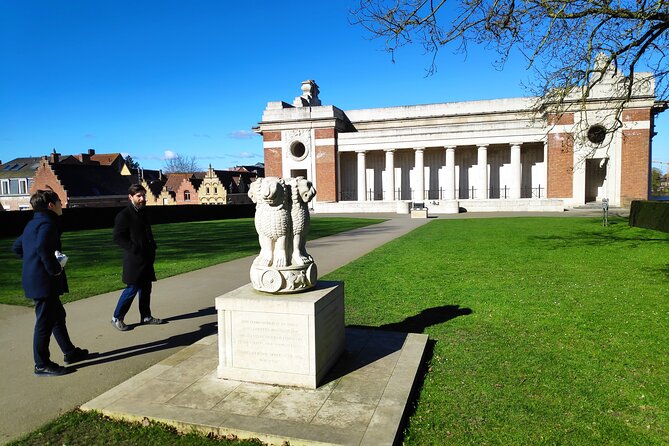
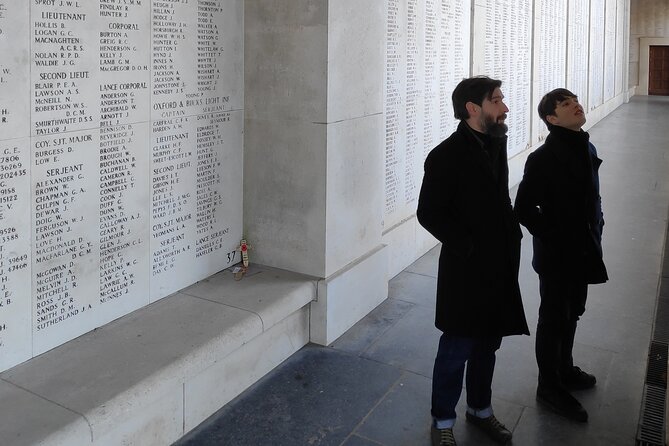
Then you reach Menin Gate Memorial, the overall symbol for WWI, and specifically a memorial to missing Commonwealth soldiers. You’ll have about 30 minutes, with admission included.
What to know before you arrive: the names of missing soldiers are listed inside—around 55,000 Commonwealth soldiers reported missing before Aug. 15, 1917. It’s not just a monument you walk by. It’s a place built to make absence visible.
The main “don’t miss” detail is timing. Every evening at 8:00 p.m. sharp, the Last Post resounds under the Menin Gate, and daily activities pause for a moment to remember the fallen. Even if you’ve seen photos before, there’s something about being there in person that can’t be replicated on a screen.
Practical note: this is a moment-based stop. You’ll want to be ready to stand and watch, not wander endlessly with your camera.
Lunch in Ieper (Ypres): A Recovery City With WWI DNA
After the big memorial moments, you get to walk around Ieper (Ypres) and have lunch. You’ll have about 1 hour, and admission to the walk itself is free.
This is where the day balances out. The WWI sites are serious and heavy. The city walk gives you a break to reset your eyes and brain. You can also pick up souvenirs, and the time is useful for getting your bearings in the rebuilt town.
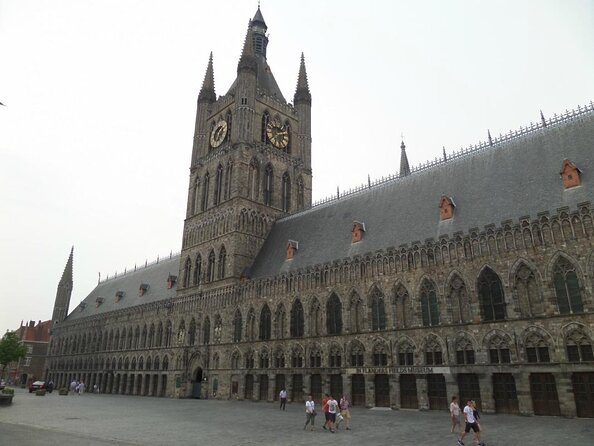
Even better, the next stop connects the city’s past to what’s visible now. The Cloth Hall of Ypres—recreated after wartime damage—becomes part of the story in the museum you’ll visit next.






In Flanders Fields Museum: Cloth Hall Story + the Belfry View
The In Flanders Fields Museum is housed in the rebuilt Cloth Hall of Ypres. You’ll have about 1 hour 30 minutes and admission included.
This museum tells the story of the First World War in West Flanders, using the Front as a gateway into how the region lived through hardship and then recovered. What I like about this museum approach is that it doesn’t treat the war as a closed chapter sealed in 1918. It keeps returning to how the surrounding area preserves the memory of the conflict.
You’ll also climb or use the restored Belfry tower for a view over the city and the surrounding battlefields. That vantage matters because it helps you visualize distance. Trenches don’t feel like “points on a map” when you can understand the terrain from above.
If you’re short on museum stamina that day, you can still get value by focusing on the big story threads and then saving your time for the tower view.
Passchendaele Museum: Trench Life Through Dugouts and Trenches
Next is the Passchendaele Museum, with about 1 hour 45 minutes and admission included.
This stop aims for a different type of understanding: not just what happened, but what soldier life looked like in the space where it happened. You’ll experience the military’s life during WWI through dugout and trench-style settings, using unique objects to move you through the Battle of Passchendaele story.
This one is a good “empathy builder,” and it works well even if your interest level varies by site. It’s also the kind of museum where you’ll notice details in the way space is arranged—how people could move, where they sheltered, and how cramped it must have felt.
Wear shoes you trust. You’ll likely be navigating uneven or enclosed areas that don’t forgive poor traction.
Tyne Cot Cemetery: The Largest Commonwealth Cemetery Feeling Like a World
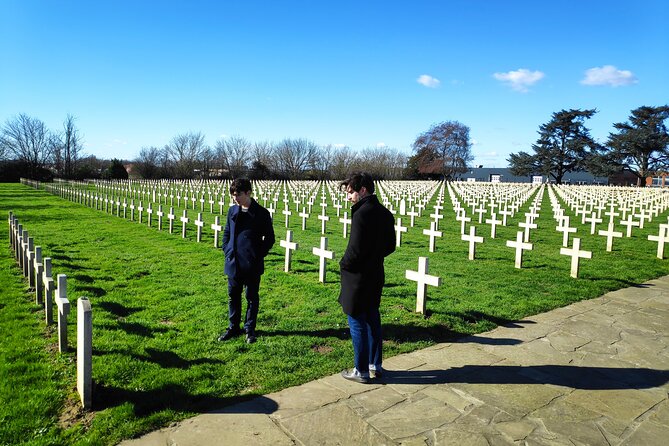
The final major stop is Tyne Cot Cemetery, with about 1 hour and admission included.
Tyne Cot is described as the largest Commonwealth war cemetery in the world by burials, and the scale is part of the impact. 11,961 Commonwealth servicemen from WWI are buried or commemorated here. The Tyne Cot Memorial also forms the north-eastern boundary of the cemetery, commemorating nearly 35,000 servicemen from the United Kingdom and New Zealand who died in the Ypres Salient.
When a cemetery is this large, you need a strategy. Don’t try to “read everything.” Instead, pick a few moments to linger—names, sections, and the way the memorial design guides your attention. Let your guide’s framing help you understand what the numbers mean.
This stop can be emotionally intense. It’s also one of the most meaningful ways to end the day, because it puts faces—or the record of names and loss—behind everything you’ve seen earlier.
Price and Value: What $701.35 Buys You in Real Terms
At $701.35 per person, you’re paying for a full day that combines transport, multiple ticketed entries, and meals. That price might feel steep compared to DIY travel, but the value is in the “packaged time.”
Here’s what’s included:
- Air-conditioned vehicle
- All fees and taxes
- Lunch and snacks
- Soda/pop
- Admission tickets for the museums and memorials listed as included
What’s not included:
- Tips/waswo for staff
- Alcoholic beverages
For me, the practical question is: do you want to spend your time coordinating transit across several WWI sites, or do you want to spend it inside the museums and at the memorials? This itinerary is built so you don’t lose half a day in getting between stops. When you add the included admissions and the meals, it becomes easier to see how the price stacks up.
Also: the tour is run with a historian. For many people, that’s the difference between collecting facts and understanding what they mean.
What to Bring and How to Survive the Walking
The tour asks you to bring a camera and comfortable hiking shoes. I take that seriously on this route. Even when the distances aren’t huge, WWI site grounds, museum interiors, and cemetery paths can add up.
I’d also bring:
- A light layer. Museum spaces and vehicles can swing temperatures.
- A small snack backup if you’re someone who gets hungry fast. Lunch and snacks are provided, but personal appetites vary.
- A charged phone or power bank for the day’s photo frenzy.
Small humor is allowed: if your shoes are only “city comfy,” you may regret it by afternoon. Give your feet something that can handle uneven ground.
Who This Tour Fits Best
This tour is best for you if:
- You want a guided day that links sites into one story
- You appreciate a historian who answers questions (and stays flexible to interest)
- You’re planning a single major WWI day trip from Brussels and want the key names and places covered
It also fits well for groups of friends, because the private setup keeps the vibe calmer than a big bus day.
One rule to know: the minimum age is 16, so it’s not set up for younger kids.
Should You Book Historic Ypres WWI Sites From Brussels?
If you’re trying to choose between a DIY trip and a guided day, I’d lean guided here. This route includes the major memorial and museum stops in a tight window, and the historian angle is what turns those stops into understanding rather than a checklist.
Book it if you’re ready for emotion, museum time, and a bit of standing around at memorial moments. Pass on it only if you want a short, low-walking, no-museums day.
You’ll come away with a clearer sense of the Western Front, how remembrance works in real places, and why Ypres keeps drawing people back decades later.
FAQ
Is the Menin Gate Last Post included in the tour?
Yes. The tour itinerary includes Menin Gate Memorial, and the Last Post is at 8:00 p.m. sharp under the Menin Gate as part of the daily memorial ceremony.
What time does the tour start?
The tour start time is 8:00 a.m.
How long is the tour?
It runs for about 7 to 10 hours.
Are museum tickets included?
Admission tickets are included for the stops listed with admission included, including Hooge Crater Museum, Hill 62/Sanctuary Wood, Menin Gate Memorial, In Flanders Fields Museum, Passchendaele Museum, and Tyne Cot Cemetery.
What meals are provided?
The tour includes lunch, plus snacks and soda/pop.
Is pickup available?
Yes. Pickup is offered, and the day uses an air-conditioned vehicle.
What should I wear?
Bring comfortable hiking shoes since the day includes walking at multiple outdoor and cemetery sites.
Is cancellation free?
Yes. You can cancel for a full refund up to 24 hours before the experience’s start time. If you cancel less than 24 hours before, the amount paid will not be refunded.
What age is this tour for?
The minimum age is 16.