REVIEW · BRUSSELS
Brussels Chocolate Tasting Tour
Book on GetYourGuide →Operated by SANDEMANs NEW Europe · Bookable on GetYourGuide
Belgian chocolate arrives fast in Brussels. This 90-minute guided walk turns the city center into a tasting route, with Royal Galleries Saint-Hubert as the centerpiece and real chocolate history threaded into the stops. When guides like Fraser are running the tour, the mood stays light and the info stays practical.
Two things I really like: you get four different artisanal chocolate shops (so you’re not stuck with one style), and the tastings are paired with stories that explain why Belgian chocolate became such an identity piece. It’s not just eating sweet things; it’s learning what to notice while you taste.
One possible drawback: you’ll be on your feet in the medieval center, and your guide may adjust the exact flow based on the group. If you’re hoping for lots of long seated breaks, plan for a walking-focused experience.
In This Review
- Key moments that make this tour worth it
- Meeting at Brussels City Hall: where the tour starts and how to find your group
- Royal Galleries Saint-Hubert: the chocolate stop that sets the tone
- Corné Dynastie on Grand-Place: noticing quality without getting lost in the hype
- The Belgian Chocolate Makers: learning the craft behind the counter
- The four-shop tasting plan: how to get the most from your samples
- Pacing and walking: what the route feels like in real life
- Guide factor: why Fraser and Adrien show up so often in reviews
- Price and value: is $35 a fair deal for what you get?
- Who this tour fits best (and who should skip it)
- Buying chocolate after the tour: how to shop smarter on your own
- Small practical tips so you enjoy every bite
- Should you book this Brussels chocolate tour?
- FAQ
- How long is the Brussels Chocolate Tasting Tour?
- How much does it cost?
- Where does the tour meet?
- What language is the tour guide?
- How many chocolate shops will you visit?
- What’s included in the price?
- Are there chocolate tastings for infant tickets?
- Is the tour wheelchair accessible?
- Will the route always be exactly the same?
Key moments that make this tour worth it
- Royal Galleries Saint-Hubert tastings paired with chocolate origins and how Belgium became synonymous with cocoa
- Four artisanal chocolate shops so the flavors actually vary from stop to stop
- Guide-led chocolate craft talk on what’s happening behind the counter (and in the making process)
- Grand-Place energy as you pass major landmarks tied to Brussels’ big-city identity
- Funny, fast, group-friendly guiding noted again and again in reviews, including Fraser and Adrien
Meeting at Brussels City Hall: where the tour starts and how to find your group
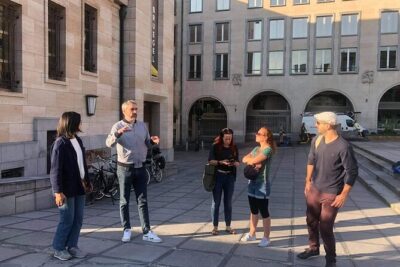
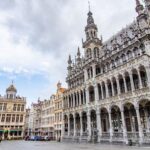
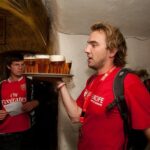
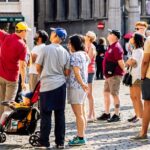
Start at La Meuse et l’Escaut, right in the heart of Brussels Chocolate Territory. The key meeting point is in front of the tower of Brussels City Hall on Grand Place/Grote Markt. When you arrive, look for guides with the red free tour umbrellas, plus the matching t-shirts and name badges.
This matters because Brussels can feel like a maze the first time you’re there. Grand Place is easy to spot, but the surrounding streets can scatter you quickly if you’re late or distracted by storefronts. Arrive a few minutes early, even if you’re tempted to duck into shops right away.
You can also read our reviews of more food & drink experiences in Brussels

Royal Galleries Saint-Hubert: the chocolate stop that sets the tone
The tour’s vibe shifts at Royal Galleries Saint-Hubert. This is where you get to combine Brussels’ classic elegance with the very modern reason people come here: tasting.
In the galleries, you’ll sample Belgian chocolates in a way that feels like part tasting session, part guided walkthrough of chocolate styles. Think pralines, truffles, ganache, and chocolate bars—plus the kind of explanations that help you understand what you’re actually eating.
Why this stop is so effective: the setting makes it easy to slow down. The galleries are built for strolling, and your guide uses that movement to connect the tasting to the larger story—how chocolate made its way to Belgium and how it grew into something the country treats as part of its identity.
If you like learning while you snack (not lecturing-only), this is the sweet spot.
Corné Dynastie on Grand-Place: noticing quality without getting lost in the hype
From the Grand-Place area, you’ll head toward Corné Dynastie. Even if you’re not planning to buy anything yet, this kind of stop is useful because it trains your eye.
You’ll see the display case world up close: stacks of tempting pieces, boxed assortments, and lots of visual cues about textures and fillings. Your guide’s job here is to keep you from getting overwhelmed by the glittering options and instead teach you what each category usually signals—so your eventual purchase makes more sense.
A practical angle: by the time you hit a shop like this, you’ve already tasted something earlier on the route. That lets you compare immediately. You’re not just sampling randomly. You’re starting to build a quick map in your head: what you like, what you don’t, and what style you should look for in your own shopping later.
The Belgian Chocolate Makers: learning the craft behind the counter
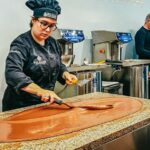
Next up is The Belgian Chocolate Makers. This part of the experience is less about the building itself and more about what you take away from watching how chocolatiers think.
You learn the secret to making delicious chocolate and you get context for how chocolate became intertwined with Belgian culture. It’s the kind of information that changes what you taste. Instead of only asking whether something is sweet or rich, you start noticing factors like texture, balance, and how different chocolates treat the same core ingredient.
This is also where the guide’s personality really matters. In reviews, guides like Fraser and Adrien come up repeatedly for being funny and for keeping the group engaged, especially during explanation-heavy moments. That matters because chocolate history can go dry fast if the pacing is off. Here, the talk seems built to move with the tasting.
The four-shop tasting plan: how to get the most from your samples
The promise is simple: you’ll visit 4 different artisanal chocolate shops and taste a variety of Belgian chocolates. The smart part is how that variety is used.
Here’s how you can get more out of the tastings without overthinking it:
- Taste by texture first. Are you getting a smooth melt, a firm bite, or something creamy in the middle?
- Then taste by sweetness. Some chocolates are built around sugar-forward comfort; others lean toward cocoa depth.
- Listen for what the guide points out. The whole point is to connect the story to what’s on your tongue.
The samples also help you avoid a common mistake: buying an assortment that looks amazing but doesn’t match your actual preferences. After four shops, you usually know what you want to carry home—dark, milk, filled pralines, or ganache-style richness.
One timing note: the tour is marketed as 90 minutes, but the walking component can feel closer to a longer stroll. Either way, it’s short enough to fit into a tight Brussels schedule, yet long enough for real comparisons.
You can also read our reviews of more tours and experiences in Brussels




Pacing and walking: what the route feels like in real life
This is a walking tour through the medieval center of Brussels. The good news is that the route is designed to keep moving between nearby stops, so you’re not dealing with constant long-distance transit. The other good news is that tastings are built into the stroll, so you get regular payoff.
Still, keep expectations realistic. There’s enough walking to matter if you’re mobility-limited or your day is already full. A review note points out that seating options can be limited at points, so if you need breaks, plan to stand, sample, and move.
Also, your tour may vary depending on what your guide thinks is best for your group. That flexibility is often a plus—guides can react to crowds or prioritize the most engaging options for the moment—but it also means you shouldn’t treat the exact sequence as a rigid script.
Guide factor: why Fraser and Adrien show up so often in reviews
A chocolate tasting tour lives or dies on the guide. This one clearly leans on personable guiding.
In the reviews you provided, Fraser shows up again and again for being funny, engaging, and quick to handle logistics if something goes sideways—like the case where a guest arrived about 20 minutes late due to train trouble and still managed to meet up without losing much. Adrien also appears as a standout, with comments about being interactive and charming, plus offering more details about chocolate-making and the shop workings.
That kind of guide energy does practical work. It keeps you from zoning out when you’re listening, and it helps you ask questions in the moment—like what to look for if you want the best dark chocolate, or how shop techniques affect taste.
If you enjoy human storytelling—rather than just a checklist of facts—this tour’s guide style is a major reason it performs so well.
Price and value: is $35 a fair deal for what you get?
At $35 per person, this tour is in the affordable-to-mid range for a guided food experience in a major European city. The value comes from two parts.
First, you get tastings across multiple shops rather than one warehouse-style stop. Four artisan shops means you’re sampling different approaches, not just re-buying the same flavor in a different box.
Second, you’re paying for context. The included chocolate history—how chocolate arrived in Belgium and how it became part of national identity—turns the chocolate from random snacks into something you can understand. That’s why the guide matters here. When you know what you’re eating, you often enjoy your later self-guided shopping more because you can make better choices.
If you love chocolate but don’t want to spend hours researching brands, this price structure makes sense.
Who this tour fits best (and who should skip it)
This Brussels Chocolate Tasting Tour is best for you if:
- You want a short, high-impact activity (90 minutes) that still delivers variety.
- You like food tours with a story component—origins, how things are made, and why Belgian chocolate matters.
- You’d rather taste and compare than gamble on blind purchases.
It might be less ideal if:
- You’re planning a super-rest-heavy day and can’t handle any walking through uneven medieval streets.
- You want a long seated meal experience (this is not that kind of tour).
- You’re traveling with a baby and were hoping the infant ticket includes tastings—it doesn’t.
Buying chocolate after the tour: how to shop smarter on your own
One of the best practical effects of a tasting tour is that it gives you shopping momentum. After sampling across different shops, you’ll know what textures and flavors you actually enjoy. Then you can walk into the places you liked and buy with confidence.
A useful bonus from the tour style you described is that guides often leave you with recommendations for where to buy next. Even if you don’t ask questions right away, this kind of guidance can help you avoid wasting money on assortments you’ll never finish.
When you do shop, stick to your new favorites:
- If you liked deeper cocoa notes, lean toward dark chocolate options.
- If you prefer softer richness, look for truffles and ganache-style pieces.
- If you enjoyed a specific filling style, search for that filling in other brands.
Small practical tips so you enjoy every bite
Do these and your tour will feel easier:
- Wear comfortable shoes. You’re walking through central Brussels, and it’s not a long-distance trek, but it adds up.
- Come with an appetite, not a full stomach. Chocolate tastings are the core event.
- Ask one good question early. The guide can often tailor explanations to what you’re tasting in the moment.
- Start thinking about gifts. Once you find your favorite style, it’s easier to choose something that travels well.
And if you’re sensitive to sweetness, go slow. You’ll get a variety of chocolates, so pacing yourself makes the experience more enjoyable.
Should you book this Brussels chocolate tour?
Book it if you want a focused, friendly chocolate experience that combines tastings with real context. At $35 for about 90 minutes, the value is strong because you’re sampling across four artisanal shops and learning what to notice, not just what to eat.
Skip it or choose another option if you need a mostly seated food tour, or if you’re expecting infant tickets to include tastings (they don’t). If you’re okay with walking and you want your Brussels day to end with a clearer sense of what Belgian chocolate tastes like, this tour is a very smart use of time.
FAQ
How long is the Brussels Chocolate Tasting Tour?
The tour is listed as 90 minutes.
How much does it cost?
It costs $35 per person.
Where does the tour meet?
It starts in front of the tower of Brussels City Hall on Grand Place/Grote Markt. Guides are easy to spot with red free tour umbrellas, t-shirts, and name badges.
What language is the tour guide?
The tour is in English.
How many chocolate shops will you visit?
You’ll visit 4 different artisanal chocolate shops.
What’s included in the price?
You get tastings of a variety of different Belgian chocolates plus the guided walking tour.
Are there chocolate tastings for infant tickets?
No. The infant ticket option doesn’t include chocolate tastings.
Is the tour wheelchair accessible?
Yes, the tour is wheelchair accessible.
Will the route always be exactly the same?
It may vary depending on what the guide thinks is best for your group.