REVIEW · BRUSSELS
Brussels Tootbus Discovery Hop On Hop Off Bus and walking tours
Book on Viator →Operated by Tootbus · Bookable on Viator
Brussels can feel big on day one. That’s why this Tootbus plan works: you get an electric hop-on hop-off loop, plus audio that follows you as you move between neighborhoods. If you like pacing yourself, it’s an easy setup for seeing a lot without building a strict itinerary.
I especially like the audio commentary available both onboard and in the Tootbus app, in multiple languages. I also like the freedom to hop off at major stops and jump back on later, instead of being stuck with one guided group route.
The main drawback to plan around is timing. Some buses and app updates may not feel as predictable as you’d hope, so give yourself extra buffer—especially if you’re trying to time a museum or a timed ticket.
In This Review
- Key things I think are genuinely useful
- A green hop-on hop-off in Brussels: electric bus, app, and walking add-ons
- Route strategy: how the two directions help you cover Brussels fast
- Central Station to Grand-Place: the classic first sweep
- Place Royale and the Poelaert/Louise/Courthouse zone for architecture breaks
- Luxembourg and Cinquantenaire: where you’ll want a longer hop-off window
- North and east: Rogier, De Brouckère, and the Atomium day plan
- Tootwalk walking tours: turning bus stops into real strolling routes
- Using the Tootbus app: e-ticket wallet, bus tracking, and audio
- Comfort and onboard reality: Wi‑Fi, open decks, plugs, and weather
- Price and value: when 24, 48, or 72 hours makes sense
- Who should book this Brussels Tootbus setup
- Should you book Tootbus and Tootwalk in Brussels?
- FAQ
- How long is the Tootbus Brussels hop-on hop-off experience?
- What ticket options are available?
- Is audio commentary included?
- Can I use a mobile ticket?
- Is Wi‑Fi included on the bus?
- Is there a restroom on the bus?
- Are food and drinks included?
- Does the tour use electric buses?
- Is cancellation free?
- Are service animals allowed?
Key things I think are genuinely useful

- Electric ride, real pickup points: You’re on a 100% electric bus, with stops mapped across both the historic core and standout sights.
- Audio both on bus and on your phone: You can listen onboard or use the Tootbus app for commentary and walking support.
- App helps with an e-ticket and live bus tracking: The Tootbus app includes an e-ticket wallet and bus tracking features.
- Tootwalk turns stops into strolls: Audio-guided walking tours help you make short neighborhoods feel walkable.
- Families get a dedicated kids audio guide: Little ears aren’t an afterthought here.
- Not every stop is instantly obvious: A few practical frustrations pop up around stop finding and onboard audio behavior.
A green hop-on hop-off in Brussels: electric bus, app, and walking add-ons
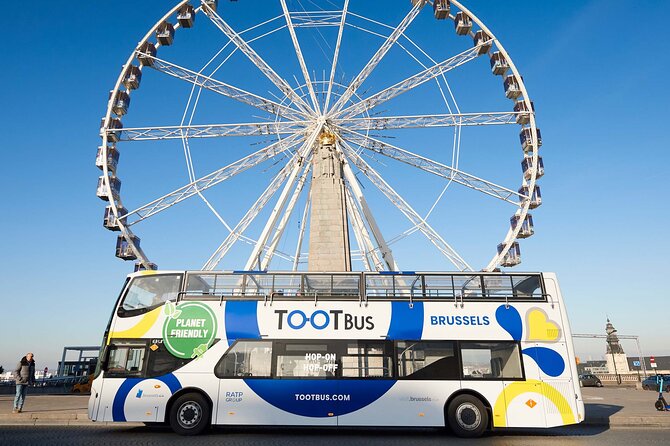
Tootbus is built for flexibility. You buy a 24, 48, or 72-hour pass, then move at your own speed: ride, hop off to explore, and hop back on when you feel ready.
The ride itself is 100% electric, which is a nice bonus in a city where you’re often stuck battling traffic. On top of that, you get free Wi‑Fi onboard, so you can keep checking your route without burning your mobile data.
Where it gets more interesting is the combination of bus + app + Tootwalk. The app isn’t just for tickets—it’s also where the audio and walking tools live, which means you can switch from ride mode to walk mode without losing your place.
You can also read our reviews of more walking tours in Brussels


Route strategy: how the two directions help you cover Brussels fast
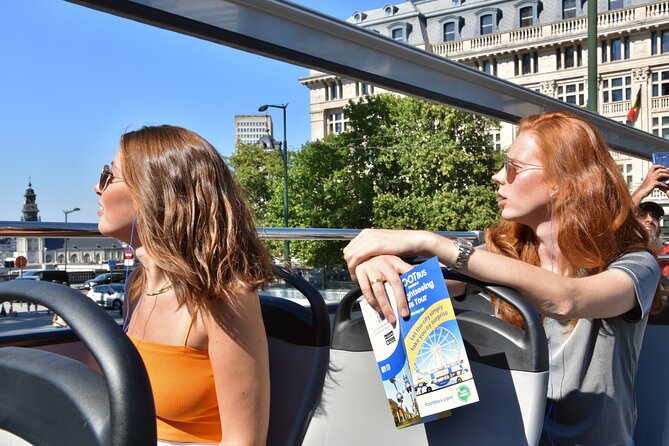
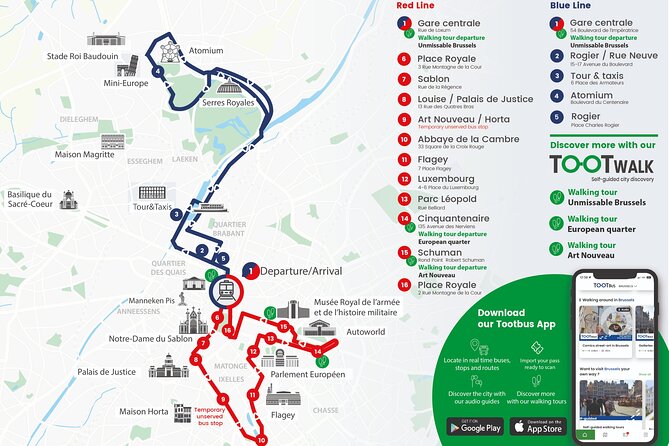
Brussels is not a “everything is next to everything” city. This bus route helps by linking areas that are otherwise spread out: Central Station and the grand squares, then out toward European landmarks like the Atomium area.
In practice, you’ll use the loop like this:
- Choose the direction that matches what you want to see first.
- Hop off at a stop long enough to do photos and a short wander.
- Reboard when you’re ready for the next jump.
Stops include Rue du Cardinal Mercier 33 (near Central Station), Rue du Lombard 68 (Grand-Place / Manneken Pis), Rue des Quatre Bras (Poelaert / Louise / Courthouse), Pl. du Luxembourg 2 (Luxembourg), Av. des Nerviens 131 (Cinquantenaire), and Rue de la Régence 2 (Place Royale). Then the loop continues back through more central areas like Rogier and De Brouckère – Centre, and reaches Atomium & Mini Europe via Boulevard du Centenaire.
That “two-part” feel is handy. If you’re tired after the city center, you can pivot toward the more spread-out highlights without needing to figure out everything from scratch.
Central Station to Grand-Place: the classic first sweep
If this is your first time in Brussels, your best opening move is often starting near Central Station (Rue du Cardinal Mercier 33). It’s one of those practical anchors where you can orient yourself quickly, then head into the sights.
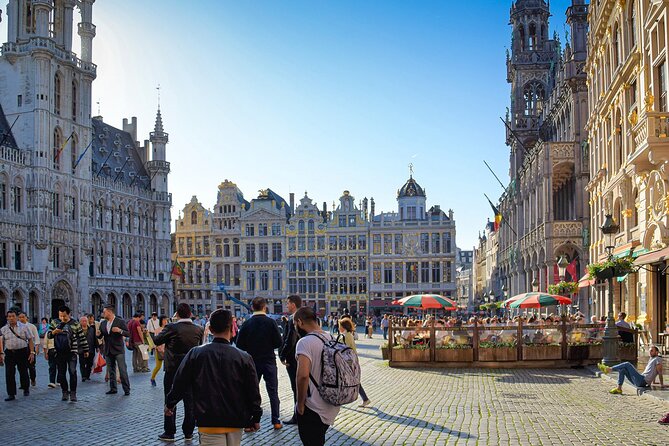
From there, you’ll reach Grand-Place / Manneken Pis (Rue du Lombard 68). This stop is a big deal for two reasons: it’s famous enough that you’ll want time for it, and it’s the kind of area where you naturally end up doing extra walks for photos. The hop-off approach is perfect here because you can linger without worrying about missing a fixed group time.
One practical consideration: this section can be busy, so plan a little patience when you’re boarding again. Also, some riders find stops not perfectly obvious at first—once you identify the stop pole sign, it usually gets easier.
Place Royale and the Poelaert/Louise/Courthouse zone for architecture breaks
Two stops that help you switch from “square sightseeing” to “city views and buildings” are Place Royale (Rue de la Régence 2) and the Poelaert / Louise / Courthouse area (Rue des Quatre Bras).
These are the kinds of stops where audio makes a difference. Instead of walking past impressive facades and hoping you guessed what you’re looking at, you can listen to the corresponding commentary and then connect the story to the streetscape right in front of you.
The tradeoff is time. Areas like this often tempt you to slow down and look upward, which is great—but it’s also easy to burn through your hop-on hop-off flexibility if you’re not careful. If you’re trying to do everything in a single day, choose one “architecture-heavy” stop for a longer break and keep the other one shorter.
Luxembourg and Cinquantenaire: where you’ll want a longer hop-off window
Pl. du Luxembourg 2 (Luxembourg) and Av. des Nerviens 131 (Cinquantenaire) are the kind of jump-off points that can turn a quick ride into an actual mini-day out.
Why these stops matter is simple: they add breathing room. You’re not just moving between dense clusters of classic sights; you’re also getting a different feel to the city. That makes it easier to avoid the common hop-on hop-off trap of feeling like you’re just collecting bus stops.
At Cinquantenaire, for example, people tend to want photos and time to wander, especially if they’re using the bus as the backbone of a broader day plan. Give yourself enough time to enjoy the pause, not just step off, take one photo, and sprint back on.





North and east: Rogier, De Brouckère, and the Atomium day plan
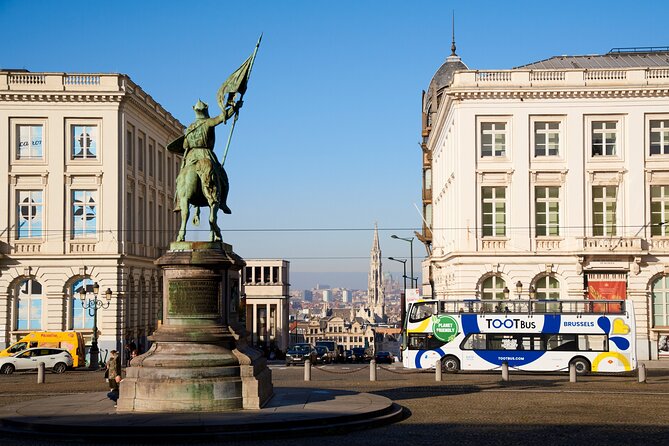
If your Brussels list includes the Atomium, you’ll want to aim for Atomium & Mini Europe (Boulevard du Centenaire). This is the stop many people build a day around, because it’s far enough from the old center that a bus shortcut feels worth it.
You also pass through central connectors like:
- Rogier (Av. du Boulevard 21)
- De Brouckère – Centre (Rue de l’Evêque 7)
These stops help you reposition without making you commit to long walks or tricky transfers. They’re especially useful if you’re tired from earlier walking, or if you want to reduce backtracking.
One thing to keep in mind: some riders report long lines at the Atomium, so even if the bus gets you close, your day can still stretch. If you have a timed plan, consider taking the bus earlier rather than treating it like your exact arrival clock.
Tootwalk walking tours: turning bus stops into real strolling routes
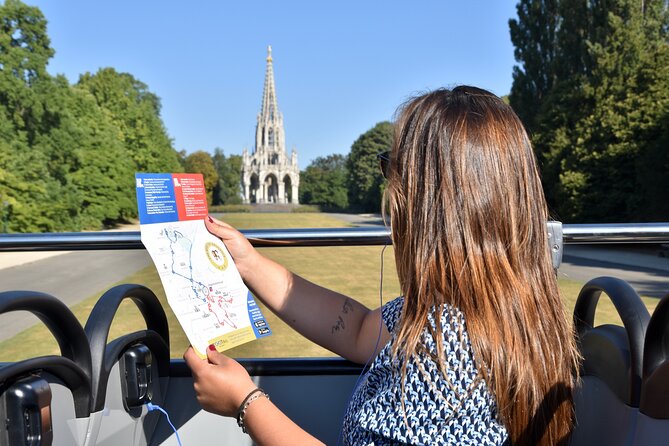
The tour isn’t only about the bus. With Tootwalk, you get audio-guided walking tours that you can plug into once you hop off.
Here’s why I think that matters: Brussels is a city where one extra 20-minute walk can change your whole impression. The bus gives you the map; Tootwalk helps you convert that map into a street-level experience.
I also found the walking guide angle a standout. In one highlight, Patrick led a 4-hour walking tour with strong knowledge and a friendly style, and radio sets were used so everyone could hear clearly. That’s a big quality-of-life detail if you’re trying to learn while you walk, not just view.
If you’re the type who enjoys hearing stories tied to what you’re seeing, use Tootwalk after your first bus loop. You’ll be more oriented, and the walking audio will feel less random.
Using the Tootbus app: e-ticket wallet, bus tracking, and audio

The app is part of the deal. You get access to it via the ticket, including:
- an e-ticket wallet
- bus tracking
- audio commentary
In theory, bus tracking makes the system smoother because you’re not guessing when the next ride will show up. In real life, I’d still keep expectations flexible. Some riders report delays that didn’t match what the app suggested, and that can turn a quick hop into a long wait.
Here’s how to use the app smartly without getting stuck:
- Before you head to a stop, check what’s nearby and which line direction you need.
- If you’re waiting for the Atomium stretch or any timed plan, build in extra margin.
- When onboard audio feels a bit mismatched, rely on the app’s stop listings to keep your bearings.
The audio experience itself can vary by preference. Some people find the mix more music-driven than history-focused, so if you care a lot about historical narration, be ready to use the app actively while you ride and not just passively listen.
Comfort and onboard reality: Wi‑Fi, open decks, plugs, and weather
On paper, onboard comfort looks solid: free Wi‑Fi, a clean ride, and an eco-friendly electric bus. The bus also offers a way to see more—some decks can be open, which is great in mild weather.
But I’d treat comfort as “check the conditions, not the promises.” Some riders report issues like seat plugs not working, and the cold can be a factor depending on the deck and season. There’s also at least one note about air conditioning problems on the lower deck during hot weather.
Two practical tips that help:
- If you’re sensitive to temperature, bring a layer even in shoulder season.
- If you need to charge devices, don’t assume every outlet works—carry a backup battery if it’s critical.
Also, there is no restroom onboard. That’s not a reason to skip, but it is a reason to plan a bathroom stop before you settle in for longer stretches.
Price and value: when 24, 48, or 72 hours makes sense
No one buys a hop-on hop-off pass just for the ride. They buy it to buy time—time that would otherwise go to figuring out routes, backtracking, and transferring.
So the value question comes down to your pace:
- 24-hour pass: Best if you want a first overview and you’re okay prioritizing a shortlist—like Central Station to Grand-Place, plus one big-name outlying stop such as the Atomium area.
- 48-hour pass: Best if you want repeat chances. Brussels is spread out, and one loop often shows you what you’ll want to revisit.
- 72-hour pass: Best if you like wandering beyond the obvious and you’re building a slower rhythm, including walking tours (Tootwalk) between bus rides.
One review-related theme I’d translate into advice: if your schedule is tight or buses feel infrequent that day, the pass can start to feel expensive. The fix is simple—plan your hop-offs with buffer time and aim to stay flexible around when you’ll board, not just where you’ll get off.
Who should book this Brussels Tootbus setup
This experience is a good match if you want:
- a self-guided Brussels backbone that keeps you moving without constant route planning
- multilingual audio so you’re not stuck reading everything from the street
- the option to turn bus stops into short walks with Tootwalk
- an easy way to cover both the city center and the Atomium/Cinquantenaire style stops in one trip
It may feel less ideal if you’re the type who wants super precise timing and zero waiting. If you hate waiting for transport, you’ll likely feel frustrated if the real arrival times drift from what you expected.
Should you book Tootbus and Tootwalk in Brussels?
I’d book it if you want an efficient way to see Brussels with choice built in. The electric bus, included audio (on bus and via the app), and Tootwalk option add up to a flexible system that can work for first-timers and for people who like to control their own tempo.
Before you go, I’d adjust your expectations on two points: stop-finding and wait times. Download the app early, watch for clearly marked stops, and give yourself a little extra time for boarding. Do that, and this pass can turn your Brussels days into a simple, low-stress circuit rather than a logistics puzzle.
FAQ
How long is the Tootbus Brussels hop-on hop-off experience?
The experience is listed as about 1 hour in duration, though the full loop and your time on the ground will depend on how long you stay at each stop.
What ticket options are available?
You can choose a 24-, 48-, or 72-hour Brussels hop-on hop-off pass.
Is audio commentary included?
Yes. Audio commentary is available on the bus and through the Tootbus app, and it’s offered in multiple languages. There’s also a kids audio guide.
Can I use a mobile ticket?
Yes. The tour includes access to the Tootbus app with an e-ticket wallet.
Is Wi‑Fi included on the bus?
Yes, there is free Wi‑Fi onboard.
Is there a restroom on the bus?
No. A restroom is not included on board.
Are food and drinks included?
No. Food and drink are not included.
Does the tour use electric buses?
Yes. The ride is on a 100% electric bus.
Is cancellation free?
Yes, you can cancel for a full refund if you cancel up to 24 hours in advance of the start time.
Are service animals allowed?
Yes. Service animals are allowed, and the tour is offered in English.