REVIEW · BRUSSELS
Flanders Fields Remembrance Tour from Brussels
Book on Viator →Operated by Brussels City Tours - Keolis Travel · Bookable on Viator
One day, eight solemn WWI stops. This Flanders Fields remembrance tour strings together major WWI sites with an expert guide, ending with the Last Post Ceremony at Menin Gate in Ypres. What I love most is how the stops feel connected: you see both the German and Commonwealth memorial stories in the same day, not as separate tourist boxes, and you get the emotional weight of Vladslo’s Grieving Parents sculpture. The main catch? It’s a long day packed with stops, so it can feel like a lot of memorials in one go.
I also really like the way the guides bring the subject down to human scale. On past departures, guides like Stefan and Dietrich were praised for making dates, locations, and unit stories click into place without drowning you in facts. They guide your attention to the details that actually matter—why a cemetery is where it is, why a tunnel matters, and what a single poem moment did for people back home.
If you prefer slow travel, plan for early mornings and a late finish. You’ll be on a coach for hours, and the cemeteries and memorial grounds do involve walking on uneven surfaces.
In This Review
- The Big Reasons to Do This Route
- Why WWI Memorials Feel Different in Flanders
- Brussels to the Battlefield: The Coach Ride and the Pace
- Vladslo German Military Cemetery and Käthe Kollwitz’s Grieving Parents
- Diksmuide’s Brooding Soldier: Canadian Loss in the First Gas Attack
- Flanders Fields Museum: Where the Day’s Facts Get Grounded
- Passchendaele and the Transformation From Battlefield to Town
- Tyne Cot Commonwealth Cemetery: 35,000 Graves in One Field
- Essex Farm Field Hospital, Hill 60, and John McCrae’s Poem at Place
- Ypres Time, Dinner on Your Own, and the Build-Up to Menin Gate
- Last Post at Menin Gate: Brief, Sincere, and Unforgettable
- How Much Walking and Driving Is Really in This Day
- Price and Value: What $113.72 Buys You
- Who Should Book This Tour (and Who Might Not Love It)
- Should You Book This Flanders Fields Remembrance Tour?
- FAQ
- How long is the Flanders Fields remembrance tour from Brussels?
- What time does the tour start?
- Where do I meet the guide in Brussels?
- What is the tour end point?
- What’s included in the price?
- Is lunch included?
- Are the site admissions included?
- Is this tour offered in English?
- Is there free time during the day?
- Can I cancel for a full refund?
The Big Reasons to Do This Route
- Grieving Parents at Vladslo: Käthe Kollwitz’s sculpture in a German war cemetery sets the tone fast.
- Last Post at Menin Gate: the 8 pm ritual is brief but seriously moving.
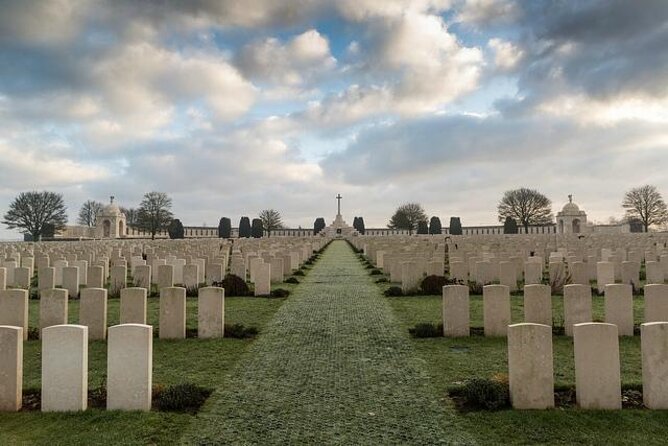
- Tyne Cot’s scale: you’ll stand in one of the largest Commonwealth cemeteries in the world.
- John McCrae’s writing stop: Essex Farm Field Hospital ties the poem In Flanders’ Field to place.
- Ypres time on your own: you get a chance to walk around and eat before the ceremony.
- A guide who connects the story: the day is built so each stop explains the next.
Why WWI Memorials Feel Different in Flanders
Flanders is where WWI went from political headline to physical reality. The ground itself seems to hold the memory: cemeteries, monuments, and memorial museums are all part of the landscape, not add-ons.
This tour is valuable because it doesn’t treat memorials like a checklist. Instead, it guides you through the war’s arc—occupation, attacks, survival conditions, and the long aftermath of missing soldiers—so you understand what you’re seeing and not just how to photograph it.
You can also read our reviews of more tours and experiences in Brussels.



Brussels to the Battlefield: The Coach Ride and the Pace
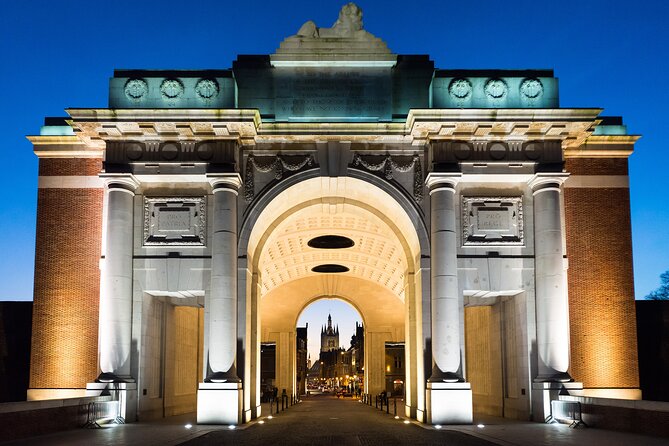
You start in central Brussels at Bd de Berlaimont 18 at 9:15 am. Expect a comfortable, air-conditioned coach and a professional guide, and keep in mind you can be on the road for a big chunk of the day.
Two practical perks help: you’re in a group (max 100), and you’re not doing the driving or figuring out connections. The tour also uses radios/earphones when necessary, which makes a long day easier when you’re frequently switching between coach time and walking time.
The pace is where you should be honest with yourself. You’ll see a lot of major sites, so you won’t have hours to linger everywhere. If you tend to want deep museum time or long cemetery wandering, you may feel the schedule squeeze a bit.
Vladslo German Military Cemetery and Käthe Kollwitz’s Grieving Parents
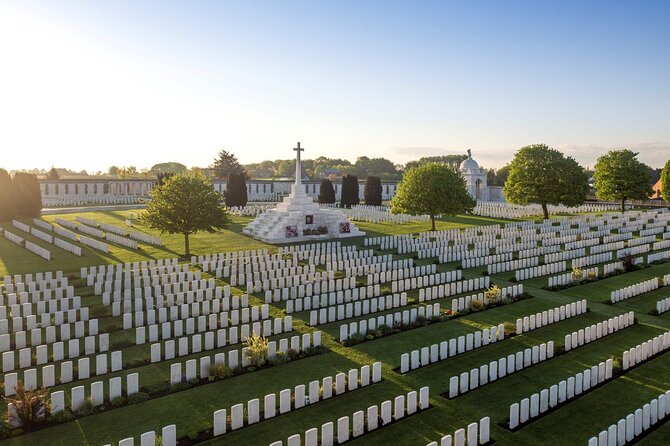
Vladslo is the kind of place that slows your breathing. You’ll arrive at the Deutscher Soldatenfriedhof / Vladslo German War Cemetery and get time to explore the grounds at your own pace before the guide ties it back to context.
The emotional anchor here is Käthe Kollwitz’s sculpture Grieving Parents. It’s not a grand action scene. It’s grief made visible—stone faces and posture that don’t need captions to communicate what loss does to families.
This stop matters for the “whole story” effect. You’ll see that WWI mourning wasn’t only a Commonwealth thing. Standing in a German military cemetery early in the day reshapes how you interpret the rest of the route, especially later at Tyne Cot.
Diksmuide’s Brooding Soldier: Canadian Loss in the First Gas Attack
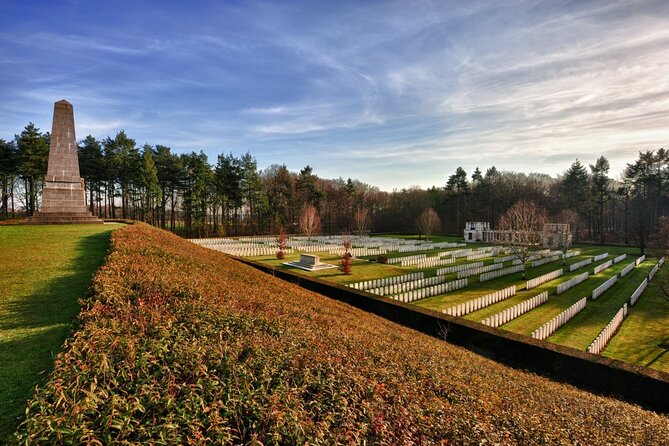
Next you head to Diksmuide, where you’ll see the monument known for the Brooding Soldier. The dedication centers on the sacrifice of 2,000 Canadian soldiers during the first German gas attack.
This is one of those stops that’s easy to misread if you only look at the shape and not the timing. The guide’s job here is crucial: WWI wasn’t just “big battles,” it was new tactics and new kinds of suffering. Gas warfare was terrifying because it changed how you could protect yourself and how quickly the front could turn lethal.
If you’re trying to connect memorial art to history, this is a strong example. The monument is short on explanation by itself. With the guide, it becomes a prompt for understanding how fear and survival played out in real time.
Flanders Fields Museum: Where the Day’s Facts Get Grounded
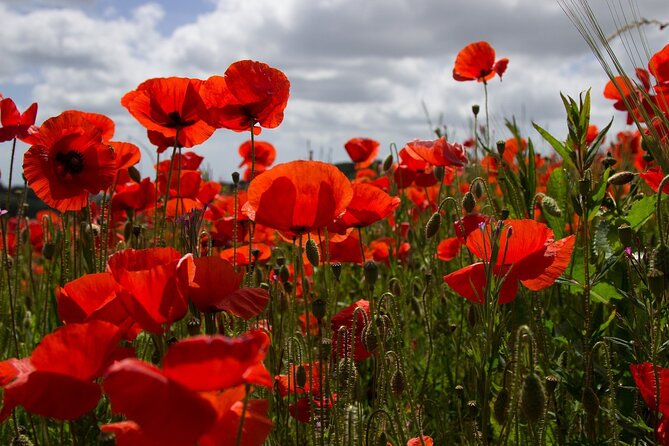
The Flanders Fields Museum visit is where the route starts to feel more than scenic. You’ll learn how events led to the war and how the catastrophe developed, with an emphasis on what soldiers faced—violent combat and the harsh, damp conditions of life in the trenches.
I like this museum stop because it prepares your eyes for what you’ll see outside. Cemeteries and monuments can otherwise feel like symbols you recognize from travel brochures. Here, you get a framework for why those symbols were created.
You should also know that museums in this kind of day trip often come with limited time. Still, even a paced visit helps because you’re not starting cold. By the time you step away from the museum, you’re watching for details with more meaning.




Passchendaele and the Transformation From Battlefield to Town
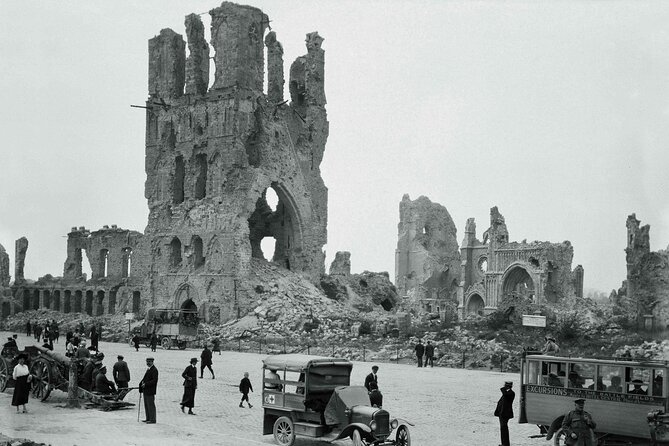
Passchendaele is a lesson in how landscapes can outlast wars. You’ll visit the Passchendaele battlefield area with about 30 minutes on site, using that short window to grasp what happened and what followed.
The striking part isn’t just the combat. It’s the idea that a bloody battlefield can later become a quiet place—people living their lives while the war’s scars sit just under the surface.
Because the time is short, you’ll want to rely on your guide for the story beats. If you’re the type who loves slow photography in open fields, you might wish for more walking time here. But for many people, that quick visit is enough to understand the turn from 1917’s violence to later normal life.
Tyne Cot Commonwealth Cemetery: 35,000 Graves in One Field
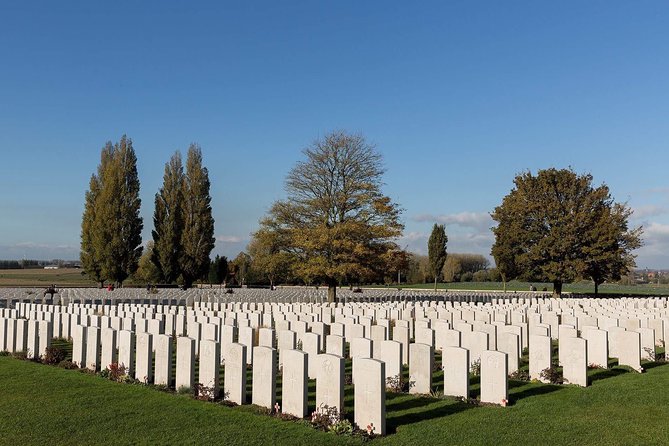
Then comes Tyne Cot, and it hits hard. You’ll visit Tyne Cot Commonwealth War Graves Cemetery, described as the largest Commonwealth cemetery in the world, with 35,000 graves.
This cemetery works because it’s both monumental and orderly. Rows of headstones create a visual rhythm, and the scale forces you to confront what “loss” means when repeated thousands of times. It’s not dramatic in the movie sense. It’s exact, steady, and hard to shake.
This is one of the most praised parts of the day for a reason: it’s not just information. It’s an atmosphere. If you need a moment to be quiet, take it here. It’s the kind of place where you don’t have to talk to feel like you’re learning.
Practical note: plan your footwear. Even if the grounds look neat, cemetery paths can be uneven, and you’ll be doing it after a full day already underway.
Essex Farm Field Hospital, Hill 60, and John McCrae’s Poem at Place
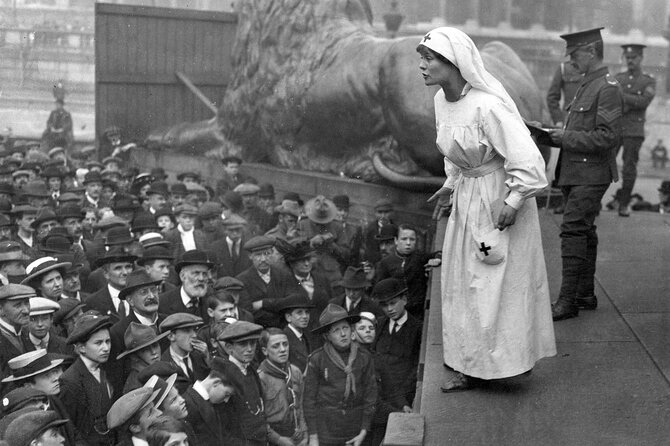
After Tyne Cot, the day turns from viewing memorials to thinking about writing, planning, and survival.
You’ll stop at Essex Farm Cemetery / Essex Farm Field Hospital, connected to Dr. John McCrae, the author of In Flanders’ Field. The route frames it as the place linked to when that influential poem took shape—so you can connect lines you may have heard in school to a real location tied to medical care amid chaos.
The day also includes Hill 60, where you’ll see strategic tunnels. This detail matters because it shows WWI wasn’t always just artillery and trenches above ground. You’re reminded that planning happened underfoot too, with tunnels used for movement, positioning, and attacks.
If you like history that includes “how it worked,” Hill 60 is a good payoff. If you don’t, that’s still fine—the guide can keep it human by relating tunnels back to what soldiers risked.
Ypres Time, Dinner on Your Own, and the Build-Up to Menin Gate
You’ll then head to Ypres and get independent time for exploring. It’s also where you’ll likely want to eat, since dinner is on your own expense.
I like the way this tour builds in breathing space before the ceremony. Ypres has enough charm and walkable streets to let your brain shift gears for a bit. You can grab a meal, walk a few blocks, and come back to the main square feeling less trapped inside the day’s solemnity.
But keep an eye on timing. You’ll reconvene at a pre-arranged time to head to the ceremony spot. This is one of those “you’ll thank yourself later” moments—show up when you’re supposed to, so you can find a good spot without stress.
Last Post at Menin Gate: Brief, Sincere, and Unforgettable
At 8:00 pm, you’ll attend the Last Post Ceremony at Menin Gate. It’s a daily tribute to Commonwealth soldiers and officers missing after battle, and the ceremony lasts about 30 minutes including time around the service.
What makes it unforgettable is how simple it is. No grand storytelling, no tourist spectacle. It’s designed to remember, not entertain.
This part of the day is often singled out as the emotional peak. It’s also a moment where you’ll feel the day’s earlier stops click into place—Vladslo’s grief, Diksmuide’s casualty dedication, Tyne Cot’s scale, and the poem’s voice all becoming one shared act of remembrance.
Dress for the evening too. Even if daytime is mild, nighttime near the ceremony area can feel colder, and you’ll be standing.
How Much Walking and Driving Is Really in This Day
This is a long day—about 13 hours total. You should plan for a full day of coach time plus multiple short to medium stops, including walking in memorial cemeteries.
The route is set for people with moderate physical fitness. That doesn’t mean it’s athletic. It does mean you should be comfortable with uneven outdoor surfaces and repeated getting on and off the coach.
Also, the day has a lot of “sit, stand, walk, listen” rhythm. If you get antsy on buses, bring something for your comfort and plan to be patient. If you’re okay with it, the structure actually helps you see everything without logistics headaches.
Price and Value: What $113.72 Buys You
At about $113.72 per person, this tour prices as a strong value for a day that includes major sites across the WWI front area.
Here’s why it feels worth it:
- Transportation by air-conditioned coach across long distances.
- A professional guide who connects the story from stop to stop.
- Radios/earphones when necessary, so you can actually hear on a full day.
- Admission is listed as free for the key stops, including the museum and cemeteries.
What you pay for isn’t just entry tickets. You’re paying for interpretation—someone to explain why each site matters and how it fits into the larger picture. For most people, that’s what turns a “drive-by” into a meaningful day.
One thing not included is lunch. You’ll have a lunchbreak, and you’ll have time to eat in Ypres. Build that into your budget so there’s no scramble.
Who Should Book This Tour (and Who Might Not Love It)
This tour is a great fit if you:
- want a high-coverage WWI day from Brussels without self-driving,
- care about the Commonwealth story and the broader Allied context,
- prefer guided context over reading signs for hours.
It may feel like too much if you:
- hate long days and late finishes,
- dislike tightly scheduled memorial stops,
- need lots of time in one place (this route favors breadth).
If you’re traveling with older teens or kids who can handle a solemn topic, it can work well, as long as you’re ready to explain what you’re seeing. It’s intense. But the guide-driven pacing helps keep it understandable.
Should You Book This Flanders Fields Remembrance Tour?
Yes—if you want a guided, emotionally powerful WWI route that covers the landmarks people actually come to Flanders for. The Last Post at Menin Gate alone is reason enough, and the rest of the day gives it context instead of leaving you with only a single moment.
I’d book it if you’re comfortable with a long day and you’re okay with a schedule that moves from place to place. If you’re the type who needs lots of quiet time in one cemetery or one museum, you might prefer a slower, fewer-stop option. But for most first-timers doing Flanders from Brussels, this one offers solid value and real meaning in the same package.
FAQ
How long is the Flanders Fields remembrance tour from Brussels?
It runs for about 13 hours.
What time does the tour start?
The start time is 9:15 am.
Where do I meet the guide in Brussels?
You meet at Bd de Berlaimont 18, 1000 Bruxelles, Belgium.
What is the tour end point?
The tour ends at Brussel-Centraal Carr de l’Europe, 1000 Bruxelles, Belgium.
What’s included in the price?
The tour includes an air-conditioned vehicle and a professional multilingual guide, plus radios/earphones when necessary.
Is lunch included?
No, lunch is not included.
Are the site admissions included?
The tour data lists admission tickets as free for the stops (including the museum and cemeteries).
Is this tour offered in English?
Yes, it is offered in English.
Is there free time during the day?
Yes. You’ll have free time during the excursions, and you’ll also have time in Ypres for exploration and dinner on your own.
Can I cancel for a full refund?
You can cancel up to 24 hours in advance for a full refund.