REVIEW · BRUSSELS
Private Half Day Tour of Brussels
Book on Viator →Operated by Belgica accesible · Bookable on Viator
Brussels rewards slow wandering. This private half-day walk strings together the city’s biggest symbols and best stories, with a guide who can tune the pace to your group. I love the Grand Place history breakdown, and I love how the stop plan lets you switch between a quick photo and a deeper explanation. One thing to consider: with so many short stops, you’ll want comfy shoes because it’s still a real walking tour.
The tour is built for small groups (up to 8) and runs in English, starting at Rue du Marché aux Herbes and ending at Grand Place. You’ll move through five classic sights in about 2 hours 30 minutes to 3 hours, though your questions can naturally stretch the timeline. If you walk slowly, you can still participate, since the guides receive specific accessibility training.
For planning value, the admissions to the main stops are listed as free, and you get a professional guide plus a mobile ticket. That combination makes it easier to spend money on the guide’s storytelling instead of juggling entry fees.
In This Review
- Key highlights worth your attention
- Entering The Tour: Private, flexible, and timed for real sights
- Grand Place: where guild power, big events, and dramatic history meet
- Manneken Pis: the symbol of Belgium, plus costumes that feel personal
- Jeanneke Pis and Zinneke Pis: the lesser-known sisters of the story
- St. Hubert Galleries: old-world shopping history and chocolate origin context
- St. Michael and St. Gudula Cathedral: catacombs, pulpit details, and Carlos I stained glass
- Price and logistics: what you’re really paying for
- Who this tour suits best (and what to bring)
- Guides make the difference: David and Adrian style notes
- Should you book this Private Half Day Tour of Brussels?
- FAQ
- How long is the Private Half Day Tour of Brussels?
- What does the tour cost and how many people can join?
- What languages is the tour offered in?
- Is admission included for the stops?
- What is included in the tour price?
- Where does the tour start and end?
- What’s the cancellation policy?
Key highlights worth your attention
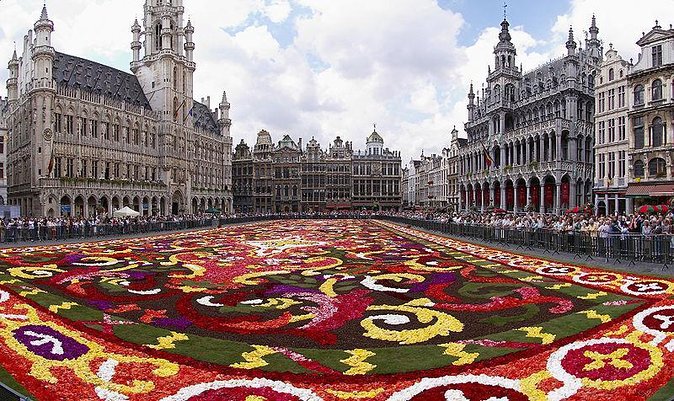
- Grand Place first: the square’s guilds, famous figures, and big events like the flower carpet
- Manneken Pis, Jeanneke Pis, Zinneke Pis: three local icons, each with legends and surprises
- Costumes matched to where you come from at Manneken Pis
- St. Hubert Galleries: royal-era shopping history plus a clear, chocolate-focused context
- St. Michael & St. Gudula Cathedral: catacombs, pulpit details, and stained glass tied to Carlos I
- Private, up-to-8 format: flexibility to ask for just a photo or a thorough explanation
Entering The Tour: Private, flexible, and timed for real sights
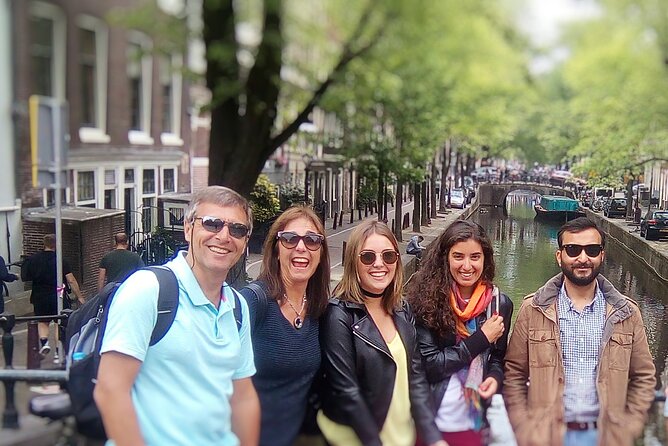
This is a private Brussels walking tour designed around a tight set of landmarks that most people want to see, but without the feel of a rushed bus stop circuit. You’ll get a professional guide and a mobile ticket, and your route flows in a sensible order from the center of town outward and back toward Grand Place.
What makes it feel different from the usual “checklist” tours is the built-in flexibility. At multiple stops, you can choose whether you want a fast look or you’d rather slow down and hear the background—history, legends, and small cultural details that help Brussels click into place.
The timing is also realistic for a half day: about 2.5 to 3 hours. If your group lingers for stories (or asks lots of questions), the tour can run longer, and that’s usually a sign you’re doing it right.
Finally, the tour is offered in English, and the meeting point is easy to find: Rue du Marché aux Herbes 90, 1000 Bruxelles. It ends at Grand Place Grote Markt, which is where you’ll naturally want to be anyway for your next meal or walk.
You can also read our reviews of more private tours in Brussels

Grand Place: where guild power, big events, and dramatic history meet
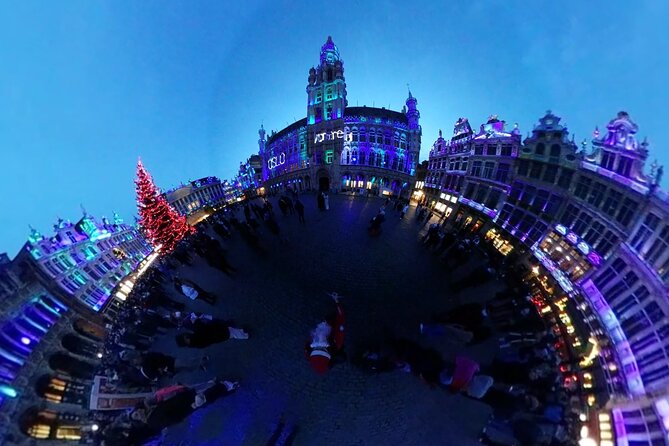
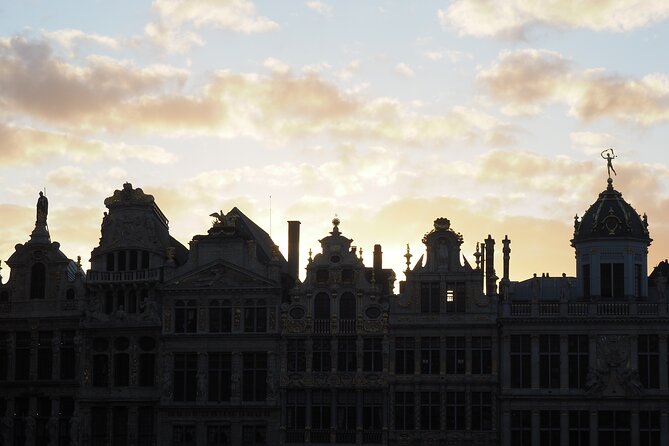
Your tour begins at Grand Place, and that’s a smart move. This square is the kind of place where you can stare at buildings and still feel like you’re missing the plot—unless someone gives you the context.
You’ll hear the history of the square and how its monuments connect to the era of guilds, not just royal pageantry. The stories here also get unexpectedly specific, including references to famous figures such as Carlos I and even the darker end of European power: stories that involve people who beheaded great kings.
Then there are the events. You’ll learn how Grand Place becomes a stage for major moments—most famously the flower carpet, the kind of spectacle that turns a historic square into a living postcard. Even if you’re not there during an event, the guide’s explanation makes it easier to picture what that transformation looks like.
What to do during your stop:
- If you want a quick hit, take your photos, then ask the guide to point out the monuments tied to guild power.
- If you want the full effect, slow down and ask about the monuments and the stories around the square.
A practical note: this is a crowded, open public space. If you’re traveling with limited mobility, plan for time to find your spot to view the buildings and listen.
Manneken Pis: the symbol of Belgium, plus costumes that feel personal
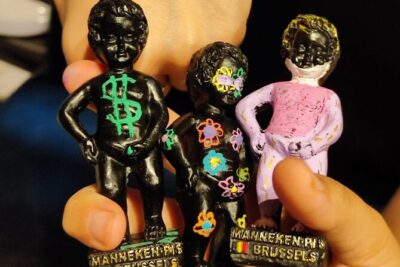
Next up is Manneken Pis, the statue that practically functions like a city logo. The tour treats him like more than a cute stop. You’ll learn the legends behind the statue and why he gets dressed, which is one of those Brussels things you can miss unless you hear the local logic.
Here’s one of the most fun parts: the guide can tell you about the costumes and, importantly, you can share where you’re from. They’ll show you the corresponding costume linked to that place. It turns a common photo moment into something interactive.
What to do:
- If you’re short on time, you can keep it to a quick look and a couple of legends.
- If you like folklore, ask for the deeper version of how the costume tradition works.
This is also a great moment to check your bearings. You’ll have seen the big historic square, and now you’re shifting into Brussels’ playful side—statues, myths, and traditions.
Jeanneke Pis and Zinneke Pis: the lesser-known sisters of the story
After Manneken Pis, the tour adds two more statues: Jeanneke Pis and Zinneke Pis. These are smaller stops, but the point is bigger than photos. The guide connects each one to Brussels’ layered storytelling.
Jeanneke Pis is described as the second best-known statue in Brussels, and the guide explains her history and local references, including a nod to a bar called Delirium Tremens. That kind of cultural link matters, because Brussels isn’t just monuments—it’s also everyday places and local habits that grow out of older stories.
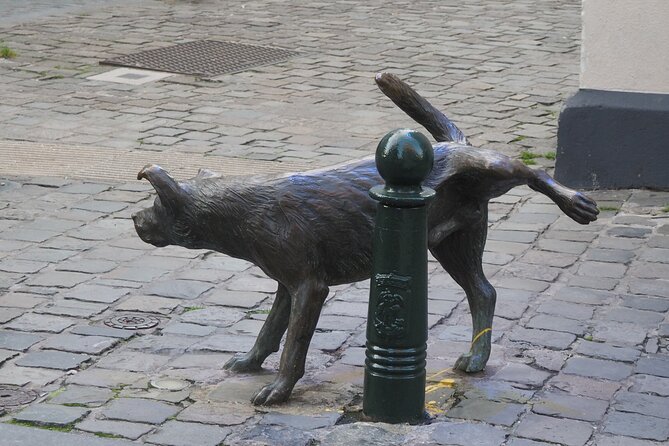
Then comes Zinneke Pis, the charming puppy statue. Here the history leans into Brussels’ hidden parts, including the role of channels and how that theme relates to the puppy. The explanation helps you see why the city keeps returning to the idea of the street, the water network, and the character of local neighborhoods.
Because these stops are brief, they work well if you want variety without adding hours. You’ll get the fun payoff of three different icons, and you’ll leave with a better sense of what Brussels considers worth remembering.
St. Hubert Galleries: old-world shopping history and chocolate origin context
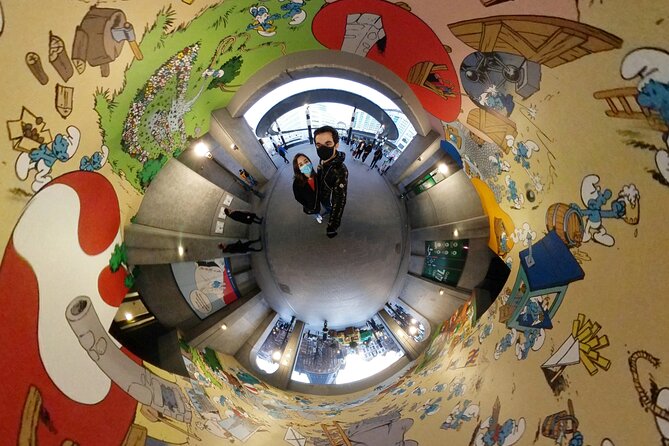
From the statues, you walk into Les Galeries Royales Saint-Hubert, one of Brussels’ most famous indoor passages. This stop is all about atmosphere and meaning. The guide explains the history of the galleries and why high society strolled there—partly to escape unpleasant street conditions of the past.
If you’ve ever wondered why Belgium is such a chocolate heavyweight, this is where the tour gives you helpful context. The guide points you toward the early roots of Belgian fame for chocolate, which can make the shops you’ll see afterward feel less random and more like the result of a long tradition.
How to use this stop:
- If you like architecture, pause for the details of the galleries and their role as a social space.
- If you’re food-minded, ask the guide to connect the chocolate story to what you’ll see around the city.
It’s also a practical break. A passage like this lets you regroup without fully breaking the walking rhythm of the tour.



St. Michael and St. Gudula Cathedral: catacombs, pulpit details, and Carlos I stained glass
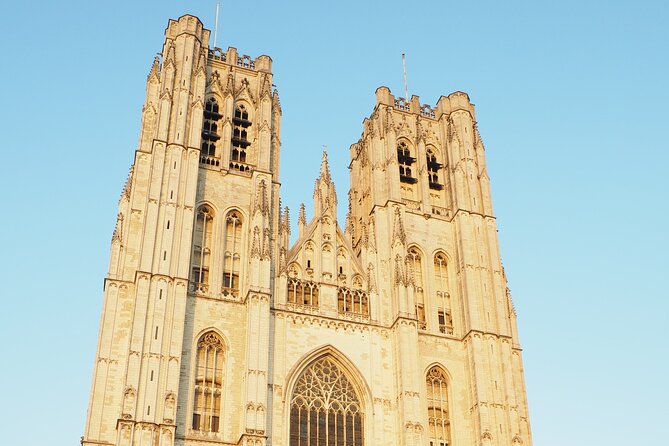
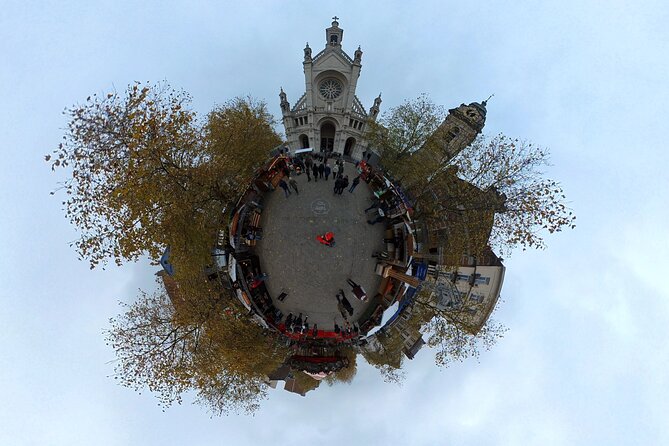
The tour finishes with the Cathedrale St-Michel et Ste-Gudule (St. Michael and St. Gudula Cathedral). This is not just a quick exterior stop. The guide frames it as a place with layers you can learn to notice—starting from catacombs and moving through key interior elements like the pulpit.
You’ll also hear about Saint Gudula—who she was and why the cathedral’s name includes her. That matters because many visitors see the building as simply impressive. Once you know the name, you understand why the building matters to local identity.
One standout detail is the stained glass window tied to Carlos I. If you’ve been following the theme of major historic figures from earlier stops, this is a satisfying payoff: the stories connect across the city, from civic power to religious art.
Because this stop is listed as a shorter segment (around 10 minutes), you won’t get a slow, museum-style tour. Instead, you get the right pointers so the cathedral becomes clearer and not just visually impressive.
Price and logistics: what you’re really paying for
The price is $279.98 per group, up to 8 people, for about 2 hours 30 minutes to 3 hours. That means the value depends heavily on how full your group is.
If you fill the group (8 people), you’re effectively paying roughly $35 per person for a private guide and a tight route through major Brussels highlights. If you book as a smaller party, the per-person cost rises, but you still get two big advantages:
- You’re not stuck with a rushed crowd pace.
- You can steer the tour toward your interests (photo-only versus fuller explanations).
Private tours aren’t just about exclusivity. They’re about efficiency: a good guide saves you time by explaining what you’d otherwise Google and piece together later.
A small consideration: because it’s a walking tour with multiple quick stops, it’s less ideal if you want mostly sit-down time. If you prefer long museum visits, this is still a strong start, but pair it with more time later.
Who this tour suits best (and what to bring)
This private Brussels half-day works especially well if you want a high-impact overview without feeling like you’re sprinting across the city. It’s also a good fit for groups who want to ask questions and get direct answers rather than reading placards.
It’s suitable for most travelers, including people who walk slowly. The guide training includes accessibility specifics, and service animals are allowed. If you’re planning around mobility needs, treat this as a tour where the pacing can be adjusted.
What to bring:
- Comfortable walking shoes (you’ll be on your feet for a few hours)
- A light layer for indoor-outdoor changes, especially if you use the galleries and cathedral
- Your curiosity: the guide’s whole thing is connecting the dots between monuments and local culture
If you’re in Brussels for a first visit, the route is a great way to get oriented fast. You’ll see the civic center (Grand Place), the playful national icon pair (plus the other two statues), the famous indoor passage, and a major religious landmark—all without wasting the half-day.
Guides make the difference: David and Adrian style notes
The biggest strength you can hope for in a private tour is a guide who can adapt to your group. In this experience, names like David and Adrian show up as standout guides, with plenty of energy and a talent for pulling together history, art, architecture, culture, and even religion in an easy-to-follow way.
One helpful detail: some guides pay close attention to practical needs in your group, like mobility or comfort, so the tour feels smoother in real life—not just on paper. Also, the tour can run longer than the baseline when you’re enjoying the stories and asking questions.
Should you book this Private Half Day Tour of Brussels?
Book it if you want an efficient, private way to hit the key Brussels landmarks in about half a day—and you like learning the meaning behind what you see. The tour’s value is strongest when:
- you want Grand Place context (not just photos),
- you enjoy local folklore like the statues and costume traditions,
- and you want a guide to connect civic history, religious art, and everyday Brussels culture.
Skip it (or swap expectations) if you hate walking or you’re looking for a slow, in-depth cathedral or museum experience. This is more of a guided, story-driven stroll than a deep interior marathon.
If you’re deciding whether to spend money on a guide, this one makes a good case: the admissions at the listed stops are free, and the route is compact enough that you’ll feel the time was used well.
FAQ
How long is the Private Half Day Tour of Brussels?
It runs about 2 hours 30 minutes to 3 hours.
What does the tour cost and how many people can join?
The price is $279.98 per group, for up to 8 people.
What languages is the tour offered in?
The tour is offered in English.
Is admission included for the stops?
The information provided lists admission tickets as free for the stops on the itinerary.
What is included in the tour price?
A professional guide is included.
Where does the tour start and end?
It starts at Rue du Marché aux Herbes 90, 1000 Bruxelles, Belgium, and ends at Grand Place Grote Markt, 1000 Brussel, Belgium.
What’s the cancellation policy?
You can cancel for a full refund if you cancel at least 24 hours before the experience’s start time, and free cancellation is allowed up to that point.